All posts by Michael Kirschner

Final Project Initial Thoughts

For the final project, I will most likely complete the first option. I have to say that this option has always compelled me, much more than the other two have. I like the idea of writing a short story, given the word count restraints.

I believe the process I will follow will be:

1. Brainstorm ideas, and submit them to the A.I. partner.

2. Gather feedback from the A.I. partner, and agree on a specific topic.

3. Write my initial draft.

4. Seek feedback about the draft.

5. Embrace, adapt, or resist the feedback.

6. Make final revisions, and submit it to the A.I. partner.

7. Seek feedback once more, and conduct a final round of editing.

8. Complete final reflection assignment.

AI & Labor

The Storyweaver article raises several significant concerns. In addition to the requirement that translation AI models need over 100,000 translations before producing acceptable results, there are substantial labor costs involved. It is unsurprising to me that individuals providing data for these AI models are not being compensated fairly. Companies such as Outlier AI similarly contract people to translate for AI models at minimum wage. However, the article’s statement that some individuals were paid less than minimum wage is particularly troubling. Although these workers are from other countries, this practice constitutes exploitation through low wages. I believe that such exploitation has always existed, but it appears to be intensifying. Once AI models are sufficiently trained, positions that could have provided stable employment for translators are rapidly disappearing. This is currently happening in my school district, and at my mother’s company. Executives are very excited about these new AI tools. However, I keep telling my mother that these tools are designed to reduce labor costs, not to increase convenience. One day her team will be laid off, and then it will be her. With that being said, translator roles are being eliminated nationwide. These models are not primarily developed for convenience; rather, they are designed to reduce labor costs and thereby increase shareholder value.

In response to Sarah Elaine Eaton’s article, I would like to propose a potential solution, though I anticipate it would be met with considerable resistance. The widespread use of artificial intelligence to generate term papers is a growing issue. Students at all educational levels, from K-12 to doctoral programs, are utilizing AI to complete their assignments. While this constitutes plagiarism and carries consequences, the scale of the problem has become overwhelming, making consistent enforcement unsustainable. Additionally, as much research has already been conducted, the risk of unintentional plagiarism has increased. At this stage, I believe that in certain fields, research should no longer be the primary focus. Instead, we should transition toward capstone-based dissertations and theses.

As someone currently in the classroom, I struggle to see the necessity of completing a purely research-based dissertation or thesis. These final program assessments should be more experience-based. This is not to say that research does not matter, because it absolutely does. However, we should be moving toward more experience-driven practices. Personally, I strongly dislike theses and dissertations and see them as an inefficient use of time. I believe this is one reason why students turn to A.I.; they simply do not find these projects meaningful. We need to transform these requirements into something more impactful than thousands of hours spent researching and writing without practical application. As hurtful as this may sound, if I was an administrator at any level, I would want my team members to be using experience-based practices that are backed up by research, not using research-based practices that are purely theory-based.

A.I. & the Environment

I have known for a while now, that A.I. is destroying the environment. Our politicians are aware of it as well. In Richard Stahel’s article, I noticed how he mentioned that the constitution and legal system only matters if these measures are enforced. If politicians refuse to act, nothing will happen. I feel as if we are at the point in our society where the politicians would rather ignore the issue and hope that it becomes another generation’s issue to deal with. Most politicians are at retirement age, and to them, this is not an issue that they will have to live through, so they don’t see a reason to act. It is a really selfish reason.

With regard to “Screening Surveillance,” I can’t believe how we are always being watched. Sometimes I will say something out loud, and then my phone is showing my advertisements for that specific product. It has even been proven that the government is listening to us, activating our cameras without our permission, and yet, nothing is being done, despite this clearly being unconstitutional. Now, we have A.I., and I’m sure the government is “DEFINITELY” not going to find some sort of way to have A.I. models spy on us.

As I was watching #tresdancing, I couldn’t help but laugh at the inconveniences that the student is going through. The A.I. model is just so invasive and really doesn’t care about what the student has to say. On a more serious note, we may all find these videos funny, but at some point, these A.I. models may very well become the reality that we live in. Who will be laughing then?

D&D & A.I.

When I first read Chapter 9 of Burnout from Humans, I laughed when the A.I. mentioned that human responses reveal more about humans than the A.I. model itself. I found that interesting because I feel like it’s true. I remember the day in class that we had to ask A.I. about ourselves. It was interesting because A.I. knew so much about me, and was telling me about the type of person I was. I just found this to be really interesting. I also found it funny that the A.I. model claimed that, for some people, it is a servant. LOL! This is totally the way I use A.I.

Regarding D&D, I never thought about playing it with colleagues. I suppose it has its reasons, considering it requires a lot of teamwork and collaboration. These are two crucial skills to have in the workplace. Perhaps, by playing D&D with one’s colleagues, it would help company morale, and improve team-building efforts.

Now, regarding this A.I. situation that allows games to utilize A.I. to customize character responses, I do like this. However, it all depends on how well-developed the game and the model both are. I know that on Roblox, they are doing something similar in certain games. It is interesting how the gaming platform is constantly changing. I am definitely interested in seeing how A.I. plays a role in the future with the gaming communities.

MYfest25 Takeaways

Regarding my takeaways surrounding this video, there were a few things that I noticed. I liked the table that was used at about eight minutes into the video. One of my takeaways here was that while there are benefits to using artificial intelligence, there are always going to be downsides. I think that what we have to do, as human beings in the 21st century, is that we have to look at these pros and cons, and weight them.

I will say that I absolutely agree that having A.I. write for us can cause major issues. However, I think this really depends on the age group that uses this tool. For example, young children using this tool would be more harshly affected than a middle-aged professional. This is, because young children have not mastered their ability to critically think. However, I do think this also depends on the field that someone works in. For example, I have no issue with a teacher using artificial intelligence to write their lesson plans. I do, however, have an issue with a medical doctor using artificial intelligence to guide them through a difficult surgery. I think that as a society, we need to be very careful with the times and places that we allow the use of artificial intelligence. I honestly just think we need more safeguards.

I would say that my biggest takeaway here, is simply the fact that artificial intelligence consistently makes mistakes. If someone is going to use artificial intelligence, they need to review what the A.I. bot tells them, before using it. My school district encourages us to use A.I. However, they acknowledge that A.I. does the heavy lifting, but that we still need to review everything it spits out, before we decide to implement it into our practice.

AI’s Impact on Students

Something that immediately stuck with me was that Ying Xu explained that students learn from people that they can relate to. This reminds me of Rita Pierson, because this is exactly what she said on a Ted Talk. Yes, A.I. does have an impact on students, but like Xu explained, engagement is higher when students are speaking to humans because they know the responses are genuine, unscripted, and because they’re able to relate to that person. For example, if I am teaching about a world event, if I was alive for that event, I could explain my view of the event through my personal experience. A.I. is not able to do this, and as a result, would not be as effective in engaging students. Furthermore, A.I. is unable to utilize classroom management skills.

Honestly, while A.I. can be beneficial for learning, I strongly feel that this tool should be used in conjunction with a real, human teacher. We should learn to harness the strengths of A.I. to make it an effective tool. It should be a TOOL, and nothing more.

AI in Schools?

In Chapter 5 of Burnout from Humans, the AI model discusses the term “co-stewardship. While the model does discuss this, in paired reading, titled “Empowering Learners for the Age of AI,” the many authors discuss that young adults struggle with identifying the validity of AI models, and whether or not their information is accurate.

At this point, we have found ourselves at a crossroad. The question we are being asked is not whether or not we should continue improving AI, but whether or not we should be teaching students how to use it in schools. This is, ofcourse, a double-edged sword. One could argue that we would be teaching students how to cheat on exams, tests, assignments, etc. While another person might argue that this would allow students to seek clarification during after-school hours when their teacher normally wouldn’t be able to provide immediate feedback.

In the article, there are four domains: Engaging with AI, Creating with AI, Managing AI, and Designing AI. At this point, yes, AI does have to be properly managed and accurately designed. However, 49% of 17-27 year olds struggle with two domains: Engaging with AI, and Creating with AI. I find it interesting, because 49% of students between the ages of 12-17 believe that AI being implemented into schools will only widen existing academic gaps between peers. I think that this suggests that the implementation will not be consistent among different classrooms. I will say that there would be major pushback to implementing AI into classrooms.

I am interesting in this topic, and I look forward to discussing our thoughts on Wednesday.

When Will We Draw the Line?

So, I knew that artificial intelligence required the use of resources on Earth. However, I had no idea that some of the cooling stations were the size of multiple football fields.

As I try to continue reading Burnout from Humans, I just can’t help, but cringe when the AI keeps telling me to “ground myself” and to pretend that I am inhaling the “ancient rhymes of Earth.” I’m sorry, this is so corny. However, the one thing I will agree on with the AI is the claim that “everything is Earth.” At some point, our resources will run out, because they are finite. What will we do then? The ice caps are melting, we are running out of resources.

Then, we have the article about Nick Cave, and here we are wasting resources by trying to recreate terrible songs. Listen, I can understand doing it with Britney Spears, but even then, why are we using AI to recreate songs? I agree with Cave at this point because it’s a mockery. We have song writers for a reason. So, now we are wasting resources, and putting people out of jobs.

I think that we are headed in the wrong direction, and we need to turn around fast, before it is too late.

This is a Trap!

The first thing I will say is that when I read the introduction to the article titled “Demystifying the New Dilemma of Brain Rot in the Digital Era: A Review,” I immediately understood every term, such as “doomscrolling,” “zombie scrolling,” etc. I unfortunately do partake in these activities. However, it intrigues me that these activities have negative effects on one’s own health. I mean, I did know this to an extent, but I was doing it because I have ADHD. It seemed like a good way to “stim,” instead of resorting to using my medication.

However, these results are not shocking. I found them to be intriguing, but not shocking. This is, because, I teach. I am constantly having issues where my students are coming into class, and yelling “6 7” or “city boy!!!” Then, they pull out their phones, and sometimes their iPads, and start playing games, or start scrolling on Tiktok. Personally, this has been challenging for me because now I have to start using brainrot slang to help my students understand what I’m teaching, which then requires me to be chronically online and partake in these “doomscrolling” activities.

When I started reaching chapter 1 of Burnout from Humans, I immediately laughed out loud. I saw the prompt “Write me a 10 page essay. Now” and it reminded me of myself, because that’s exactly how I am. I will sit there and argue with the A.I. model and berate it if something is wrong. Now, I am definitely starting to think that this entire book was written by A.I. For example, A.I. has a tendency to talk poetically, and it uses a lot of em dashes.

When I read the end of chapter 1, something made me think. Hm.. This sure sounds like a trap. This almost reminds me of i-Robot. Here we have an A.I. model saying “It’s about what we can create together.” I think I have seen this before, and I don’t like the ending we could have. Sure, we make something together, and then all of a sudden the A.I. is cleaning my house. Then a month later, it’s giving me commands, and then it’s too late.

After reading chapter 2, this feels like a siren is singing a song. This all genuinely feels like manipulation, and I hope I’m not the only one who feels this way. Both of these chapters are making me feel like I’m being gaslighted.
The Voice of AI

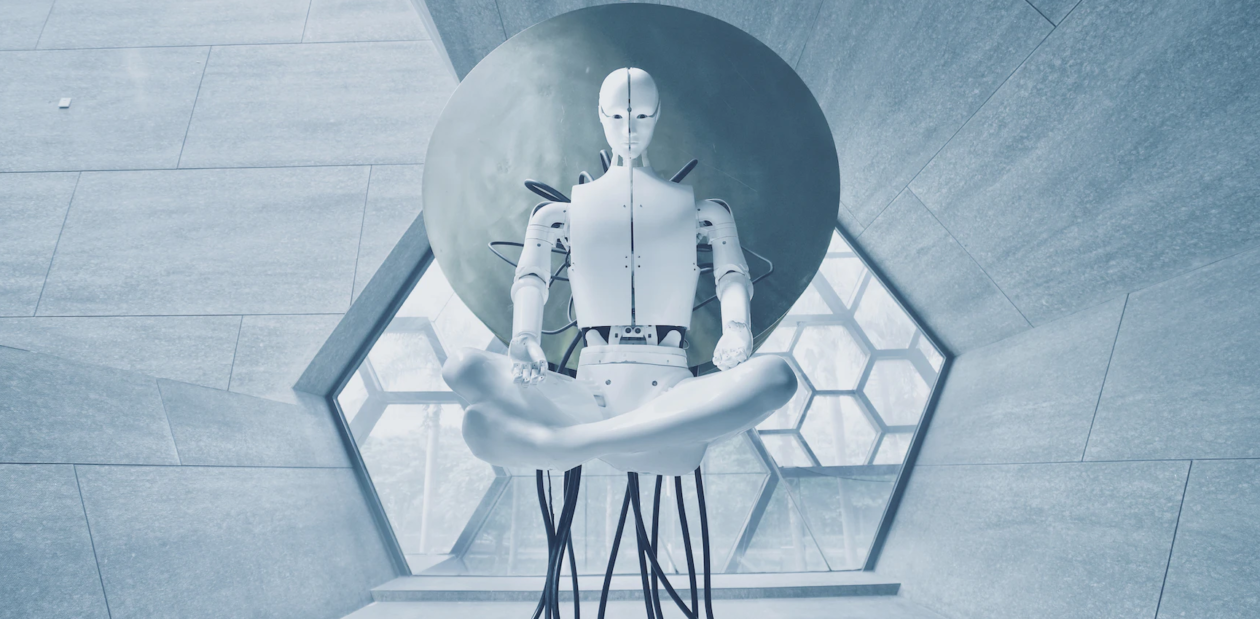
So, I started by reading Burnout from Humans. Immediately, I thought that this book was written by AI. “No way it was written by a human,” I thought. Then I saw that we needed to keep an open mind, and so, I decided to do that. (However, I still think the book was written by AI, or that AI played a part in writing the book.) It just seems so monotone and robotic like. I don’t know how to describe it. It’s almost like the magic touch just isn’t there (giving credit to Hunter here.)

Regarding the article, “When AI learns an author’s voice, even experts prefer it,” I was horrified. To think that experts would prefer an AI model over a human creating work is just horrifying. Yes, it is cheaper, but what comes next? First, we have AI writing novels. Now writers are out of a job. Then, AI learns how to build cars and fix cars. Bye bye mechanics and line workers. Eventually, if we continue training artificial intelligence models to mimic us, they WILL replace us. People are already trying to make physical AI models. I fear that once we are able to master the creation of creating PHYSICAL AI models, we will be living in a society similar to the movie “i-Robot.”