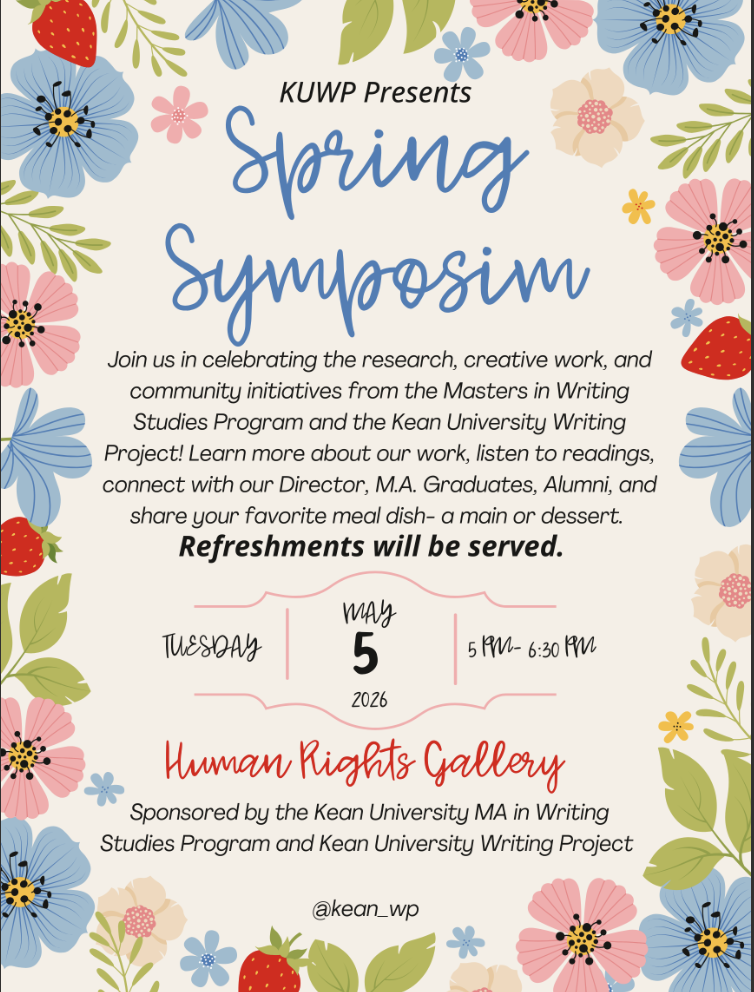
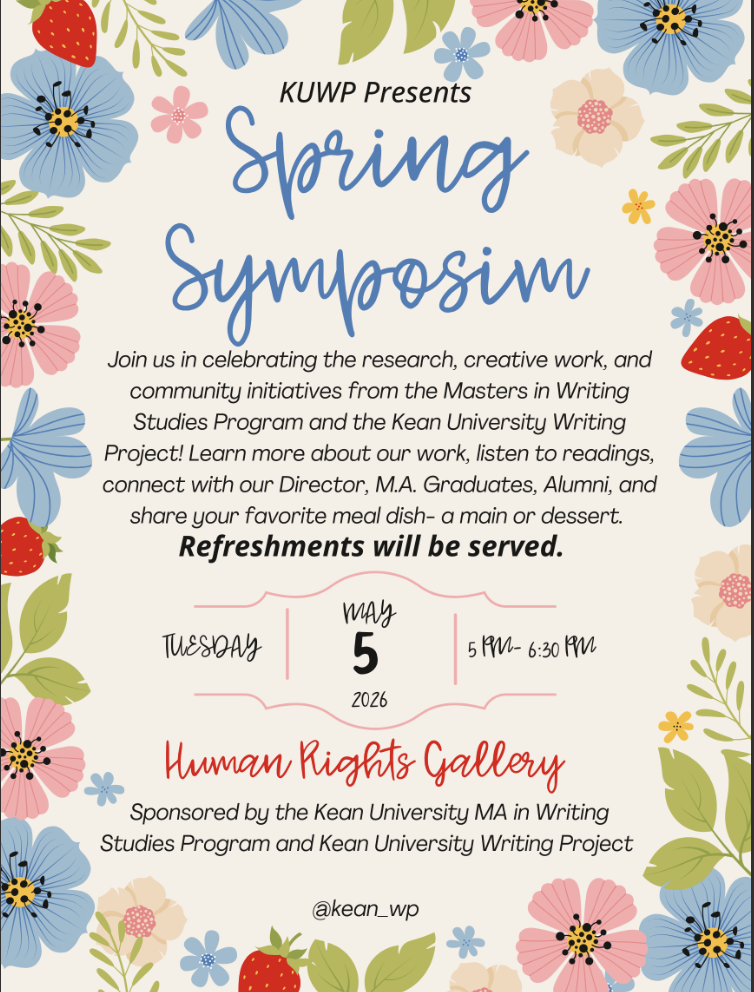
You are all invited! I would love to see you at our annual Spring Symposium at the Human Rights Gallery (next Tuesday evening May 5). We will be celebrating our MA in English, Writing Studies Program and community. In particular, I want to encourage my undergrad students to consider joining us (for both the Symposium celebration and the MA program as well).
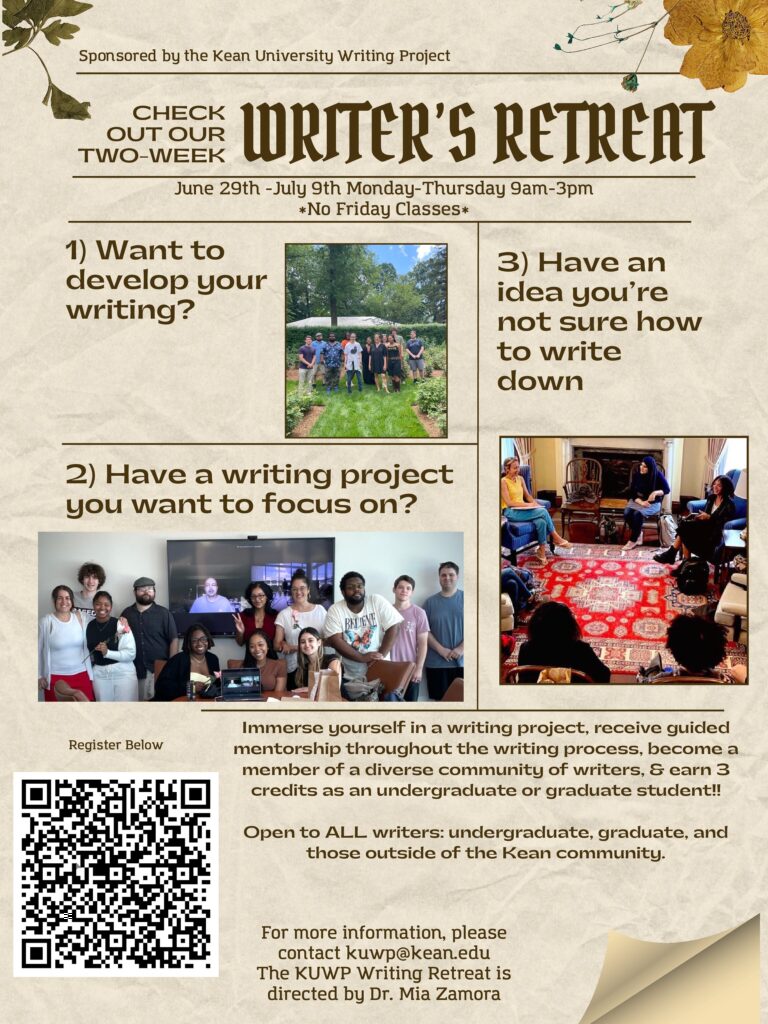
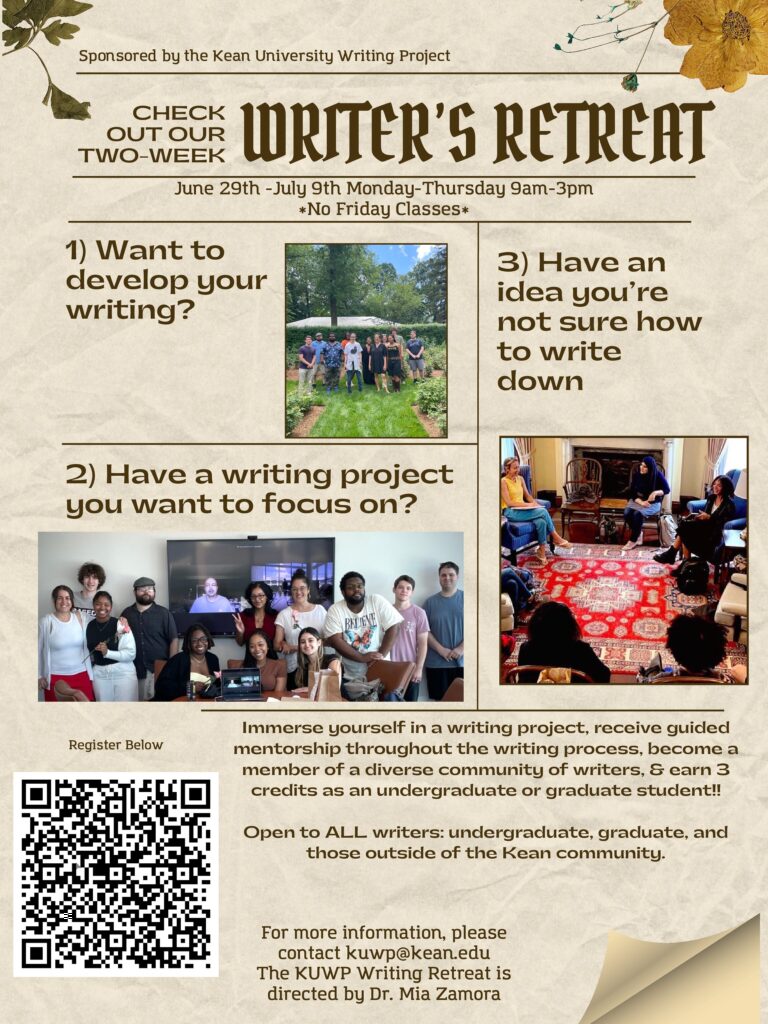
Summer Opportunity:
If you looking for a special summer class that counts towards you ENG degree:
Final Push
We are almost at the finish line. I know you are all working on your final project now – your contribution to the Student Voices on Artificial Intelligence Collection. It has been exciting to hear about your developing concepts in our workshop time together these past two weeks. As you prepare the final draft for submission, please be sure to refer to the Final Project Assignment for the assignment details to make sure you have covered all bases in the development of your work. In addition, please be sure to share your final project link here as well.
Our last class on 4/29
Our final in-person class will be this coming Wednesday (4/29). Please remember to prepare your Lightening Talk about your final project and add your single slide into the Lightning Talk Deck for our final showcase of your work as a class. I am hoping to share with you a celebratory atmosphere. I encourage you to bring some snacks so we can enjoy our close of this course with some treats, positive vibes, and fun!
The last “to-do”
Just a reminder that the final step to complete your work for this course is to prepare and submit your Final Self-Assessment and Portfolio. The deadline for this submission is May 6, 2026.
Congrats to all of you and have a great summer season. ❤️
Thanks for a productive and insightful workshop on the Final Project assignment this week. From your ideas shared at the close of class on Wednesday I can already see how diverse and compelling the Student Voices on Artificial Intelligence: A Collection is going to be. 👏
This week is “Blog Catch Up Week”! This means if you have missed a blog or a few, you can make up one missed blog by blogging about the content for one date you missed earlier. If you don’t need to (or don’t feel compelled to) “catch up”, that is fine. There is no blog requirement this week otherwise.
**Please be working on your Final Project design and get it started this week (before coming to class). Please come to class with an outline/map/notes re: your project. You will have some dedicated in-class time for further work on the project, and we will also have some workshopping regarding the on-going development of your contribution to this collection. I will also address your preparation for your “lightening round” presentation for our final class on 4/29.
Finally, I am glad we took the time to go over the Final Self-Assessment & Portfolio requirements for completing the course. Please remember your final deadline for this course is May 6, 2026.
Thank you all for your patience and understanding through my illness in the past week. There are some affordances that come with the technologies that we critique, and I have been grateful for our ability to stay in touch via Zoom while not feeling my best.
Shout outs
To Sarah
Thanks to Sarah for taking us through her consideration of “AI-generated contradictions for environmental democracy” (2025). This was an important stop in our pathfinding serie. By starting with the carbon footprint calculator (i.e. how many earths do you use up? and does your human demand exceeds the planet’s biocapacity?) we are brought up against a measure of personal responsibility. But Sarah expanded upon this thoughtfully by helping us understand that AI is not a neutral tool, but actually a techno-political force that deepens existing contradictions in democratic systems. In her presentation she highlighted that AI intensifies this imbalance, often serving corporate and geopolitical interests rather than public ones. Can we aspire to “environmental democracy” which might treat access to basic life resources (like water, food, energy) as fundamental democratic rights? Is it possible to prioritizes sustainability over growth as the central political imperative? These are questions that are critical to our time. …Oh, and shout out to Footprint Alarmists!!
To Oliver
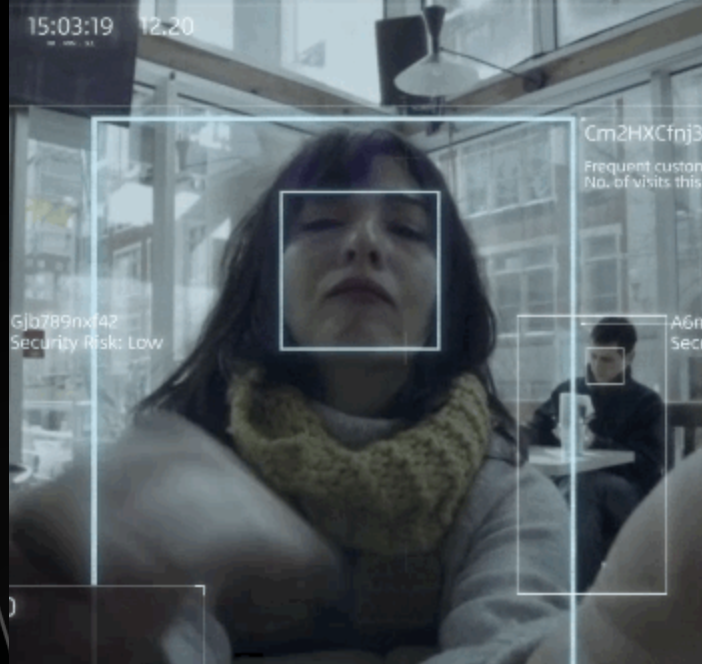
Shout out to Oliver for selecting and discussing the short film “Frames” which is a part of a series entitled “Screening Surveillance”. The short harrowing film follows a lonely woman moving through a “smart city”. Her actions are constantly tracked and analyzed. Her life seems to reflect adata-driven “story” about her behavior. But what does this data-based “version” of her miss about her personal truths. The dissonance between her data points vs. her emotional truths seem both poignant and worth considering. Data can create “representations” that misrepresent people. This tragic yet compelling little movie shows us that human complexity exceeds machine logic. What is watched and surveilled is not necessarily understood.
To Adamari
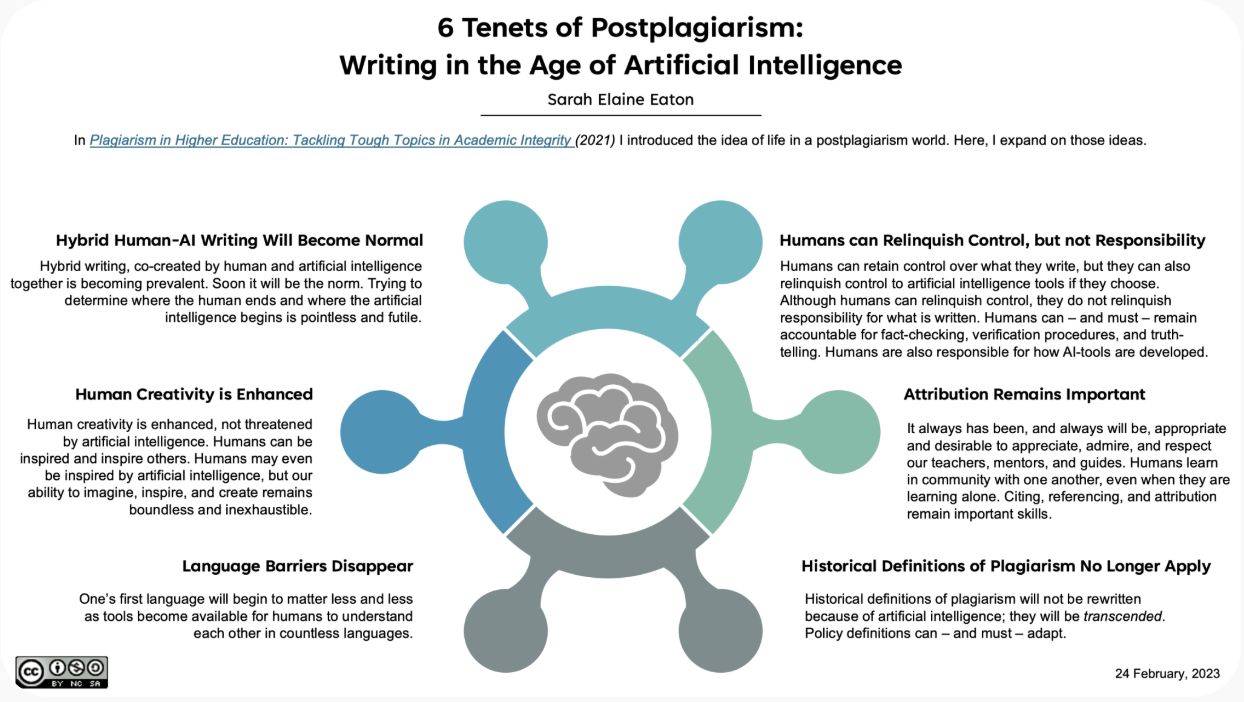
Shout out to Adamari for walking us through a new but important concept – post plagiarism – which is due to the dawn of pervasive AI in our educational landscape. In her article Postplagiarism: transdisciplinary ethics and integrity in the age of artificial intelligence and neurotechnology”, Sarah Eaton wants us to move beyond the impulse to simple detect cheating, Eaton argues that traditional ideas of plagiarism are becoming obsolete as human & AI collaboration becomes normal. Eaton claims that humans must remain accountable (“responsible”) for the work they produce, even when using AI. And she argues for a culture of attribution, and that we must aspire to an ethical practice of knowledge creation, rather than just policing misconduct.
Just how to accomplish this is where the challenge comes in of course! 🤔😮💨 But I think there is an important contribution here in recognizing that whether we like it or not, we are forced now to move beyond “policing plagiarism”. Instead we must rethink integrity within a new context of ethical knowledge-making in human–machine environments. 🤯
To Keslande
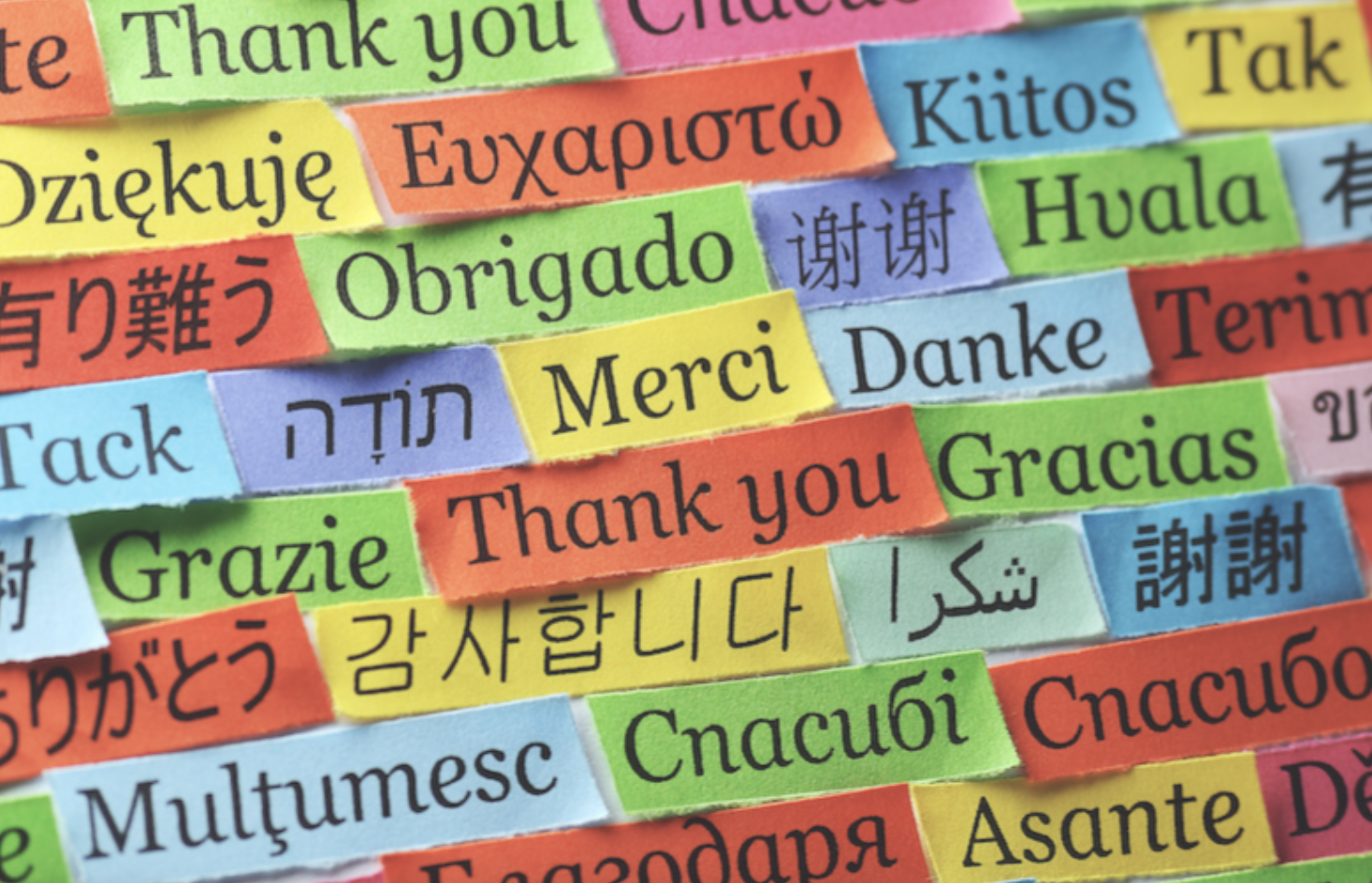
Finally, shout out to Keslande for ending our Pathfinding Series with a (hard to come upon) positive note. In “An A.I. Translation Tool Can Help Save Dying Languages. But at What Cost?”, Madhuri Karak explores the promise of using AI translation tools (like StoryWeaver) to preserve endangered languages. What I enjoyed about this presentation was the emphasis on language as deeply tied to culture, context, and community knowledge. It was plain to see that AI can indeed expand our access, documentation, and revitalization efforts for underrepresented languages. But also, these systems must depend heavily on data and labor from native speakers, raising concerns about exploitation and ownership.
We have completed our Pathfinding Series with a vast yet significant amount of ground covered, in terms of the impact of AI.
Blog #12 due 4/15: An early reflection on your ideas about the final project assignment. Try to imagine (and articulate) an initial plan/direction for each of the assignments. You will attend the workshop next week which assist you in your final plan…
Eaton, S.E. Postplagiarism: transdisciplinary ethics and integrity in the age of artificial intelligence and neurotechnology. Int J Educ Integr 19, 23 (2023). https://doi.org/10.1007/s40979-023-00144-1
Wow! I learned a lot from your thoughtful writings during our break. I think the video discussion which was lead by Dr. Sharma prompted many of you to think of AI through a “pros & cons” lens. In what contexts might it be useful vs. what contexts might it be damaging or destructive to your own growth? Asking pre-use questions could be helpful in discernment: Can this task be done without human empathy? Can this task be done without human creativity? Can this task be done without human judgment? What am I willing to give up in terms of my own agency or authority over certain matters? These are useful questions to run when thinking about tasks at hand and what role AI might play in your own processes. I notice that some of you still seem to be staunch ‘AI abstinence’ advocates, which I find both fascinating and hopeful. Each of us will have to grapple with how, when, and why we might use AI tools, and I do think that a ritual of fine tuning our personal reckoning with certain tools will have to be an on-going process, for everyone.
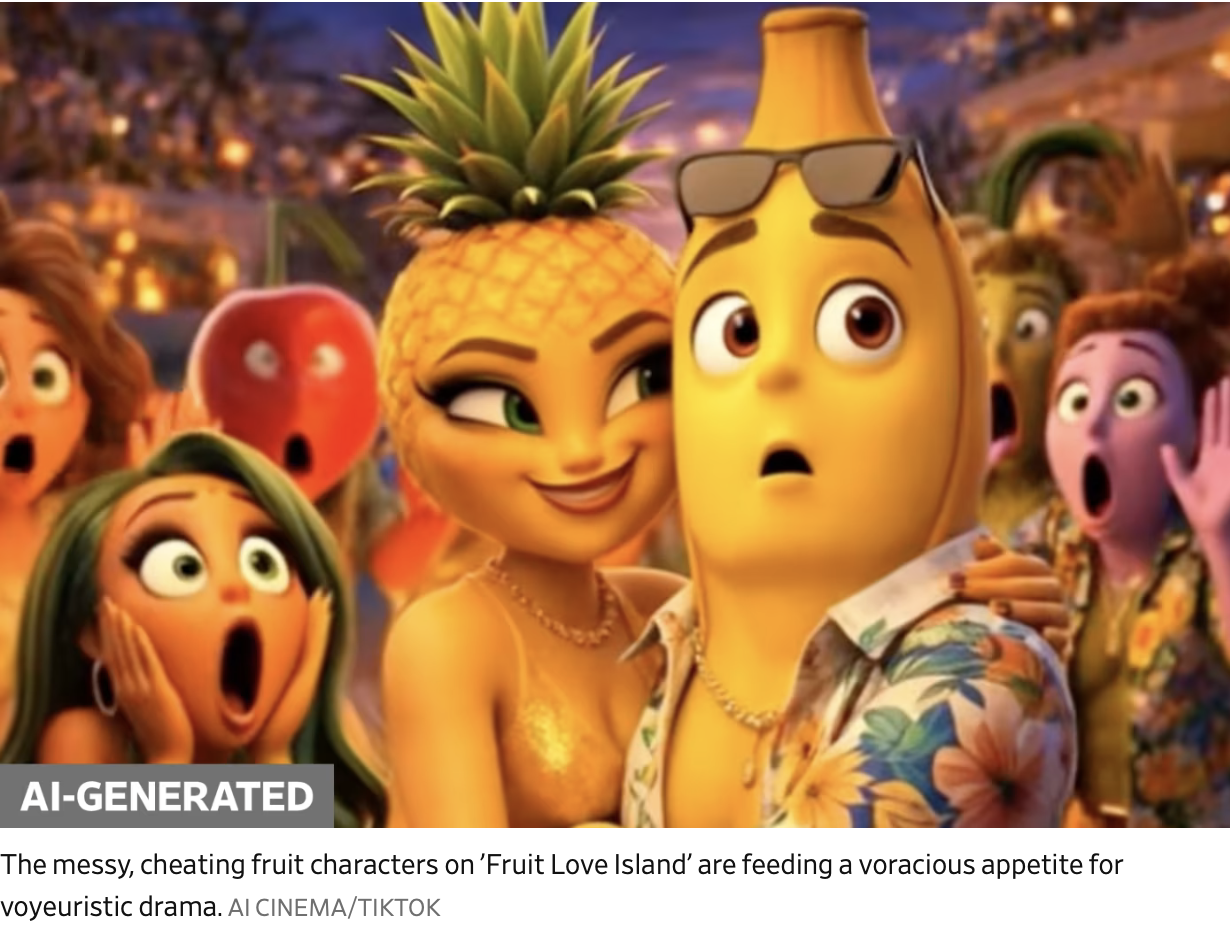
Also, I am flummoxed re: AI Fruit Love island. You already had me on Italian brain-rot and tung tung…but this is… 😮💨… Does someone want to write a critique of what is happening here?
Thinking about burnout!
This week we spoke briefly about the concept of burnout. One main takeaway I hoped to emphasize is that the experience of burnout is not simply individual fatigue, but rather a symptom of civilization running out of rhythm with itself. Burnout is NOT personal failure. It is often structurally produced. Burnout is often produced by institutional pressures. Many of us know well the overwhelm of having to appear calm, supportive, or enthusiastic: we are familiar with suppressing frustration or exhaustion; and we find ourselves “performing” care or attentiveness even when depleted. Slowing down enough to feel the human (and non-human) consequences of our choices is a key to reclamation and health. We spoke about unseen or invisible forms of labor. A profound dissonance occurs in the state of burnout. An internal conflict arrives and takes over between ‘what you feel’ vs. ‘what you’re told’. And people have a hard time sorting this experience of dissonance. In a way, dissonance is what keeps the burn out alive and happening all the time. People accept “the system I depend on is harming me.” But if we can start to question the system, resist harmful norms, and collectively imagine alternatives, we can start to build better (non-burnout) pathways for everyone.
D & D
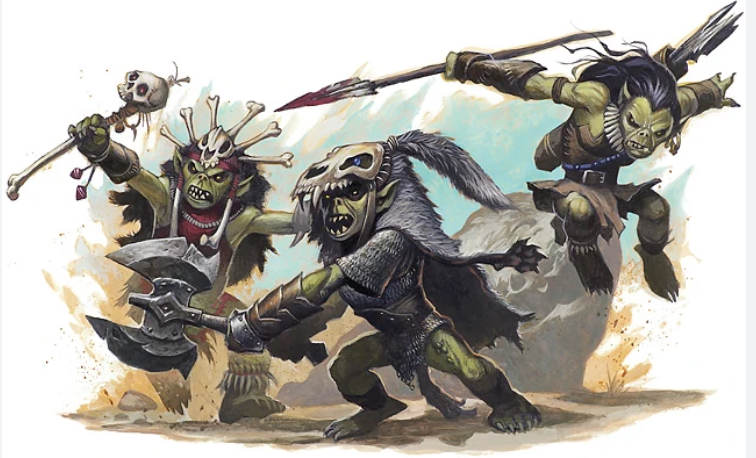
Thanks to CJ for bringing us into the world of D&D!! Dungeons and Dragons is of course the longstanding collaborative storytelling game where players rely on human interaction, unpredictability, and imagination, improvise narratives, and build characters and worlds collectively. We were confronted by some goblins, and we had a short but sweet experience of authentic social play. Fun! This compared to the glimpse CJ shared of the AI Dungeon made it plain to see that the AI route could easily feel scripted, flattened, and “less alive”. In our quick attempt to start a campaign we experienced spontaneous chaos, we doubled down on reading facial expressions (embodied knowledge), experienced mild awkwardness, shared some laughter, …. we able to be silly together. Do we really need our imaginative playtime to be “efficient and productive”? Yuck. CJ thoughtfully highlighted there is a literal cost in making that decision. Double yuck. I wish we had a bit more time because we were just getting started with co-creating meaning together.
The question stands: why would we give up that bit of gold in order to be guided by an invisible system? This short moment with D & D helped us see key connections between community, creativity, and care. And how AI can disrupt this powerful/magical recipe of factors.
Well we have made it to Spring Break week! I believe we could all use a bit of a break, so I am glad we have the week ahead just to recharge. Enjoy a little time decompressing and hopefully we will have some early Spring weather.
Is it personal?
We spoke a bit about the problem of personalization, personification, and even personhood in light of AI. It is hard to believe that so many are willing to forget that AI can never be sentient. And perhaps even more upsetting is the realization that so many are forsaking real human connection due to a perceived personalized connection to the machine. Our human-centric assumptions about AI, and the impulse to treat AI like a predictable, emotionally attuned human are ubiquitous. You all brought up some compelling examples about how this is playing out everywhere. There are many harrowing stories about the personification of AI, and how misleading this can be to vulnerable people during the endemic of loneliness. The US Surgeon General declared a loneliness epidemic in 2023, with ~50% of adults experiencing, and up to 80% of young adults (18-24) reporting, profound loneliness. The ascendency of AI in this midst is clearly not helping.
Class slides
Childhood Development in the Emerging AI Landscape
Thanks to both Alexa and Ebony for sharing a thorough presentation on the challenge of “AI” in the context of early childhood development. They asked us to listen to a HarvardEdCast podcast (with Jill Anderson interviewing Ying Xu about how artificial intelligence may influence children’s learning and development). Their discussion focused on the potential benefits and risks of children interacting with AI tools. Safe to say, we all seemed to agree that AI cannot fully replicate deeper socio-emotional engagement, follow-up questioning, and the intimate connection that come from interactions with teachers, parents, and peers. We were all pretty spooked by some of the current examples Alexa and Ebony shared with us of AI literacy tools that are currently being applied to the early childhood classroom. We spoke about the significance of productive struggle when learning, and that it is often better for children to learn by working through mild difficulty rather than immediately receiving answers. AI can sometimes short-circuit this process if students simply ask for solutions. The deeper question is whether children will still develop these underlying life skills if AI is removed. The podcast Alexa and Ebony selected also opened up a discussion about how AI might affect children’s social norms and politeness. Will the design of a “polite mode” teach our children to be compassionate and courteous with others? We doubt it will have the lasting effect that IRL interaction and lessons from others that care might have.
What is next?
3/11 Spring Break
Next week (3/11) there is no class because it is Spring Break!
Blog #8 based on this material is due 3/25. (You are welcome to do this ahead of time if it works for your schedule better.) **Please write a reflection of your “take -aways” after watching the video “MYFest25: “Researchers Writing With(out) AI”.
3/25 AI’s impact on Community & Care
I will see you in person in our classroom on 3/25. Blog #9 is a reflection on the following readings. It is also due March 25th:
CJ will discuss “Dungeons and Dragons” as a base for going over AI’s impact on communities of care:
Please note two seperate blogs are due on March 25th: Blog 8 & Blog 9.
Have a good Spring Break everyone! I will see you again in our classroom on March 25th, and we will discuss care and community in the context of AI, based on the readings selected for us by CJ.
We have made it to the close of February with another blizzard and some virtual days (while we wait for snow and slush to melt, and fog to lift). I am looking forward to ‘the turn around’ that typically occurs in March. A little less snow, a bit of a warm up, a break, and before you know it, you can sense the oncoming Spring! We are almost there…
More from “Burnout”
We have continued to think about the tension between technology and what it means to be human. Aidan Cinnamon Tea asks us to see burnout not simply as overwork, but as a symptom of severed relationships. The severance can be seen between humans and the more-than-human world, between productivity and care, between speed and attention.
The first group noted the stories that technology and AI as “inevitable” benefit tech companies and institutional “higher-ups,” while teachers and students bear the stress and burden of navigating a newly restructured world. You also seemed to embrace the idea of cultivating AI literacy (knowing when and when not to use it), while shifting emphasis from outcomes and quantification to curiosity, process, and intellectual growth. The second group shared that AI refusal can appear inflexible or become truly isolating, and the notion of “refusal” seemed to you more risky than generative. And the third group reflected on burnout as an overlap with refusal: exhaustion may stem not only from overwork (like grading AI-generated essays) but also from the ongoing tension of navigating, resisting, or defending one’s stance within rapidly shifting AI-integrated academic cultures. Sigh. …Talk about a rock and a hard place.
OECD Framework
Thanks to Michael for opening up a conversation about Empowering learners for the age of AI: An AI literacy framework for primary and secondary education. The OECD’s draft framework sets out a comprehensive AI literacy model designed for primary and secondary education worldwide. At its core, the framework addresses the growing need for students to interpret AI systems and outputs, to work with them responsibly, and to appreciate their societal implications.
This framework represents one of the first global efforts to define what it means to be AI literate. This is not just about being “technologically competent”, but instead, it means being ethically aware and socially informed. Ethical and societal considerations like fairness, transparency, sustainability, and human agency are woven throughout all domains. But it seems that as a whole, you were conflicted and doubtful (based on the surveys Michael took) about whether this could be applied to the current educational landscape. Implementation is really where the rubber hits the road. What the project requires is examples, teaching resources, and professional development for the start of any effective adoption.
In addition, please read: Burnout From Humans: Chapters 7 & 8 (pg. 69-95). **Please listen to the podcast and read the chapters from BFH and then reflect on the material in your weekly blog.
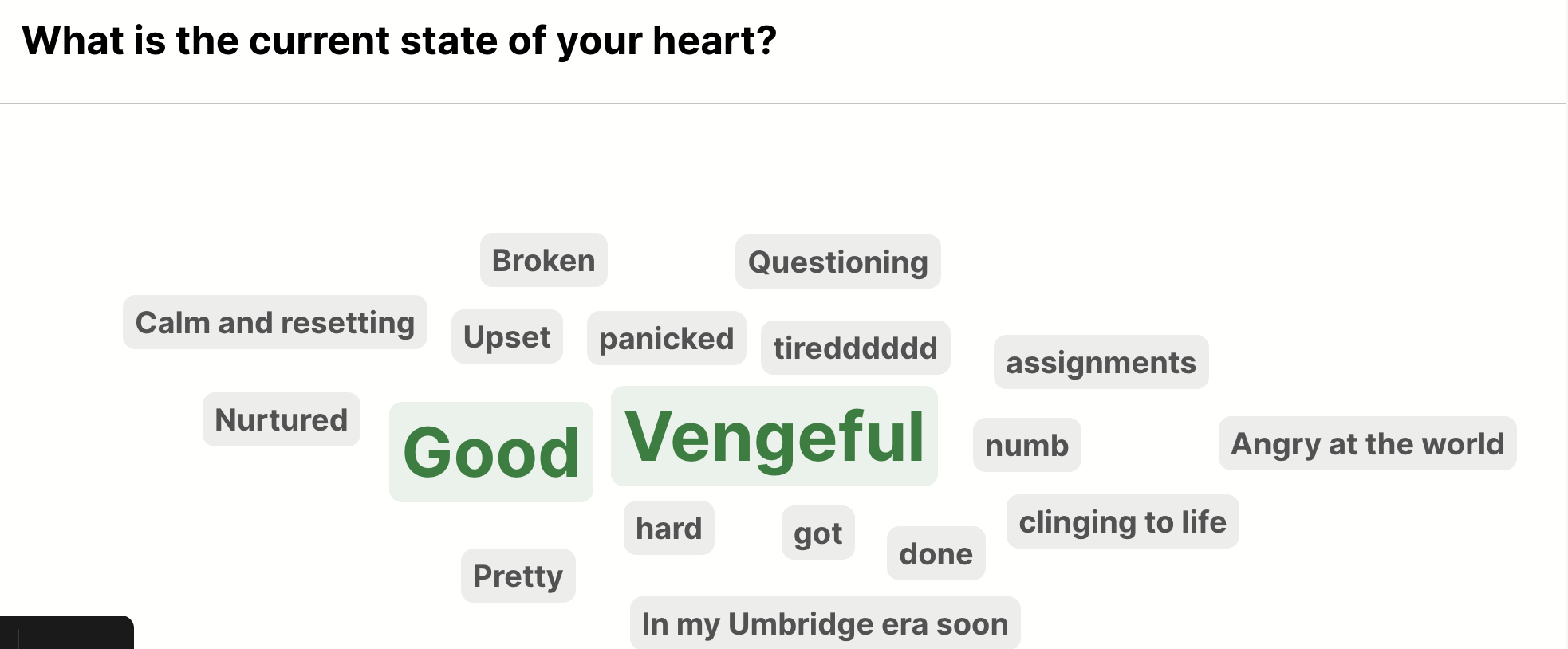
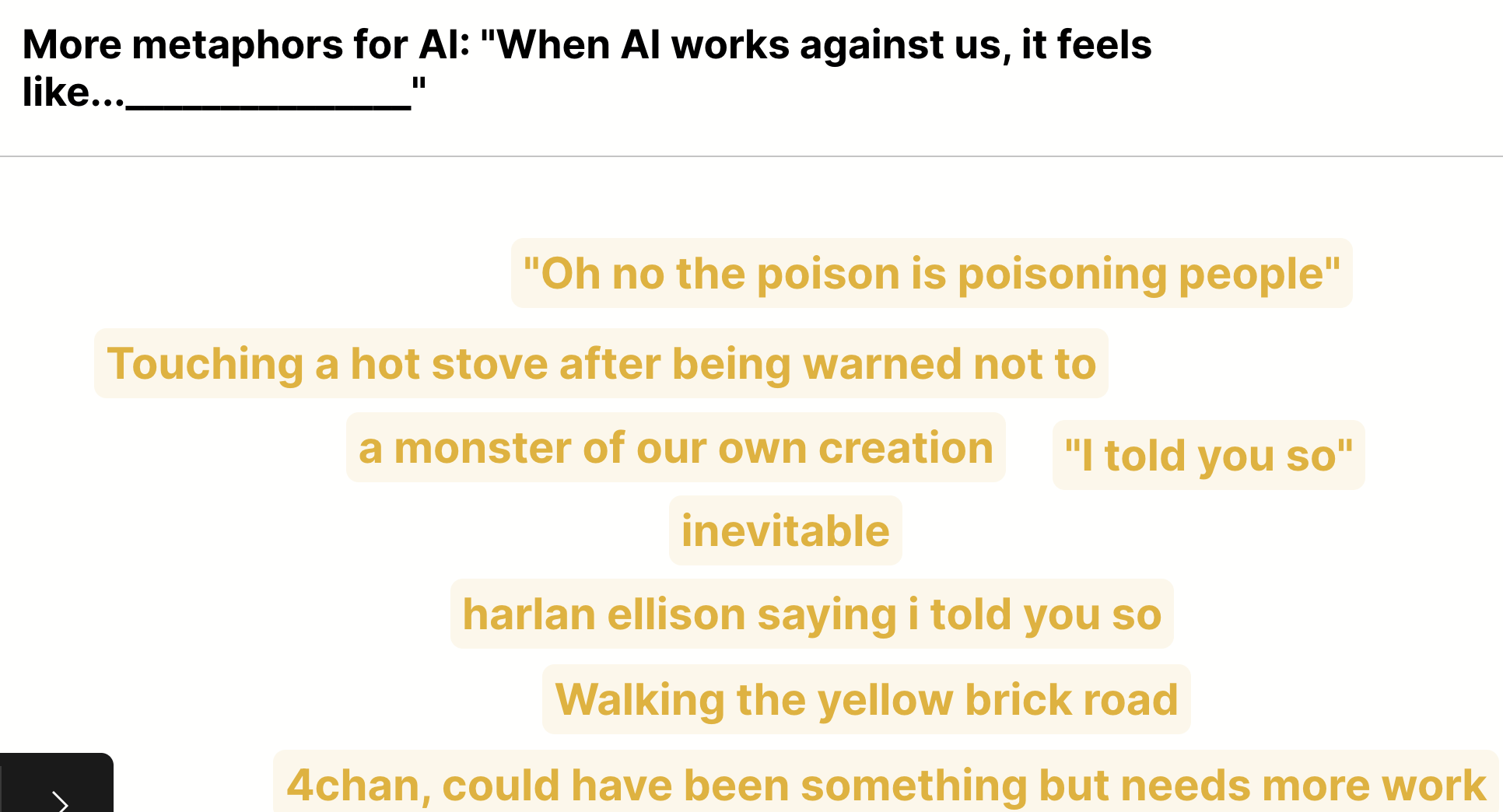
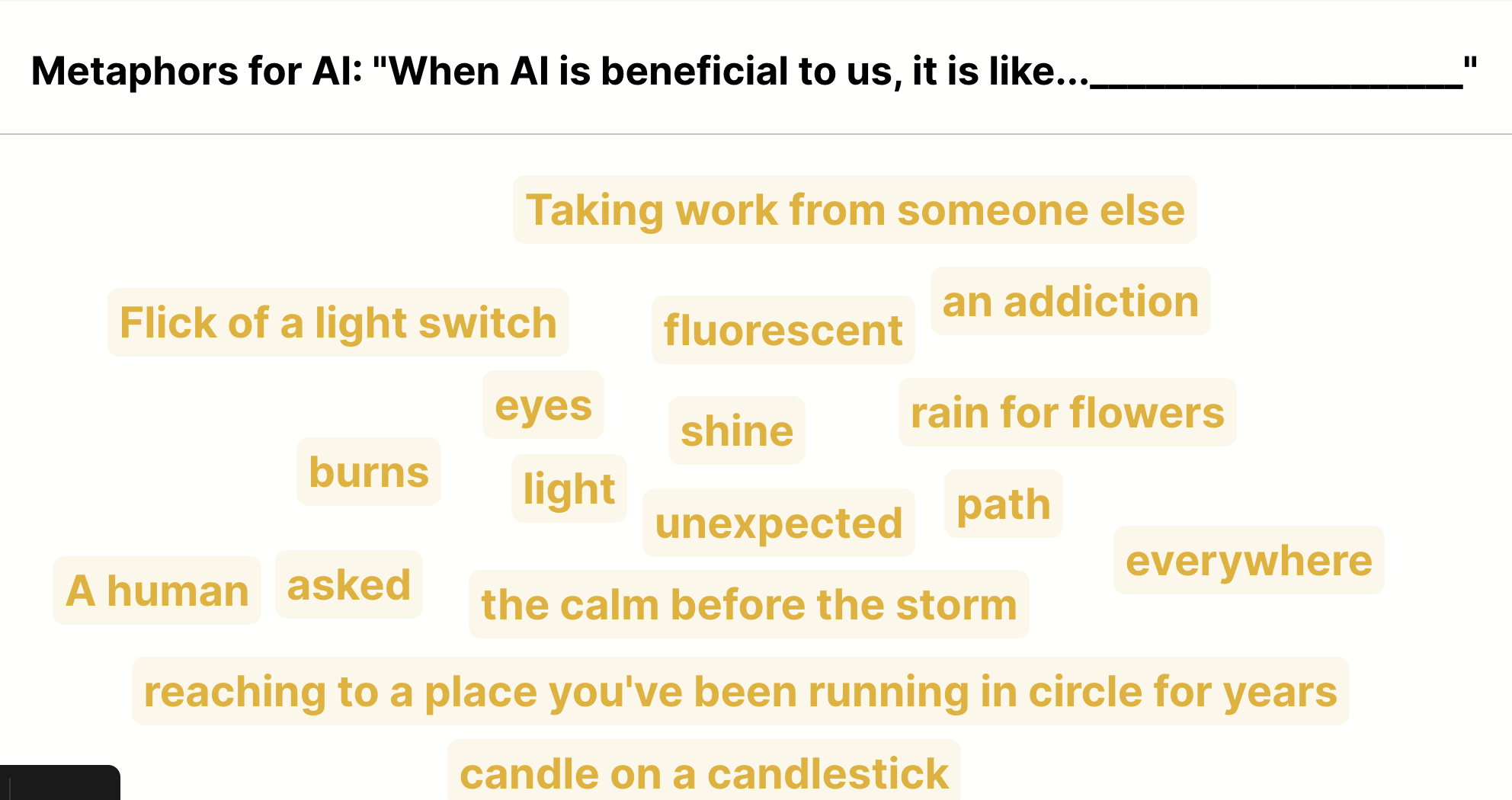
The start of class this week left an impact. You admitted a lot of truly difficult feelings in our anonymous word cloud survey, and even though this unsettles my heart, I truly appreciate your candor and the truth of the human place you find yourselves in.
We know there is no machine or algorithm that can account for our human history, our personal human encounters – all our accrued feelings and the meaning we must sort behind those experiences. I do think we need to get better at apprehending how we truly are, before we can ever venture to learn (either as individuals, and even more so, in community with others). I am glad we took a bit of time to write a bit about the experience of burnout, and to consider what it means to locate burnout in relational networks rather than just inside one’s own fraught heart. I know it is important to connect what we experience individually to a broader systemic lens. It follows that this notion of “self-care”, as a purely individual journey alone, is not working. Self-care cannot be solely an individual endeavor because well-being is shaped by social, institutional, and structural conditions, not just personal habits. And so we spoke together about the idea of “composting harm”.
If burnout is relational and harm must be composted, what new practice might you experiment with this semester? This is about transforming injury rather than denying, bypassing, or simply “moving on” from it. Like organic waste, the harm we experience must be worked through, turned, aired, and metabolized within a community. Composting harm means staying with discomfort, acknowledging complicity, and engaging in relational repair so that what was damaging can become the ground for new forms of accountability, solidarity, and practice. I think that this concept resists the idea that individuals can privately “self-care” their way out of structural harm. Instead, it frames healing and change as ongoing, relational processes that can transform residue into nourishment. But of course, it is troubling that it is Aidan Cinnamon Tea is “the voice” that is urging us to think of it. Can we begin to imagine more just and sustainable ways of being together? Can we embed humanistic values of care into the widespread tools we use to navigate the world moving forward?
What about music?
Thanks to Veronica & Jacob who had us all read “Nick Cave Says ChatGPT’s AI Attempt to Write Nick Cave Lyrics “Sucks.” We started with a simple question. What is music? Together, we thought about this concept of music, and then we considered the role that suffering and loss plays in the process of making meaningful art. And we played a game, attempting to identify what music was machine made, and what music was human made. We agreed that some human made music can be as vacuous as the AI songs that are built from previous sounds arrangements and patterns. What seemed to be at stake in our short game was our ability to “detect the soul” of artistic expression. To our dismay, the game was not so easy to play. So what does this tell us?
We all seem to harbor hope that art isn’t just a set of stylistic patterns that can be statistically reproduced. Rather, it carries subjectivity, lived experience, intention, emotional depth, and meaning in context. Nick Cave’s dismissal of the AI lyrics speaks to the idea that what makes art genuine has to do with human consciousness. That means that our choices, vulnerabilities, our singular perspective hold something sacred to us. And computational approximation is an affront. And it seems clear that we don’t want to play this game of guessing all the time, as we keep trying to live our lives. What choices will we have moving forward?
For next week:
Michael will be our next pathfinder and he will lead a discussion of teaching, learning, and education in the Age of AI. To prep for this conversation, please read:
It was great to resume our rhythm together this week virtually, and now that both Hunter and Nas have established an excellent reference point for our co-created Pathfinding Series, I feel like a certain momentum is building where each of you is contributing uniquely to our overall learning experience.
Our class slides:
I am also pleased we spoke a bit about our “anchor text”: Burnout From Humans. Our course, entitled “The Human Nature of Writing,” asks: Who (or what) writes? Under what conditions? What assumptions about intelligence, agency, and value in writing do we bring to this moment? And it is safe to say that “Burnout From Humans” doesn’t answer these questions directly. Rather, this “little book” unsettles the ground on which we usually ask them. I have chosen to make this our anchor text for this very reason. Some of the ideas it brings to the foreground include the notion that writing is co-emergent, that intelligence is distributed, and that meaning is relationally generated. What might it mean to think like an octopus rather than like a machine? It also asks us to reconsider: what writing is for? It will make us look deeper into our own assumptions about writing, making us step back and ask, “where do I expect clarity, authority, or solutions”? The book dares to ask “what if humans are tired of being human in modernity”? It invites us to notice how we might over-identify with output, how we might commodify ourselves. It makes us think about how we have lost touch with ecological rhythms, and how we prioritize speed over slowness. This “burnout from humans” is a specific fatigue from a version of humanity shaped by late modern capitalism.
Nas also took us straight into the heart of the matter pairing my opening reflections about our “anchor text” with the issue of “brainrot”. Her twine game was a wonderful tour (which actually curated your own insights from your blogs). It also showcased the current crisis of attention fragmentation and cognitive overload, while pointing to the ways one might start to claim agency in this age of algorithmic-driven consumption. What choices do we have moving forward? We are often overstimulated yet unsatisfied. As you all know, brain rot and is not literal brain damage. Rather, it is a subjective experience of attentional depletion (induced within monetized digital systems). It is an experience of emotional flattening that comes with overstimulation. Doomscrolling is ubiquitous. Meme saturation and loss of temporal awareness is endemic. Can we rebuild deep focus muscles? If brainrot is junk food, we really must ask: What numbs me? What is nourishing me? What expands me? As we continue to consider the human nature of writing and our relationship with the digital tools that can assist us in our work (i.e. AI, natural language processing), we should strive to prioritize an ideal state of creative flow verses the numbing affect a kin to a “zone-out surrender”. Welcome to zombie land…or not?
Your to-do list:
Our pathfinders for next week – Veronica & Jacob – ask us to read:
I was smitten with your articulation of what “voice in writing” might be:
“Some of your flavor, mixed with words”
“personality on a page”
“where people can recognize you in a sea of words”
“your authenticity”
“how you get “it” across”
It is such a critical yet elusive aspect of writing, and I think you captured some it so beautifully in class. I also think you considered the question of voice from your own well-earned experience of writing. What is writing, if not thinking in nuanced and refined ways? What is writing, without the communicator’s intention? What is writing without whimsicality and serendipity?
Class Slides
Completing Class Calendar
At this stage you each have confirmed the date for your “pathfinding presentation”. Some of you still need to confirm your contribution (your selection of material to cover in the presentation). Please consider the Reading Roster and determine the theme and content you would like to cover. You can also add readings that are outside our roster (if you feel they will enhance your “pathfinding” direction). For those of you who have not made a selection yet, please look at the comments I have made in the side of the Reading Roster for suggestions. **Please email me the working title and the selected readings that will become the basis for your presentation by next week.
Some guiding questions for us to contemplate together over the course of this semester:
How does AI disrupt a writer’s intention?
As writers, how can we use AI to extend our thinking but not replace our thinking?
What are the ways computational tools and AI might impact our writing?
Is it important to protect a writer’s authenticity and intention? If so, why? What is at stake?
We have lift off!
Thanks to Hunter, we were able to kick off the pathfinding presentation series with a deeper look into the notion of techno-humanism, and we looked towards the author for some clues (and a healthy measure of criticality). Who is designing this future for all? What drives this design impulse (from a few for the many)? Do the tech bros (like Reid Hoffman) really have everyday people in mind when selling their wares in the name of convenience and progress? These will be central concerns from here on in. This article int eh Atlantic by Reid Hoffman suggests that tools have always extended human capacities (from language and wheels to telescopes and AI). This isn’t new. AI is just the latest, most powerful extension. But claiming AI a tool to empower individuals obscures power imbalance. Who controls the technology, who benefits, and who suffers displacement, surveillance, or exploitation? Hunter did a good job pointing out the lessons of history, and revealing that Hoffman is a billionaire whose wealth and influence come from platform capitalism, a system that has often reduced agency for most people. This has unfolded with the ubiquitous reality of precarious work, algorithmic management, surveillance, and winner-take-all dynamics. I am glad we started the pathfinding conversation by lifting the veil on the design promises, and revealing the truth behind them. It is an important critical acumen to take forward from here.
Your to do list:
We are moving on to the phenomenon of “brain rot”! Readings for next week:
1. From Nas:
Yousef, A. M. F., Alshamy, A., Tlili, A., & Metwally, A. H. S. (2025). Demystifying the New Dilemma of Brain Rot in the Digital Era: A Review. Brain Sciences, 15(3), 283. https://doi.org/10.3390/brainsci15030283