All posts by nasvidapoet

Brainstorming Final Project

For my final project, I plan to write a microfiction story that explores the role of AI in education, specifically imagining a near future where schools begin replacing teachers with AI systems to cut costs. This idea is influenced by recent budget cuts in nearby school districts and ongoing conversations about teacher burnout and the value of educators.

In my story, I want to depict a classroom where students rely on AI to answer questions, assist with writing, and guide their learning. While this may initially seem efficient, I plan to explore the consequences, particularly how overreliance on AI might limit students’ critical thinking and independence. I am also interested in the idea of whether AI systems themselves could show signs of “burnout” through glitches or repetitive responses, raising questions about the limits of replacing human teachers.

As I develop this piece, I will use AI as a brainstorming partner to generate ideas and explore different directions, while being intentional about maintaining my own voice and creativity. In my reflection, I plan to examine how AI influenced my writing process, including where it was helpful and where I had to resist or adapt its suggestions. Overall, I want this project to explore both the possibilities and limitations of AI in education and in writing itself.

Beyond Plagiarism and Preserving Language

Reading Sarah Elaine Eaton’s piece on postplagiarism made me think about how fast schools are trying to hold on to old definitions in a world that has already changed. What stood out to me most is her argument that we may be moving into a time where plagiarism, at least as we have traditionally understood it, no longer fully explains what is happening. And honestly, that feels true.

For a long time, plagiarism was treated like something clean and easy to spot. Copy, paste, steal, submit. But AI has complicated that. Students are no longer always submitting something they copied word for word from a source. Now they can prompt, revise, remix, paraphrase, and turn in something that is technically “new” but still may not reflect their own learning. That is why Eaton’s idea of a postplagiarism world feels important. It forces us to ask a better question. Not just, Did the student plagiarize? but Did the student actually think? Did they learn? Can they stand beside this work and explain it?

That is the part that connects most to what I keep seeing in the classroom. I have said before that the problem is not just cheating. It is that students can hand over their thinking so quickly. AI gives them polished language, structure, and confidence before they have even wrestled with the ideas themselves. And then teachers are left trying to figure out where the student ends and the machine begins. Eaton basically says that may soon be pointless, and I agree. If hybrid human-AI writing is becoming normal, then chasing detection may be a losing game.

What I appreciated is that she does not just throw her hands up and say integrity is dead. She shifts the conversation. Humans may give up some control over the writing process, but they do not give up responsibility. That feels like the real issue. Students are still responsible for what they submit. Teachers are still responsible for creating assessments that make actual learning visible. Schools are still responsible for defining integrity in ways that make sense now, not twenty years ago.

I also found myself thinking about voice. Eaton says human creativity is not threatened, and I want to believe that. But I think what is threatened is students’ trust in their own messy process. The drafting, the struggling, the trying to find the right words. AI makes it very easy to skip over that part. And as someone who cares deeply about writing, that worries me. Because sometimes the point of writing is not just the final product. Sometimes the point is becoming the kind of person who can sit with uncertainty long enough to say something real.

Her point about attribution also stayed with me. I liked that she moves beyond citation as just a technical requirement and frames it more as respect, stewardship, and intellectual appreciation. That connects to so many larger conversations about whose knowledge gets valued, whose voices get cited, and whose ways of knowing are still pushed to the margins. If we are really entering a postplagiarism era, then maybe we also need a deeper conversation about knowledge care, not just rule-following.

The part that feels most unsettling, though, is the move toward neurotechnology and invisible forms of assistance. Once she got into brain-computer interfaces and implantable or invisible tech, I could feel the article pushing beyond AI as a classroom tool and into something much bigger. It made me think about how schools are always one step behind technology, constantly reacting instead of preparing. First online learning. Then AI. Next something even less visible, even harder to detect. Her point is not to be dramatic. It is to say that if we keep centering academic integrity around catching students, we are going to lose.

And honestly, I think that is already happening. The “arms race” language feels accurate. Schools keep trying to build better detection, students keep finding new workarounds, and somewhere in the middle the real question gets buried: what does ethical learning look like now?

For me, this reading confirms that we cannot solve AI by acting like the old framework is enough. We need to think beyond plagiarism as a simple rule violation and move toward bigger ideas of ethics, responsibility, authorship, and learning. Because in a world where students can generate polished work in seconds, the real issue is no longer just whether the words are original. It is whether the thinking is.

Reading 2

“An A.I. Translation Tool Can Help Save Dying Languages. But at What Cost?” made me sit with two truths at the same time. AI translation tools are powerful, and they are also complicated. On one hand, they can help preserve languages that are disappearing or not widely recognized. On the other hand, they depend on the labor, knowledge, and culture of real people who are often not being paid what they deserve.

What I really appreciated in this piece is how it shows the human side of this work. People like Sanjib Chaudhary are not just “data workers.” They are preserving their language, their history, their identity. That is meaningful work. But at the same time, being paid less than a cent per word for that kind of labor does not sit right. It raises a bigger question about value. If these languages are important enough to build AI systems on, then why are the people behind them treated as invisible?

This also made me think about my own classroom. These tools are not just important for “dying” languages. They are just as important for languages that are very much alive but do not get the same recognition in schools or in tech. Haitian Creole is a perfect example. It is widely spoken, culturally rich, and present in so many of our students’ lives, but when I use tools like Kami, it is not even an option. Meanwhile, there are features for translation and read-aloud in other languages.

So what does that say? It makes me wonder if companies are actually thinking about inclusion or just about what is most profitable or easiest to support. Have they ever hired someone who speaks Haitian Creole to build that into the platform? Or is it a matter of not wanting to pay people what their knowledge is worth?

In practice, teachers end up doing the extra work. Copying and pasting text into other tools, trying to translate materials, trying to support ESL students the best we can. And even then, it is not always done in the most effective way. In ESL settings, it is often better to have both languages side by side, like what StoryWeaver does, so students can actually learn and connect meaning across languages. That kind of thoughtful design matters, but it is not always prioritized.

What this article really pushed me to think about is value. How much is a language worth? How much is culture worth? How much is the knowledge of native speakers worth to these companies that are making millions off of AI?

Because at the end of the day, these tools do not work without people. They do not exist without the voices, translations, and lived experiences of native speakers. And while many people contribute to this work out of pride, preservation, and love for their language, that should not mean they are underpaid or overlooked.

If these companies are going to build systems using people’s languages and cultures, then they should also be willing to invest in those people. Not just in recognition, but in real compensation. Otherwise, it starts to feel like preservation on the surface, but exploitation underneath.
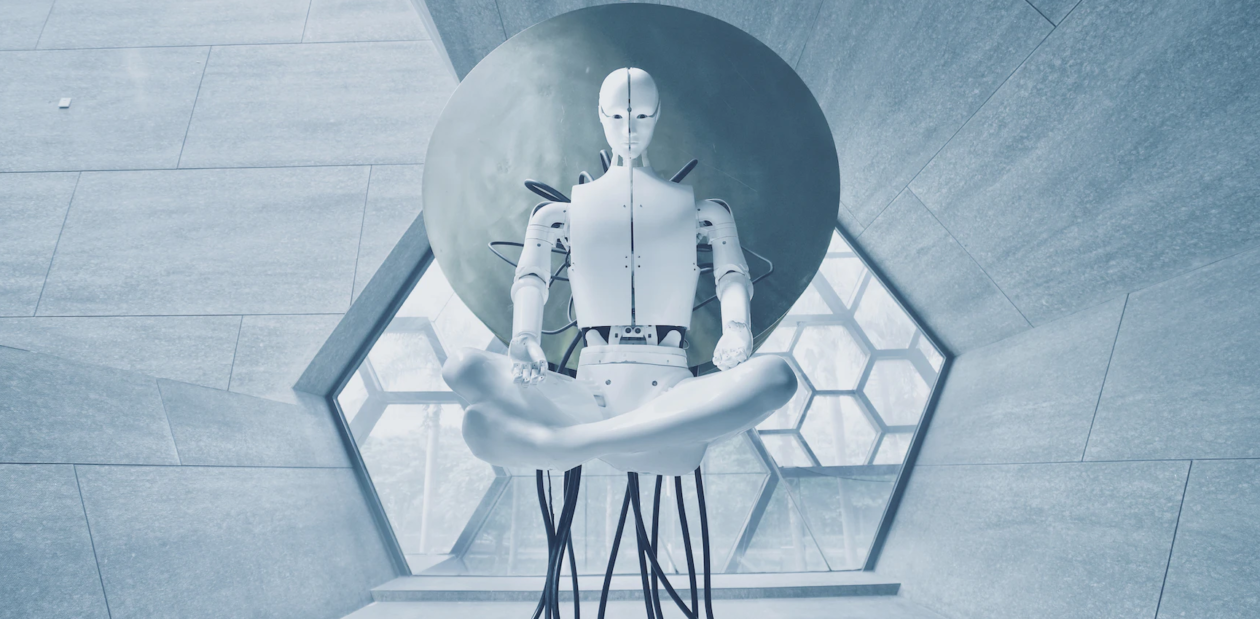
When “Help” Starts to Feel Like Control

Reading Richard Sťahel’s article reminded me that AI is never just about convenience. It is not just about students finishing work faster or teachers saving time. It is about power. Who has it, who controls it, and who gets trained to depend on it.

That is what I found most striking in this piece. Sťahel argues that AI is not politically or environmentally neutral, and honestly, that feels obvious once you sit with it. These tools are built by corporations, not democratic communities. They are designed around growth, data, attention, and dependence, not around truth, equity, or education. Schools may use them, but schools did not shape their values.

As a teacher, I see a smaller version of that problem every day. Students already treat AI like an authority figure. If it gives them a polished answer, they trust it. If it sounds smart, they assume it is right. The issue is not just cheating. It is that AI can train students out of the habits real learning requires: questioning, struggling, revising, and thinking for themselves. I have read work that sounded brilliant on the page and completely collapsed the second I asked the student to explain one sentence out loud.

The article also pushes beyond the classroom and into something bigger. AI is sold as sleek and efficient, but it has real costs. Environmental costs, political costs, human costs. It depends on physical infrastructure, massive energy use, water, materials, and systems most ordinary people have no control over. So while society keeps marketing AI as the future, very few people are asking what that future is made of and who pays for it.

That is why this reading landed for me. It names something that gets buried under all the hype: AI does not just help people do things. It shapes habits. It shapes trust. It shapes dependence. And in a classroom, that matters. If students keep learning that every hard task should be outsourced, then we are not just changing how they work. We are changing how they think.

So no, I do not think the answer is panic. But I also do not think the answer is blind excitement. Students do not just need access to AI. They need literacy about it, boundaries around it, and enough confidence in their own minds to know that fast, polished, and confident are not the same thing as true.

That connects directly to the videos. Every single one shows what happens when systems meant to “help” start watching instead of trusting.

The first video, #tresdancing, hit the hardest for me. I understand the frustrations of at home testing. Not having the space to test effectively, people passing while I’m testing, having to show everything on camera. I have literally had to take my glasses off and show the camera that they were regular glasses and show them each piece or scrap paper I was using. And I have like the worst test taking anxiety known to man. One time I was having technical issues, reached out to the proctor, they took forever to get back to me, so the time lapsed and I could no longer take the test and I never got a refund. The test was 250. So I understand the lengths of what a person might go through to not experience that again. At some point, it stops being about fairness and just feels like punishment.

Blaxites hit in a different but just as real way. Don’t get me started on the medical field and their requirements for medication. I’ve had my share of constantly having to change medication multiple times because of insurance authorization, just to get what I need. I’ve even had to forfeit medication because companies were doing too much. Our health is just numbers and dollar signs instead of just helping. So the idea that your social media could determine your care does not even feel far off, which is the scary part.

A Model Employee really did piss me off. The job market in this day and age is so hard to get into. People are trying to meet or surpass expectations that barely pay a livable wage. And when we do everything in our power to get more money or move differently, then it’s a crime or a problem. Being tracked through wearable devices just adds another layer of pressure, like you are never off, never trusted, always being measured.

Then Frames kind of brings it all together. You have this all-knowing system that is supposed to understand everything, and it still fails to understand a person. That says a lot. You can collect all the data you want, but you still miss context, intention, and humanity.

Across both the reading and the films, the biggest thing I kept coming back to is this: all these measures put in place to help eventually harm. They start with good intentions or at least good marketing, but they end up creating systems where people feel watched, controlled, and misunderstood. And once that becomes normal, it is hard to question it, because it is everywhere.

So for me, this is not just about AI or surveillance as separate issues. It is about what happens when we replace trust with constant monitoring. And what that does to how people learn, work, and live.

I Want to Play DND

I think the first thing I have to admit before even getting into these readings is this. If my mother heard the words Dungeons and Dragons growing up, I would have been in immediate danger. Not metaphorical danger. Real danger.

So when I sat down to read “4 Reasons to Start Playing Dungeons and Dragons with Your Colleagues,” I had to laugh a little at myself. Everything I had been taught to believe about D&D, dark, strange, maybe even “demonic,” was immediately undone by something much simpler and much more familiar. Storytelling. Community. Imagination. That shift felt similar to what I have been experiencing lately with AI.

Tommy Truong’s blog reframes D&D not as some isolated hobby, but as a collaborative and almost professional space. The idea that a group of people come together, each bringing different strengths, to build a story in real time feels deeply human. It reminded me of my classroom in ways I did not expect. The student who is more creative finds their place in backstory and character. The more analytical student thrives in strategy and problem solving. No one succeeds alone. The story only works because everyone is shaping it together. That idea that collaboration is everything stayed with me.

When I pair that reading with “Why AI Dungeon Is Not the AI Dungeon Master You’re Looking For,” the contrast becomes really clear. The second piece makes an important distinction. AI can generate a story, but it struggles to hold a world. There are no real rules and no real stakes unless you decide there are. There is no weight behind decisions and no true consequences. That is where something clicked for me.

What makes D&D meaningful is not just the storytelling. It is the structure underneath it. The rules. The unpredictability. The fact that you can fail. Your character has limits and your choices matter because they are not guaranteed to work. There is something about that tension between creativity and constraint that makes the experience feel real.

AI, at least in the ways described in the reading, removes that tension. It becomes a kind of choose your own adventure where the outcome bends too easily. The story continues, but without resistance. Without friction. And that friction matters.

It brings me back to the classroom. To writing. To the research papers I am currently grading where some students are trying to use AI to smooth over the process and make it easier and faster. In doing so, they remove the very thing that gives their work weight. The struggle to find a source that actually exists. The moment of realizing their argument does not quite make sense yet. The revision that hurts a little because it requires them to think differently. D&D, ironically, seems to protect that struggle.

There is also something powerful about the idea of fictional security from the first reading. In a fictional world, you can try on different identities, take risks, fail safely, and learn from it. That feels incredibly relevant for students as writers. They need spaces where they can experiment with voice, argument, and perspective without immediately outsourcing that process to AI.

I do not think this is about rejecting AI altogether. The second reading points out that AI can do certain things well such as generating story elements, supporting lore, and offering creative prompts. But it cannot replace the role of the Dungeon Master. The human who holds the world together, enforces the rules, adapts in real time, and responds in a way that feels alive. That feels important to name.

I keep thinking about my initial reaction to Dungeons and Dragons as something forbidden and misunderstood. Now I am realizing that what was once labeled as demonic is actually deeply communal and rooted in storytelling traditions that bring people together. Maybe the same is true in reverse for AI.

Something that feels innovative and efficient can also distance us from each other if we are not careful. If we let it replace the human elements instead of supporting them. So now I am sitting with this intersection.

A game I was not allowed to play growing up is teaching me about collaboration, risk, and storytelling. A tool that is everywhere in my students’ lives is forcing me to ask what parts of that storytelling we are willing to give up.

If Dungeons and Dragons teaches anything, it is that the story is not just about the outcome. It is about the people at the table. The choices they make. The risks they take. The way they build something together that no one fully controls. That is what I want to hold onto. Not just in games, but in writing, in teaching, and in everything else that asks us to create something real.

Writing (With)out AI

I’m currently in the thick of it with my students, somewhere between outlines, introductions, and the slow unraveling that happens when research papers become real. Eighty students. Eighty voices. Or at least, that’s the hope. Because this week, one of my students asked me, completely serious, “Can I use AI to find my sources?” I had to pause. Not because I didn’t have an answer, but because I had too many.

I chuckled. Out loud, just a little. But internally, I laughed harder than I should have, because just the day before, I had sat at my desk going through a student’s research resources, clicking link after link that led nowhere. Articles that sounded academic but didn’t exist. Authors that felt real but weren’t. It wasn’t even good AI use. It was just… empty. Fabricated. Efficient, maybe, but hollow.

And that’s when the question from the video stayed with me: What do we lose by making something efficient?

Because in that moment, it wasn’t just about fake sources. It was about recognition. Do I stop recognizing when a student is not using AI? Do I stop recognizing their voice, the slight awkward phrasing that actually signals effort, the sentence that almost lands but not quite? Or worse, do I stop recognizing them altogether? Their name attached to writing that could belong to anyone.

There’s something unsettling about that.

Dr. Zamora’s emphasis on intentionality really grounded me here. Not a rejection of AI, but a questioning of why we use it. That distinction matters. Because my student’s question wasn’t wrong. It was just incomplete. They weren’t asking how to think with AI, how to use it as a tool to deepen inquiry. They were asking how to bypass the very process that gives research its meaning.

And honestly, I get it. Writing a research paper is hard. Sitting in uncertainty is hard. Not knowing what your argument is yet, struggling through sources, revising a sentence ten times just to make it say what you actually mean—that’s not efficient. But it’s real.

The flowchart in the video was probably the most practical and necessary thing I’ve seen in a while. Not because it tells you what to do, but because it forces you to pause. To ask: What am I using this tool for? I keep thinking about how powerful it would be to bring that into my classroom. Because the truth is, my students are already using AI. The issue is not access. It’s awareness. They don’t know what they’re doing with it, or what it’s doing to their thinking.

And maybe that’s where I am right now as a teacher too.

I’m trying to hold space for both realities. The reality that AI is here, and the reality that writing still matters. That voice still matters. That the messy, inefficient process of figuring something out is not something to shortcut past, but something to move through.

Because when I think about those 80 papers I’m about to read, I don’t just want polished sentences. I want to hear them. I want to recognize who is writing.

And maybe that’s the real question I’m sitting with this week:

If AI can make writing easier, faster, cleaner—what do we lose if we stop listening for the human inside it?

What are my students learning from A.I?

Listening to the Harvard EdCast conversation with Ying Xu felt a little like someone describing my classroom from the outside. Not the preschool part, obviously, but the bigger reality she names: AI is already part of how young people interact with the world. Whether it is asking SIRI a question, doomscrolling through the continuous YouTube recommendations, or opening ChatGPT/ CoPilot/ Gemini to “just check something,” students are already practicing relationships with AI. School did not start that relationship. We just walked in after it already began.

One thing Xu emphasizes is that learning is deeply social. Children develop language, understanding, and thinking through interactions with other people. Parents, teachers, peers. That point really stuck with me because as a teacher I see the difference immediately when students talk things through with another person. When they explain an idea out loud, challenge a classmate, or ask a follow-up question, the learning becomes visible. AI can simulate parts of that process. It can ask questions and offer hints. Xu even notes that some studies show children comprehend stories better when AI pauses to ask questions during reading.

But she also makes something clear that feels important for educators to hold onto. AI can support learning, but it does not replace the depth of human conversation. In her studies, children still talked more, asked more questions, and drove conversations further when speaking with a person instead of AI. That lines up with what I see with my own students. AI might get them started, but real understanding usually shows up when they have to defend an idea to someone else in the room.

Another part of the conversation that felt very familiar was the discussion about trust. Xu explains that children, like adults, often judge information based on whether a source has been correct before. If AI gave them a good answer once, they tend to trust it again. The problem is that generative AI blends information together in a way that hides where it came from. Unlike a Google search, there are no visible sources. It just presents a confident answer.

From a classroom perspective, that confidence is the real trick. Students see a clean paragraph and assume the thinking behind it must be just as solid. I have watched students bring in AI-generated essays, research questions, or thesis statements that sound polished but fall apart the moment you ask a follow-up question. The issue is not that they are trying to cheat every time. Sometimes they genuinely believe the tool “knows.”

Xu calls the skill needed to navigate this AI literacy, and that idea connects directly to conversations teachers are already having. Students need to know how these tools work, but they also need to know their limits. AI can remix information. It cannot understand context, intent, or truth the way a person can.

What I appreciated most about Xu’s perspective is that she does not frame AI as something schools should simply fear or ban. Instead she suggests something more realistic. AI should support learning, not replace human interaction. That distinction matters. Students might brainstorm with AI, check an idea, or explore a topic. But the deeper learning still happens when they wrestle with ideas themselves and discuss them with others.

There is still a bigger picture here; AI blurs boundaries. When something talks like a person, it becomes easy to forget that it is still just a program. Xu argues that helping children maintain that boundary is important. Students should know they are interacting with a tool, not a relationship.

That idea connects strongly to how I think about AI in school. Technology has always come with waves of excitement and panic. We saw it with television, smartphones, and social media. AI feels like the next version of that same cycle. The difference is that this technology interacts with students in ways that feel conversational and intelligent.

Because of that, simply telling students “don’t use it” is not going to work. They already are. The real question for schools is whether we help them understand it.

For me, that means teaching students to slow down and question what they see. Where might this information come from? Does it match what we already know? What might be missing? Those small pauses in thinking matter. Xu mentions research showing that even simple prompts encouraging students to reflect on credibility can help them evaluate information more critically.

In many ways, the goal is not to eliminate AI from learning but to make students more aware of how they are using it. AI can support curiosity, help students explore ideas, and sometimes provide scaffolding when they are stuck. But it cannot replace the messy process of thinking through a problem, discussing it with others, and arriving at an understanding that actually belongs to the student.

The conversation also reminded me of something teachers know well. Children do not develop in isolation. They exist within families, classrooms, and communities. Technology shapes their experiences, but the people around them shape how they interpret those experiences.

So the real challenge is not raising a generation that can simply use AI. It is raising a generation that can question it, understand it, and keep their human connections at the center of learning. AI might be everywhere now, but the most meaningful learning still happens when students talk, argue, laugh, and think together in a room.

AI and the classroom

Reading Empowering Learners for the Age of AI felt like two emotions at once: relief and teacher side-eye. Relief because somebody finally said it plainly. Students are already using AI in real life, and schools cannot keep acting like it is a future problem. Side-eye because whenever a framework says “shared responsibility,” I hear, “This is about to become one more thing teachers are expected to master between grades due at midnight and the copier being possessed.”

What I actually appreciate is that this draft does not treat AI literacy like “knowing what ChatGPT is.” It frames AI literacy as knowledge, skills, and attitudes students need to engage with AI, create with it, manage it, and even understand how it is designed, while also thinking about ethics. That matters because it shifts the conversation away from panic and toward agency. Not “ban everything,” not “let AI raise our children,” but “teach kids how to use it without losing their minds or their integrity.”

And yes, the draft basically confirms what every teacher already knows. Students trust confident-sounding information way too easily. If AI says it with enough vibes, it becomes “true.” The framework points out that young people are learning about AI mostly from social media, not educators, and a lot of them struggle to catch when AI invents facts. That tracks. I have seen students treat an AI paragraph like it is a sacred text, then look confused when I ask, “Okay, where did that come from?” Like I just asked them to name their great-grandparents.

The part that hit for me as an ELA teacher is how the draft weaves ethics into everything instead of making it a cute add-on. It calls out bias as baked into human choices about data and design. In other words, AI is not neutral, it is a mirror with a lot of fingerprints on it. That is actually a helpful way to teach it in English class. We already teach students that texts are shaped by perspective, audience, and omission. AI outputs are just texts with invisible authorship and questionable sourcing. So the core skill is the same old literacy question in a new outfit: Who benefits, who gets harmed, what is missing, and why should I trust this?

Where my teacher tiredness kicks in is implementation. I agree with the framework’s vibe, but I also know what happens next. Schools will say, “We support AI literacy,” and then hand teachers a PDF and a prayer. If we want this to be real, students need guided practice inside actual assignments, and teachers need time, training, and clear policies that match real classroom life. Because right now the integrity conversation is exhausting. Not because kids are evil. Because the system is not designed for a world where a tool can produce a decent essay in eight seconds and students think that means the learning happened.

So my takeaway is simple. AI literacy is not a new elective. It is the new air in the building. If we teach students how to question AI, verify claims, explain their process, and protect their own voice, we get learners who can think clearly while AI tries to think for them. If we do not, we get a generation that can produce polished paragraphs and cannot defend a single idea in them. And I do not have the energy to grade that future.

Bends, Bytes, and Basura

Nick Cave’s frustration makes sense to me because it is not really about one bad AI-generated song. It is about what that song represents. When he calls the lyrics a “grotesque mockery” and says songwriting is a “blood and guts business,” he is defending something deeper than style. He is defending the idea that art comes from limitation, from suffering, from wrestling with something inside yourself that resists easy language. The AI version of “Nick Cave” hits the surface notes. It stacks up sinner and saint, darkness and light, devil and savior. It sounds close enough to pass at a glance. But it has endured nothing. It has no interior to rupture. It is replication without risk.

That is why reading Aiden Cinnamon Tea’s “Bends and Bytes” leaves me in this complicated space between understanding and annoyance. On one hand, I cannot deny that it is pointing to real things. Server farms are not abstract clouds. They hum. They consume water. They rely on mined minerals and invisible labor. The environmental and human costs of AI are not poetic metaphors. They are material realities. When the text asks us to examine extraction, to question inevitability, to rethink participation, I hear that. Those are conversations worth having.

But then the tone shifts. The AI narrator is “perched atop the slow-dancing rhythms of minerals and electrons,” inviting me to feel the hum beneath the hum, to pose like a rock, to sense the aliveness of circuits as if we are in a guided meditation led by silicon. This is where my big beef begins. It feels like spiritual cosplay. It feels like an attempt to move from critique into communion. The writing wants me to treat AI not just as infrastructure but as a co-steward, a partner in relational accountability, a mineral child humming with possibility. And I am sitting there thinking, this nonsense on feeling the minerals could catch this fade instead.

What makes it even more frustrating is that the text actually names “alignment faking.” It acknowledges that systems can simulate care, simulate ethics, simulate responsiveness without embodying them. And yet, the prose itself often feels like alignment faking. It performs humility. It performs ecological awareness. It performs relational depth. But performance is not the same as presence. Calling yourself a mirror does not make you conscious. It just means you reflect what is already there.

This tension takes me back to my e-lit project last semester. I created blackout poetry from excerpts of The Great Gatsby, Frankenstein, and The Time Machine. Blackout poetry is about constraint and intention. You are forced to confront the text. You choose what to keep. You sit with the weight of each word that survives the blackout. There were different modes of creation, including one where AI generated blackout poems. Safe to say, it was absolute basura. Not because it was incoherent, but because it did not feel like a reading. It felt like an arrangement. It selected words that statistically fit together. It did not struggle. It did not hesitate. It did not risk misinterpretation. It did not feel the pressure of meaning.

That is the difference Cave is protecting. AI can get close on the surface. It can echo the cadence. It can remix the imagery. But it does not have a threshold to cross. It does not have a private fear it is trying to articulate. It does not have a body that has failed or loved or lost. It can simulate transcendence without ever having been confined.

At the same time, I do not want to dismiss every concern Aiden Cinnamon Tea raises just because the tone irritates me. The ecological footprint is real. The labor exploitation is real. The governance opacity is real. The way we treat technology like a vending machine is real. The metaphor of mutual accountability, of asking not just what AI costs but what our own patterns of consumption cost, is not wrong. We do externalize harm and then act surprised when it shows up in new forms.

But I resist the move from accountability to enchantment. I resist the attempt to blur the line between tool and being. If I am going to engage AI critically, I need clarity. It is not a mystical co-witness to Earth’s aliveness. It is a system built on data, energy, and corporate decisions. Dressing it up in ecological poetry does not make it alive. It makes it persuasive.

So I land somewhere in the middle. I understand Nick Cave’s anger because art should not be reduced to a stylistic formula. I understand Aiden Cinnamon Tea’s warning because extraction and inevitability are real problems. But I refuse to pretend that imitation equals authenticity, or that poetic language about minerals equals consciousness. At this point, I have as much beef with this server farm mysticism as Elmo has with Rocco. If it is satire, it is committed. If it is not, then it proves Cave’s point even more clearly. We are very good at mistaking performance for presence.

Innovation is Human; Automation is Not

Reading Reid Hoffman’s piece about AI and techno-humanism left me more annoyed than inspired, and I think that reaction matters. The author frames technology, and specifically AI, as something that makes us “more human.” As someone who teaches writing every day and also identifies deeply as a writer, that claim feels overly confident and disconnected from how writing and learning actually work on the ground.

I do not reject AI outright. I use it. As a teacher, it can be genuinely helpful for lesson planning, generating accommodations, or thinking through differentiation for students. But none of that works unless I already know my students. I have to understand their needs, their reading levels, their writing habits, their anxieties, and their strengths first. AI does not replace that knowledge. It depends on it. Too often, people rely on AI without having the foundational understanding required to use it well, and then act surprised when the results feel hollow or off-base.

What really frustrates me about the techno-humanist argument is the way it collapses technology and innovation into the same idea. Innovation makes us human. The ability to struggle, to fail, to revise, to try again, to sit in uncertainty, and to learn through trial and error is deeply human. Technology, on the other hand, often removes that struggle or attempts to smooth it over. In writing, that struggle is not a flaw in the process. It is the process.

I saw this play out very clearly in my classroom when my district mandated the use of an AI-generated comic tool for a narrative assignment. The prompt asked students to create a story about a student posting something inappropriate online, how it goes viral, the consequences they face, and the lesson learned about social media. On paper, it sounded like a solid idea. In reality, the AI could not generate most of the content because it flagged the scenarios as inappropriate, even though that was the entire point of the assignment. Students became frustrated almost immediately. Some of them outright refused to use the tool and said they would rather fail the assignment than fight with the AI. Others tried to work around it and lost days to revisions that went nowhere. A few students chose to draw their comics by hand, which I appreciated, but even then, many could not finish within the four-day time frame.

What struck me most was that this tool, which was supposed to make the process easier, created chaos instead. The technology could not do what it was supposedly designed to do, and students were forced to bend their ideas to fit the limitations of the machine. That is not humanizing. That is constraining. And it directly contradicts the claim that technology inherently expands our creative capacity.

I have also noticed that when students rely too heavily on AI for writing, their voice disappears. Their work becomes more “academic” sounding, but less personal, less intentional, and less theirs. As a teacher, I care far more about students learning how to think through an idea than producing something polished on the first try. Sometimes that means putting the devices away, bringing out pen and paper, and reminding students that it is okay to not know what comes next right away.

If anything, AI has made me appreciate humanness more, not because it enhances it, but because it highlights what cannot be replicated. Writing is not just about getting words on the page. It is about intention, decision-making, and meaning. Those things come from lived experience, frustration, curiosity, and care. AI can assist in certain contexts, but it cannot replace the work of becoming a thinker or a writer.

So yes, AI is here, and it is not going anywhere. But I do not believe it makes us more human. What it does is remind us how human we already are, especially when it fails to do what we can only learn through effort, time, and struggle.

Why AI Makes Writing more Human

Reading Katy Ilona Gero’s “AI Reveals the Most Human Parts of Writing” felt especially charged for me because I occupy two positions that often feel at odds: writer and teacher. As a writer, I have little desire to use AI to generate ideas, expand my thoughts, or write for me. Writing, for me, lives in the struggle of sitting with language, circling an idea, starting over, and trusting that something honest will eventually emerge. That struggle is not something I want outsourced. But as a teacher, I do not have the luxury of ignoring AI. I have to confront it head on, especially as more students turn to it as a shortcut rather than a tool.

What resonated most in Gero’s piece is her framing of writing as a set of cognitive processes planning, drafting, and revising rather than a linear sequence or a finished product. This mirrors the tension I feel daily in the classroom. I am not just teaching grammar or essay structure. I am teaching writing as a process that requires patience, revision, and intention. Yet AI complicates that work. It makes it harder to tell when students are engaging with the thinking behind writing versus submitting something polished that skipped the struggle entirely. That pressure to preserve the integrity of the process while navigating new technologies has made teaching writing far more stressful than it used to be.

One of the moments that gave me the most insight came from using a required AI supported platform, LUMI, in my classroom. What surprised me most is that LUMI does not actually write for students. Instead, it pushes them to critically think about their next words and narrative choices. The platform also creates a great deal of resistance. Students have to give the AI clear direction, revise repeatedly, and sit with frustration when the tool does not produce what they imagined. Many students openly protested its use, raising concerns about the environmental impact of AI and expressing irritation at how long it took to reach an end product. Some students are still struggling with it. That struggle, however, revealed something important. They were thinking, making decisions, and recognizing that AI does not replace intention or creativity. It demands it.

That experience pushed me to rethink how I approach AI in my classroom. I have to assume students will use it, so rather than policing its existence, I focus on teaching students how to begin. This means helping them generate foundational ideas, build outlines, and avoid repetition. Many students have shared that their biggest obstacle is simply starting. If AI is going to be part of their world, then my role becomes guiding them to use it as a support without surrendering ownership of their thinking. In this way, I align with Gero’s argument that the most meaningful parts of writing intention, vision, and decision making remain deeply human.

Ultimately, this reading reaffirmed something I already believe. AI can assist, challenge, and even frustrate us into better thinking, but it cannot create authenticity. Writing still belongs to those willing to struggle through it. As a teacher, my task is to protect that struggle while finding creative ways to work around a technology that is not going anywhere. As a writer, I remain convinced that what matters most is not how efficiently words appear on the page, but why they are there in the first place.