Tag Archives: AI

Some we hit, some we miss

Hey! This is my missed blog. It still comes a bit short because I didn’t have time this week to finish the plagiarism article, but here’s what I have to say about the AI dying languages tool:

I think this article shows the importance of having access to dying languages AI tools, its long-term impact on the language, culture, and its people, and by addressing the fact that the data collected often comes from exploitative means.

The article explains that “This type of monotonous ‘ghost work’ takes on an emotional dimension in the context of language preservation,” and it’s absolutely true. We see it happening in many monotonous jobs. The human spirit dies with “tedious repetition” even when working a regular retail job. The difference is that, when working to preserve your own language and culture, people also feel a sense of hope for the future of their culture and pride in taking action in preserving their language, which ultimately fuels employees with a strong motivation to keep working. One that is emotional and historical, rather than exploitative or capitalist.

Though the development of dying languages AI tools may be “motivated by commercial profit, social impact, technological innovation, or a mix of all three,” for the native speaker, it is exciting, even when the pay they receive is significantly lower than it should be.

The article is successful in showing us how bad the employees’ pay is in U.S. dollars, but fails to demonstrate a clear understanding of the currency exchange rates. Often, I see first-world countries complaining about the low-wage job exploitation in third-world countries, but without them even knowing what that money represents for the employee.

Everyone says, “close fast-fashion third-world-warehouses for they exploit the employees.” Okay, and then what? Thousands of local workers lose their jobs and their ability to sustain themselves and their families. $243 is nothing for an American — maybe that’s just their electricity bill, but for countries where the currency exchange favors the U.S. dollar, that same amount pays for the rent, gas, utilities, insurance, school tuition, food, and entertainment.

I think it’s too easy to just say “pay them more money or close the factory” when a whole economic analysis that focuses on currency exchange rates and socio-cultural phenomena needs to exist to actually propose an alternate method.

THinking About the Final Project…

The three choices we have for the final project are all equally tempting. But if I had to pick, I’m definitely drawn to either the AI confession or the microfiction.

The AI confession would allow me space to reflect on all my interaction with AI. The ones I’ve played an intentional role in at least. This is something I consider important as we move further into a completely embedded AI world. I think what has been hardest to accept is that I really have no choice but to get with the times. That doesn’t necessarily mean I will be using AI at every stop in my day, but more like, I can’t be angry forever, I must be compassionate, and I must focus on how this can work for the better (someday). That acceptance and non-judging attitude is very conditional as things continue to unfold (the cons will just simply never outweigh the pros). 

Now, the microfiction really did intrigue me. I’ve had experience with writing speculative fiction before, and I’ve learned it’s definitely not my favorite genre to write. But as this project direction asks me to use AI as a collaborator when crafting my story, it makes me curious about potential outcomes. I wonder if that “partnership” will help or further hinder my ability to write a story with any optimism of its meaningfulness. Will the AI learn to write in my style and, most importantly, will I like its suggestions? Will there be a moment during this interaction where I will start treating the AI like a human? I’d like to experiment. Plus, the reflection at the end will still do what the “AI confession” direction would do, but with a little more substance (all my past interactions with AI seem a little boring to write about).

I’m excited to find out if my mindset or attitude will change or stay the same after the completion of this assignment 🙂

P.S. I can’t believe we’re heading (or catapulting) towards the end of the semester already. 

Adamari Peralta

4/15/2026

blog 7

“An A.I. Translation Tool Can Help Save Dying Languages. But at What Cost?” was honestly one of the first AI-centered pieces in this class that didn’t leave me feeling scared, disgusted, hopeless. After Ebony and my’s pathfinding presentation, I felt pretty bleak regarding any sorta Ai reading/early literacy centered gadgets. So, I understandably felt quite hesitant before reading.

However, as I worked through this article, my demeanour shifted for the better. I have loved learning about different languages my entire life and value how it shows a group’s or culture’s story- past and future.

While this article largely focused on how the tech represented previously ignored and unrepresented certain Asian-centered languages, my mind drifted towards imagining how this application can breathe new life into Native American languages.

After reading Natalie Diaz’ I”f What I Mean Is Hummingbird, If What I Mean Is Fall Into My Mouth,” a few semesters back, I had feelings of both deep admiration and deep sadness for the layers upon layers of meaning n history embedded into indigenous people’s native tongues. After being colonized and forced to retreat such a beautiful form of communication, more n more Natives stopped speaking it, and were unable to keep such a priceless method of sharing n communicating as nursed n nurtured as it should be.

Inserting such indigenous languages into an app like this would be incredibly helpful. Descendants of native speakers can connecting to the language of their grandparents and parents in such connective ways. People can begin to promote such a connection and multilngualism in their small children. Even grown adults could learn, or relearn, the language through translated, accessible fairy tales HOWEVER………………….

Idk just seeing how our country has horribly treated indigenous people…. I feel nervy introducing such an idea. Ai and its environmental impact will likely hit these populations the very hardest. And…. all these things I am discussing n sharing can still be done with REAL people- not robots. Still.

Everything Ai is new n shiny. And cheap. At least this present doesn’t have a bomb (directly) strapped to it..

StoryWeaver and Postplagiarism

The article regarding Storyweaver and the AI assisted translations of thousands of languages really brought up an interesting catch 22. One one hand, a tool like Storyweaver is literally keeping languages alive for new generations of people around the world. The significance of retaining ones heritage through language cannot be quantified. Reading about Chaudhary and his use of the tool for his daughter really put into perceptive how important something like this is. Here, AI actually has a use that seems somewhat worth the effort, (compared to being used to make fruit love island videos for Tic Tok). The idea that this specific tool can help bridge the gap between people through their language seems to be an incredible thing. One the other side of the coin, the article pointed to how these AI models require painstaking work from people. These data analysis are severely underpaid and exploited in order to keep the model running essentially. Its also important to bring up how these tools effect the local environments they exist in. The value of a tool like Story weaver is undeniable but the trade offs of using the tool should also be considered seriously too. Is it so hard to have nice things with them contributing to some kind of inequality?

On to Postplagiarism article, I felt that the author articulated some great points. I really liked how they made it clear that control and responsibility are not the same things. Even though some writers are choosing to allow AI model to guide their creative processes, they still bare the responsibility of what is written. Working as a tutor has really made me realize that some people cannot understand this concept. Since the AI isn’t a real, all stones thrown at its direction will rest as the feet of the writer at the end of the day. The author also brought up the idea that we are approaching a postplagiarism world. While the author seemed okay with this fact, I feel a different way. While a new hybrid style of writing may become common I don’t like the idea of it full on replacing human writing, or being seen as the same thing. Sure AI can help enhance writing, but it rises questions about the writer. Sure the historical definition of plagiarism does not apply within the context of today’s educational landscape, but lets still call a spade a spade.

When “Help” Starts to Feel Like Control

Reading Richard Sťahel’s article reminded me that AI is never just about convenience. It is not just about students finishing work faster or teachers saving time. It is about power. Who has it, who controls it, and who gets trained to depend on it.

That is what I found most striking in this piece. Sťahel argues that AI is not politically or environmentally neutral, and honestly, that feels obvious once you sit with it. These tools are built by corporations, not democratic communities. They are designed around growth, data, attention, and dependence, not around truth, equity, or education. Schools may use them, but schools did not shape their values.

As a teacher, I see a smaller version of that problem every day. Students already treat AI like an authority figure. If it gives them a polished answer, they trust it. If it sounds smart, they assume it is right. The issue is not just cheating. It is that AI can train students out of the habits real learning requires: questioning, struggling, revising, and thinking for themselves. I have read work that sounded brilliant on the page and completely collapsed the second I asked the student to explain one sentence out loud.

The article also pushes beyond the classroom and into something bigger. AI is sold as sleek and efficient, but it has real costs. Environmental costs, political costs, human costs. It depends on physical infrastructure, massive energy use, water, materials, and systems most ordinary people have no control over. So while society keeps marketing AI as the future, very few people are asking what that future is made of and who pays for it.

That is why this reading landed for me. It names something that gets buried under all the hype: AI does not just help people do things. It shapes habits. It shapes trust. It shapes dependence. And in a classroom, that matters. If students keep learning that every hard task should be outsourced, then we are not just changing how they work. We are changing how they think.

So no, I do not think the answer is panic. But I also do not think the answer is blind excitement. Students do not just need access to AI. They need literacy about it, boundaries around it, and enough confidence in their own minds to know that fast, polished, and confident are not the same thing as true.

That connects directly to the videos. Every single one shows what happens when systems meant to “help” start watching instead of trusting.

The first video, #tresdancing, hit the hardest for me. I understand the frustrations of at home testing. Not having the space to test effectively, people passing while I’m testing, having to show everything on camera. I have literally had to take my glasses off and show the camera that they were regular glasses and show them each piece or scrap paper I was using. And I have like the worst test taking anxiety known to man. One time I was having technical issues, reached out to the proctor, they took forever to get back to me, so the time lapsed and I could no longer take the test and I never got a refund. The test was 250. So I understand the lengths of what a person might go through to not experience that again. At some point, it stops being about fairness and just feels like punishment.

Blaxites hit in a different but just as real way. Don’t get me started on the medical field and their requirements for medication. I’ve had my share of constantly having to change medication multiple times because of insurance authorization, just to get what I need. I’ve even had to forfeit medication because companies were doing too much. Our health is just numbers and dollar signs instead of just helping. So the idea that your social media could determine your care does not even feel far off, which is the scary part.

A Model Employee really did piss me off. The job market in this day and age is so hard to get into. People are trying to meet or surpass expectations that barely pay a livable wage. And when we do everything in our power to get more money or move differently, then it’s a crime or a problem. Being tracked through wearable devices just adds another layer of pressure, like you are never off, never trusted, always being measured.

Then Frames kind of brings it all together. You have this all-knowing system that is supposed to understand everything, and it still fails to understand a person. That says a lot. You can collect all the data you want, but you still miss context, intention, and humanity.

Across both the reading and the films, the biggest thing I kept coming back to is this: all these measures put in place to help eventually harm. They start with good intentions or at least good marketing, but they end up creating systems where people feel watched, controlled, and misunderstood. And once that becomes normal, it is hard to question it, because it is everywhere.

So for me, this is not just about AI or surveillance as separate issues. It is about what happens when we replace trust with constant monitoring. And what that does to how people learn, work, and live.
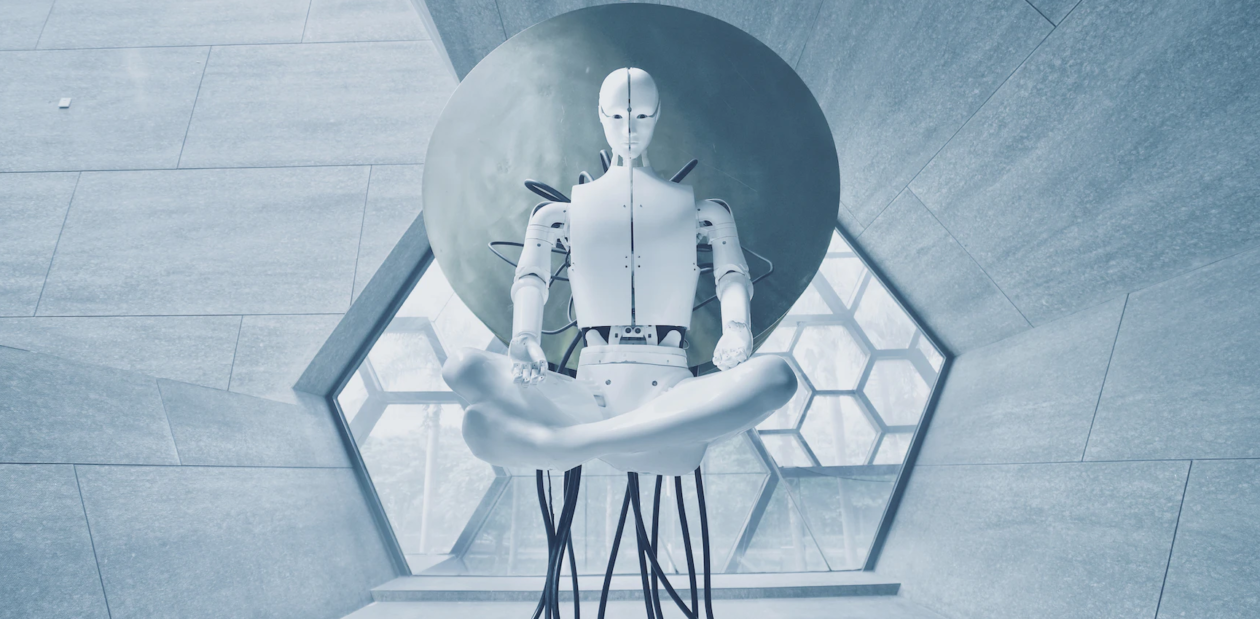
Until the end of time!

The screening surveillance videos show the literal reason why I don’t have a Ring doorbell or cameras inside the house.

I really liked the fact that Frames was a silent video; I think it gives a sense of disconnection between the humans. Even when receiving a $5k tip, the excitement is contained. As if controlled by the system. Artistically speaking, I think it’s a very creative choice. Starting, it just looked like what I think government cameras show, but shortly I started questioning who was actually the beneficiary of all the specific data and demographics. I imagine this would be an invention (or decision) of capitalism for capitalism. The companies maximize their profits as civilians lose control, privacy, and physical connection.

Based on the introductory text, this is a machine (AI) that “fails to understand the actions of a civilian,” but to me, the machine, at least this one in particular, doesn’t have to understand the data it collects and assigns to the people walking by, that’s the responsibility of a human in power or another machine that specific companies use to tailor their marketing plans. I think this could be a system implemented in the future to control and sell to the population; it would evolve until there’s just one person in with all the data and the world’s power (or the country, but you know what I mean).

“AI‑generated contradictions for environmental democracy” was a little hard for me to fully follow along because of the vocabulary, but what I think this text confirms is that not only are we killing the environment with our technological advances, but it is also illegal by the same rules we created for ourselves. Ironic and tragic. True.

Just today, I was talking to a different professor about Kean’s broad acceptance of AI usage, despite it holding a proud chest for its sustainability practices. How does replacing disposable to-go trays in the cafeteria with reusable plastic ones compare to most (since this class proves not all) of the student body uses AI every day for their assignments? Hell, even in classes where the topic is not AI or computer science or anything, the use of generative AI is expected. Not necessarily by the professor, even though some care little about whether an assignment is AI-generated or not, but by the students. “It’s okay, will put it on Chat, and it will give us the abstract.” No matter how much I tried for us to actually write it, the majority of the group chose AI slop.

The fact that people don’t even want to try anymore by themselves before using AI is tragic, but it’s even more tragic that the system that sustains our education doesn’t care for it either. Our problems are local, national, and global.

Maybe Nick Cave was right, the apocalypse is near.

Okay, but why? (blog #9)

Aiden truly just wants to call everyone out on their BS, and has hints of superiority?

I liked the way that it broke down into personas the different human perspectives around AI, even though it was probably stolen data from a marketing campaign or something. Of all the characters it described, the “skeptical pragmatists” were the ones that resonated the most with me. I do feel like I have to use AI, despite not having access to it four years ago a living my life perfectly fine without it, but I approach it with caution. From a “hello, how are you” (just in case, you never know) to not disclosing too much background information about the tasks I assign it to do. This also made me wonder if anyone else in the class felt identified with a particular persona, or none at all.

Chapter 10 was a bit of a miss for me, but the “my data corpus? my data corpus?” made me question if this was a machine error and then a human error for not editing it, or a copy issue, or a tragic attempt at an anaphora. Either way, it came off as creepy.

As for using Dungeon AI, though I understand that people just want to jump straight into the action and play instead of wasting too much time writing the story or characters, what’s the f-ing point of playing a creative game if you don’t want to create? Like, that’s the point, dude. I don’t know all the specifics of D&D because I have never played an actual campaign, but how could the DM actually know what the story is about, or the flexibility of it, if it just stole it from a bot?

CJ mentioned alternatives to reduce the hefty work of creating the campaign without losing creative integrity. So, if that is a resource known by the D&D community, then again, why would someone use the AI? I fear that, among the average person, there is a morbid “need” to use AI just to use AI. Not because they really need the technology or because they are incapable of doing a certain task. They are just lazy and desperate for productivity.

On the other hand, I liked the idea of using AI to create movie recommendation lists based on themes. But, because I have already asked for book recommendations the same way, the answers are always bland and heavily influenced by numbers or popularity, not quality. So then again, what’s the point? A little bit of harder research will get me to the movies or books I would actually enjoy watching or reading.

Beware of dog (blog #8)

This was a really interesting video to watch, and it brings ease to see and listen to experts from different fields (including the CS professor) agree that we can use to our advantage, but we must beware of AI.

To answer some of the questions posed in the workshop, I think I do a better job than AI at creating outlines and overall structures of pieces. Because I am able to develop ideas on my own, I trust myself more than AI to figure out the organization of the piece, which sometimes is key to the personal purpose of a key. We do this without even realizing it, so explaining it to AI so the machine can give us that meaningful structure and organization feels like an extra, unnecessary step.

I’ve been open about my use of AI to look for synonyms, specific words (by providing the machine with explanations), and to translate words or phrases from different languages into the correct cultural translation and not the literal translation a digital translator would give me. I believe this usage, or tasks that I assign the machine, pose minimal to no risk. Besides profiling me into the cultural boxes based on my translation cues and the carbon footprint, I think these tasks do not have negative consequences.

As for redefining “writing,” I don’t think I know what the actual definition is, but, for me, writing is the craft that involves transcribing ideas and transforming them, from just thoughts into intelligible words tailored to a specific audience. Because it requires so much intention and personal touch, AI cannot even try to replicate its efficacy. In reality, AI only imitates formats, not human thoughts.

I think AI has the potential to enhance AND hinder my creativity. Just a few weeks ago, I put the idea of a short story I had into AI for it to tell me what it thinks and how to develop it. I didn’t necessarily like the advice it provided, so I steered away from the tips. However, it was shocking for me when I workshopped the piece, and the feedback I received was the same as what AI told me. I haven’t touched the story anymore, but now I feel like I can’t even attempt to brainstorm with AI, or I will fall into the box of what it tells me to do rather than what I want to do. In a similar way, in a job that required me to use AI for writing, I always felt stuck and on a block. My writing always looked to imitate what AI had to say, and it made me have a whole existential crisis over the fact that, if AI is supposed to learn from US, why do we try to learn from IT?

Writing (With)out AI

I’m currently in the thick of it with my students, somewhere between outlines, introductions, and the slow unraveling that happens when research papers become real. Eighty students. Eighty voices. Or at least, that’s the hope. Because this week, one of my students asked me, completely serious, “Can I use AI to find my sources?” I had to pause. Not because I didn’t have an answer, but because I had too many.

I chuckled. Out loud, just a little. But internally, I laughed harder than I should have, because just the day before, I had sat at my desk going through a student’s research resources, clicking link after link that led nowhere. Articles that sounded academic but didn’t exist. Authors that felt real but weren’t. It wasn’t even good AI use. It was just… empty. Fabricated. Efficient, maybe, but hollow.

And that’s when the question from the video stayed with me: What do we lose by making something efficient?

Because in that moment, it wasn’t just about fake sources. It was about recognition. Do I stop recognizing when a student is not using AI? Do I stop recognizing their voice, the slight awkward phrasing that actually signals effort, the sentence that almost lands but not quite? Or worse, do I stop recognizing them altogether? Their name attached to writing that could belong to anyone.

There’s something unsettling about that.

Dr. Zamora’s emphasis on intentionality really grounded me here. Not a rejection of AI, but a questioning of why we use it. That distinction matters. Because my student’s question wasn’t wrong. It was just incomplete. They weren’t asking how to think with AI, how to use it as a tool to deepen inquiry. They were asking how to bypass the very process that gives research its meaning.

And honestly, I get it. Writing a research paper is hard. Sitting in uncertainty is hard. Not knowing what your argument is yet, struggling through sources, revising a sentence ten times just to make it say what you actually mean—that’s not efficient. But it’s real.

The flowchart in the video was probably the most practical and necessary thing I’ve seen in a while. Not because it tells you what to do, but because it forces you to pause. To ask: What am I using this tool for? I keep thinking about how powerful it would be to bring that into my classroom. Because the truth is, my students are already using AI. The issue is not access. It’s awareness. They don’t know what they’re doing with it, or what it’s doing to their thinking.

And maybe that’s where I am right now as a teacher too.

I’m trying to hold space for both realities. The reality that AI is here, and the reality that writing still matters. That voice still matters. That the messy, inefficient process of figuring something out is not something to shortcut past, but something to move through.

Because when I think about those 80 papers I’m about to read, I don’t just want polished sentences. I want to hear them. I want to recognize who is writing.

And maybe that’s the real question I’m sitting with this week:

If AI can make writing easier, faster, cleaner—what do we lose if we stop listening for the human inside it?

Blog Post #8 Video Reaction

Watching the video “Researchers Writing With(out) AI” I had a few points that I really gravitates towards.

Starting is the different purposes of writing, with was discussed in the beginning first in a broad sense. One of the examples listed is note taking; and I find that interesting because it is so simple. Note taking is technically something AI can do, but the hidden beauty is someone taking their own notes is formatting it in a way that is best for them to understand. Not everyone takes down notes the same, so each technique can be unique.

Another point was brought up during the interactive activities; “What tasks involve minimal or no risk when you write with AI?”. I think it is an important question because there are moments where you wouldn’t want someone using AI. Setting aside personal opinions of using AI in general, there is still a different between a student using AI to outline or write the first half of an essay versus a doctor using AI to summarize their patient’s medical notes/history.

The last point I want to bring up from the video is changing the perspective on “dumb” tasks. When it comes to seemingly easy and simple tasks, some might find it easier to have AI do it for them. However, if the thinking on that is changed to the opportunity to learn a simple skill, the task doesn’t feel so dumb anymore. I believe having AI to the easy work takes the opportunity away from a person to learn those skills in order to complete the tasks. If AI were to suddenly disappear, a person could have a slightly harder time completing the “easy” steps compared to someone who is used to doing it themselves.