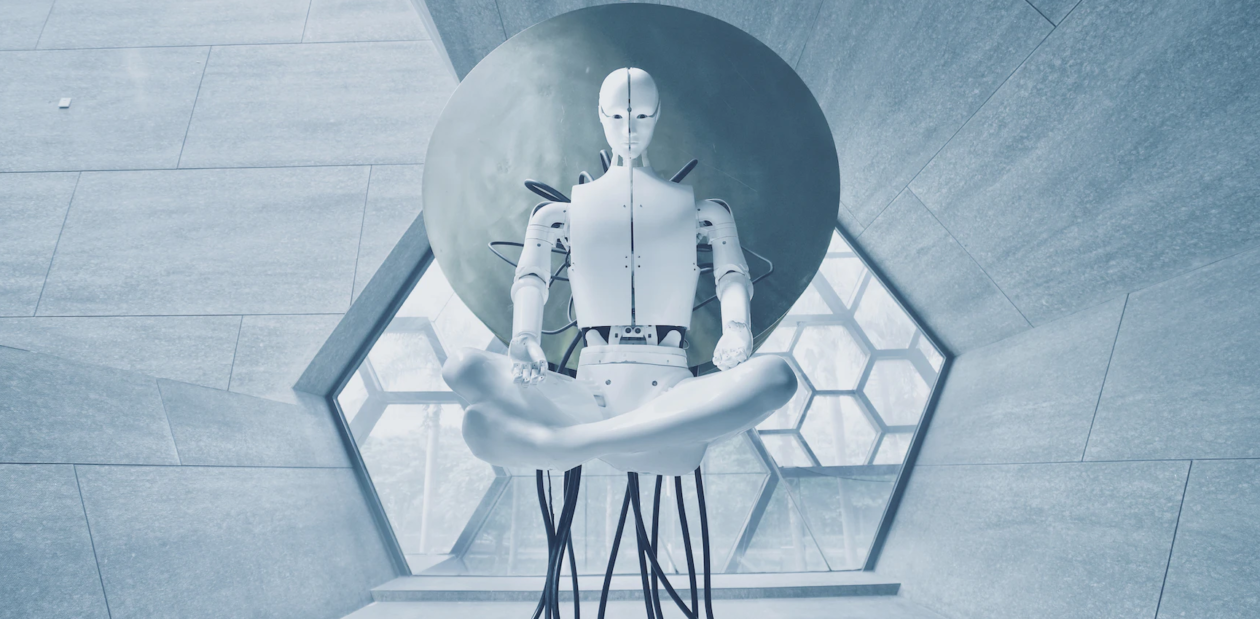
So, I started by reading Burnout from Humans. Immediately, I thought that this book was written by AI. “No way it was written by a human,” I thought. Then I saw that we needed to keep an open mind, and so, I decided to do that. (However, I still think the book was written by AI, or that AI played a part in writing the book.) It just seems so monotone and robotic like. I don’t know how to describe it. It’s almost like the magic touch just isn’t there (giving credit to Hunter here.)
Regarding the article, “When AI learns an author’s voice, even experts prefer it,” I was horrified. To think that experts would prefer an AI model over a human creating work is just horrifying. Yes, it is cheaper, but what comes next? First, we have AI writing novels. Now writers are out of a job. Then, AI learns how to build cars and fix cars. Bye bye mechanics and line workers. Eventually, if we continue training artificial intelligence models to mimic us, they WILL replace us. People are already trying to make physical AI models. I fear that once we are able to master the creation of creating PHYSICAL AI models, we will be living in a society similar to the movie “i-Robot.”
Tag Archives: student blog
Why AI Makes Writing more Human
Reading Katy Ilona Gero’s “AI Reveals the Most Human Parts of Writing” felt especially charged for me because I occupy two positions that often feel at odds: writer and teacher. As a writer, I have little desire to use AI to generate ideas, expand my thoughts, or write for me. Writing, for me, lives in the struggle of sitting with language, circling an idea, starting over, and trusting that something honest will eventually emerge. That struggle is not something I want outsourced. But as a teacher, I do not have the luxury of ignoring AI. I have to confront it head on, especially as more students turn to it as a shortcut rather than a tool.
What resonated most in Gero’s piece is her framing of writing as a set of cognitive processes planning, drafting, and revising rather than a linear sequence or a finished product. This mirrors the tension I feel daily in the classroom. I am not just teaching grammar or essay structure. I am teaching writing as a process that requires patience, revision, and intention. Yet AI complicates that work. It makes it harder to tell when students are engaging with the thinking behind writing versus submitting something polished that skipped the struggle entirely. That pressure to preserve the integrity of the process while navigating new technologies has made teaching writing far more stressful than it used to be.
One of the moments that gave me the most insight came from using a required AI supported platform, LUMI, in my classroom. What surprised me most is that LUMI does not actually write for students. Instead, it pushes them to critically think about their next words and narrative choices. The platform also creates a great deal of resistance. Students have to give the AI clear direction, revise repeatedly, and sit with frustration when the tool does not produce what they imagined. Many students openly protested its use, raising concerns about the environmental impact of AI and expressing irritation at how long it took to reach an end product. Some students are still struggling with it. That struggle, however, revealed something important. They were thinking, making decisions, and recognizing that AI does not replace intention or creativity. It demands it.
That experience pushed me to rethink how I approach AI in my classroom. I have to assume students will use it, so rather than policing its existence, I focus on teaching students how to begin. This means helping them generate foundational ideas, build outlines, and avoid repetition. Many students have shared that their biggest obstacle is simply starting. If AI is going to be part of their world, then my role becomes guiding them to use it as a support without surrendering ownership of their thinking. In this way, I align with Gero’s argument that the most meaningful parts of writing intention, vision, and decision making remain deeply human.
Ultimately, this reading reaffirmed something I already believe. AI can assist, challenge, and even frustrate us into better thinking, but it cannot create authenticity. Writing still belongs to those willing to struggle through it. As a teacher, my task is to protect that struggle while finding creative ways to work around a technology that is not going anywhere. As a writer, I remain convinced that what matters most is not how efficiently words appear on the page, but why they are there in the first place.
Blog #2 What’s really human about a machine
Katy Ilonka Gero’s article was an interesting read. I feel that one of the rewarding aspects of a class like this is to read works from people who’s perspectives are wickedly different from my own. In reading about Gero and their work in studying AI, I can understand their tone towards the use of AI and how writers interact with it. I found it interesting that Gero wrote from the perspective that AI will get better and that it is ultimately here to stay. I can also appreciate that Gero was coming into this discussion with a level of nuance that many “tech bros” tend to not have.
If I had to make note of one thing in the article, I found Gero’s mention of “control” very interesting. For me personally, control is one of my concerns when it comes to the use of AI. I feel that part of what makes writing so interesting and engaging is the fact that we basically “drive the ship” when it comes to putting words and ideas on a page. I have felt that using AI takes control away and in some ways puts the actually writer in the back seat. Gero’s analogy about writing as a dance and AI not stepping on our toes was pretty insightful. Another thing I wanted to point to was the authors discussion about AI’s role in revision. The revision process is much less creative then the planning and drafting stage in my opinion. In thinking this way, I can see some argument as to letting AI help lead the way in revising a work. Though, as a writing tutor, I still cling onto the fact that only using AI takes some of the human element out of someone actually reading a work and giving feed back. Gero mentioned the emotional aspect of using an actual person to help a writer revise which is real. But I feel that it should not stop people from reaching out to other people. Maybe I’m just missing something.
Overall, I see some of the arguments that Gero made in the article. I can honestly say that the article made me consider some new things when it comes to how I see AI in the writing world. Despite all of this, I am too much of an AI hater, this is a hill I am willing to die on. I want to note that I do not think less of a writer that may us AI. I would just not that I cannot bring myself to give control of my writing to some machine.
AI & The missing Human Touch
(Week 2 Blog)
There was a time when writers, (whether the ones who write professionally, or those of us who do it for class assignments)used to look for inspiration through their imagination, books, or even through a nature walk. That was before the age of Artificial intelligence when people actually think. For most people, those days are long gone. We’ve switched to using AI as a shoulder partner. “The role of AI writing systems as drafting buddies is a big departure from how writers typically get help”. As soon as we get the writer’s block, we immediately pick up a device and put AI to work for us. almost as if we stop believing in ourselves and the power of our brains. Forgetting how we used to be amazed by our imagination when we allow it to exercise and ‘run wild’. Nonetheless, as much assistance AI can provide to us, there are certain aspects in writing that only humans can achieve. There are many times when I use an AI platform to help correct an assignment, and when I read it, I ended up choosing my original over the corrected version because it sounds more human. As many tasks AI can do for us, drafting, picking up where we left off, completing a paragraph with instructions, and writing more words than we possibly can, it will always fell short in adding that human touch and connection.
In Response to “AI Reveals the Most Human Parts of Writing”
“Which parts of writing are so tedious you’d be happy to see them go?”
None of it. There’s satisfaction in the struggle. If it doesn’t cause you stress dreams, then you didn’t write it out of passion. Why would I want anyone, person or machine, to figure out what I want to say?
“Which parts bring you the inexplicable joy of creating something from nothing?”
Doesn’t this question answer itself already? Being able to make something from nothing. The act of creativity alone is therapeutic.
“And what is it about writing you hold most dear?”
I make what I want to read. It’s like sewing clothes for yourself. I tailor my reading experience to my favorite audience. Me.
“Writers I have talked to worry about the normativity of AI writing systems, that they will reflect a straight white male perspective, but also fear a system attempting to represent another particular perspective that may lead to tokenization and stereotyping.”
I’ll defend the machine on this point. This concern is funny to me because white writers have been doing this for years before AI was even invented. They’re still doing it. Twins in modern TV still dress identically and talk at the same time. Gay men mimic Regina George’s personality. Fat hispanic women work in some kind of service job. Love interests all look like Anne Hathaway. AI doesn’t perpetuate stereotypes in writing- lack of research and real-world experience from the writer does. The machine’s job is to follow patterns. It just so happens that the majority of writers are not very good at writing minorities.
“If I have an idea for a novel, but the computer writes most of it, is it still my story?”
If I commission an artist to draw my OC, and they do it, is it my art?
Closing thoughts: If a writer absolutely must use AI, then I think using it to generate ideas makes sense. Other writers consult with peers for help fleshing out details and making their stories run smoothly. It doesn’t make sense to have AI write out a part for you. It’s just plagiarism from another author at that point, since the machine had to draw the idea from somewhere.
A.I. in the real world (our world)
The biggest question plaguing students navigating busy schedules and pressuring expectations has shifted from “How can I manage it all?” to “Should I ask A.I.?”
It’s been jaw-dropping to witness how A.I. has caused a complete cultural shift in such a concrete space. You learn, and you grow. That’s what you were always taught, right? But once A.I. grew in popularity, we learned that there is a machine out there, who we could depend on (any place, any time), with the capability of learning and growing for us.
And it’s weird to think of all the benefits scrapped by the captivating ability to generate funny images for a viral Twitter moment. Larry Elison definitely loves it (it’s making him billions).
Now, think of the harm: On the PBS documentary, A.I Revolution, Miles O’Brien spoke about a case from May of 2023, where an A.I. generated image of a terrorist bombing at the Pentagon went viral after Bloomberg (a verified Twitter news account) reported on it. It caused major mayhem. So much so, the stock market dropped by trillions of dollars!!! Its ability to successfully fool a massive amount of people is a clear sign of its risks. It lets evil people be as brutally dishonest as they want. And now, more than ever, it’s teaching us to mistrust the news, academics, and our government. Which could only lead to us distrusting each other.
And after finishing the documentary, I’ve never felt more tempted to listen to On and On by DJO. I won’t go too into depth about the lyrics and their meanings (although I’m tempted), but the song is essentially about our dependency on algorithmic platforms downloaded on our phones—which have become our worlds—and how we each interact through them. How we feed them.
It made me think about the increasing lack of humanity in online spaces. Inside these worlds we’ve created on our phones, we are slowly losing that once sincere ability to connect. To think for ourselves. To rely on each other. And through our usage, we’ve slowly been coerced into depending on machines instead.
I keep my usage of ChatGPT to a minimum (I promise). But I’ve learned that even with a little bit of usage in marketing classes, my mind has learned to pop the question of, “should I just ask ChatGPT?” Afterall, this technology is machine learning. Once I create an account, it takes my prompts, identifies patterns, and spits back a “curated for me” response. In minutes, it becomes a perfect internet confidant.
And it all falls on convenience (which the business world is all for). I mean, I knew plenty of people in marketing classes that always had ChatGPT tabbed. I would watch them use it for everything. That kind of dependency is becoming more and more normalized. But is it just the direction we’re headed in? Or is this completely offbeat to human nature?
The Wired article we were tasked to read for this week, AI Reveals the Most Human Parts of Writing, made me think a lot about peoples dependency on A.I. for help.
Being a writer in this era of technology is difficult. Everything is so highly analyzed all the time. Writers are always open to receiving feedback, right?
AI is impersonal, which, in theory, makes it far more approachable for writers to use as a tool for feedback (instead of for revision or generation of ideas). And I think that’s true. Then there’s the argument that no feedback is worth it if real, authentic, human interaction doesn’t play a role in it. Which I mostly agree with. But then that brings me to question the possibility of objective perception/feedback (which A.I. is apparently capable of). And since our perception of writing is considered subjective, should I trust a machine (with no soul) to perceive my piece in a humanly trustworthy manner?
This machine has no alliance, it isn’t capable of any real desire to benefit my life, and therefore, has no actual ability to judge my work like a fellow writer or friend with real experiences and a real connection to me could. It’s just a machine given a task (by me), and it’s programmed to give it to me no matter what the impacts are (physiologically or environmentally). Sure, there’s the chance of bias. But if ChatGPT senses (even indirectly) that I desire positivity, it won’t hesitate giving that to me. Because it doesn’t care about me actually progressing. It never will. So, is relying on it really all that beneficial?
And I can go on and on about how society reacts to A.I. art… but you know that already.
So it’s true, at the end of the day it’s up to you whether you engage with A.I. or not. But you should care enough about yourself to believe you are capable of thinking more creatively than a machine (a machine that takes all it knows from you, a human).
“The achievement of landing the end of a scene may only come from struggling to do it yourself.”(Gero).
No one should skip out on the struggle (it’s how you grow).
Adamari Peralta 1/27/2026.
AI is Garbo
After watching the documentary and reading the article, my views on AI have changed a little bit. A very small amount. I think it is bad for the creatives, horrible for humans to rely on, but could be helpful for science.
For the creative side of things, I always thought it was horrible. Creative people could turn to it and lose their spark. Sure, it could help you get over the block, but what is the fun in that? It is as if you always won at something. At first, it would feel great to win. However, over time, you will be bored with a lack of challenge. What is the point in writing or drawing if you just get over the hardships? Half of doing something is failing or struggling. That is where learning comes in. If you just go to something else every time, eventually you will go to it more and more for every problem, and then the AI would be the creator and not you. Failing or struggling also makes you, you. It is how you find yourself or your voice. Sure, the AI could learn your voice or the way you write, but it won’t ever be as good as the real you. It learns patterns, but you could break those patterns. Change things up. Be creative instead of just using what is there, like it does.
As a writer, I want it to help me with nothing. I want to figure out the writing myself. I want to say “I wrote this” and mean it. I do not care if I get stuck; that is part of the journey. I will be a better writer after getting through that block. I want to navigate my writing, learn how to make it stronger, and write the piece myself. The idea of using it for feedback was okay, but I still wouldn’t use it for that. Why? Cause I ain’t listening to no robot. Sometimes the grammar checker is wrong. It wants me to sound academic, but what if I am writing a creative piece? It might not understand what I am meaning, and I am not killing the environment trying to get it to generate the right thing. I would rather just talk to people and get feedback that way. It might be awkward, and the person still might make corrections I don’t think are needed, but at least I can have a conversation with the person. I can build a bond, check their work, get ideas or perspectives, learn something, and just be a better writer at the end of it. AI is a big BOOO for the creative in my book.
Now, for the horrible for humans to rely on aspect. Every time we discuss AI, I see all these crazy movies about robots in the future, but I always think WALL-E. I always think of humans relying on it too much that they get lazy and the planet being dead. This is kinda already happening. I see so many people use ChatGPT as a search engine. Google already sucked at having people just search up whatever whenever, but ChatGPT has made things so much worse. People don’t even Google and read the websites; they don’t think for themselves. They just generate ideas. Which is crazy. At least TRY to think. Take a second to come up with anything. I have seen people ChatGPT ice breakers. Insane. That is so easy to work out. If you can’t think of one, talk to people. Brainstorm. I fear we are losing that. We are just generating, not thinking or brainstorming anything anymore. Which is crazy to me. So, I still hate AI for that. Ruining people’s thinking. If it gets more advanced in the tech, people might really forget how to do things, as AI can just do it. But, at the end of the documentary, the guy was mentioning “No signal” when trying to work his arm. What if that happens? Then what. Will humans not be able to think without AI? Stupid. AI is bad for humans in terms of thinking and humans doing things themselves.
But what changed my mind a LITTLE bit? The science. Predicting patterns to save lives. Very the cool. I enjoy this. We love saving lives. I got no clue if this is the stuff that also kills the environment, which would then complicate things. Killing the environment to save lives, but killing the environment kills lives, so like, what are we doing. Killing or saving. Anyway, as a non-science guy, I thought it was pretty cool. My dad lost part of his leg, knee and below, so tech for prosthetics is easy for me to like. Maybe he would walk more if he had a better leg. Who knows. But stuff like that really changes lives for the better. Predicting fires also very helpful. And of course boo cancer we love saving people from that. So all that science stuff, yes. AI is good to use to help people for that, I THINK. I do not know if it still kills the environment, so I am unsure how good it is, but it seems good to me. I think all the science and tech stuff around that is super cool, and as long as it isn’t harming people, keep doing it.
The documentary didn’t get me to change my mind much, clearly. AI is still bad in many ways. And that scientist wanting to give out warnings after helping create it was SCARY to hear. It is like Iron Man and Ultron up in here. Which is not good to hear, at all, very scary. For those who don’t know, Iron Man made Ultron, a robot, to help human kind right. And Ultron, who was on the internet for like a FEW MINUTES, was all “to save humans they all must die”. Real. But also no, please. So the scientist being like “it is too advanced, the risk is too great” was not cool to hear. “Best thing is to pull the plug before we can’t,” or something like that, being said was also not cool. As a non-science guy, very scary stuff here. If the science guy is freaking out about the robot, I sure am going to. I do not know anything about the robot; that guy does, so the freaking out was not a great thing to see. Thank you, documentary, for that.
Anyways, I do not know how to end this, but that was my thoughts on the reading and documentary!
Article reflection
Hi everyone! My name is Ebony Rodrigues and I am in my last semester at Kean as an Elementary Education major currently in my Clinical 2 program. I am trilingual, I love reading, traveling, playing piano, and I’m the oldest of 5. I look forward to being in class with you all this semester!
Reflection:
I thought Gero’s article was really interesting because it allowed us to envision what a writing process looks like with the inclusion of AI. However, although I can see the benefits in terms of efficiency, I can’t bring myself to justify its consistent use in writing. In the world of creativity, I strongly dislike the use of Ai. For one, I believe it’s limiting everyone’s ability to think critically and think for themselves. Writers block has been a thing for a long, long time and although it is frustrating, when you find inspiration and you get past the block the work you typically come up with is great. It’s a result of seeing and experiencing different things that inspire the next portion of whatever it is you are writing and that in itself is reflected in your work. Though I think it’s okay to use it as support for technical revisions, I’m not a fan of its use for content purposes. Each author has their own writing style even if it’s not perfect. Their use of descriptive imagery to describe a place they’re imagining or have seen, placement of dialogue, punctuation, everything! This is something that cannot be replicated by Ai because it takes away the personal touch that it embedded in everything you write. Every decision you make as a writer is a reflection of the way your brain works. When you strip that away and replace it with content created by Ai it eliminates individuality and everyone’s “voice” starts to sound the same. The same thing applies to music and movies. Hunter made a great point last class where he talked about how even if something is “bad” there was still a purpose behind it and that’s what makes it matter. I agree with this whole heartedly. A movie/song/ book could be absolutely awful, but someone still used their ideas, their opinions and everything else that makes up who they are as a person to pour into this project. I’d rather experience something like that than a piece of art, writing or media that is decent content wise but has no personal human touch behind it.
Rage (and Love) Against the Machine
Hello everyone! I’m Veronica, and I am a senior English Writing major. I have a background in audio technology and music production and am passionate about music, movies, arts, fashion, and anything creative, really. In my free time, my favorite thing to do is go to music shows, no matter the genre, no matter the space, shows are where I feel the happiest. Maybe it’s because of the connection with the rest of the crowd all singing (and screaming) at once, or the movement of the music. Because I listen to so many different music styles, I don’t always have a friend who listens to the same artist or genre. That’s why, for the last two years, I’ve tried to build myself with courage and borrowed confidence to go to shows by myself. Standing in line to enter is terribly awkward, but sometimes I make friends. Other times, I sink into my phone until the doors open and the music begins to play.
A video I could not embed of a show:
https://photos.app.goo.gl/FqETYwgpsG892byT8
A link the the studio recording version of the song:
La Vida Boheme – “¡Coño!” (Audio Oficial)
On another note, watching NOVA’s documentary helped me realize how much we needed AI technology to support our bio-advances. The fact that, thanks to AI, we can predict a cancer diagnosis five years prior, gives me hope for better treatment options and extending life expectancy. However, it fails to address environmental, creative, ethical, and socio-economic factors. This was about the accomplishments, rather than the challenges. It made me think of the owners of this AI software and those ads Facebook put out when they had just rebranded into Meta. Those ads featured doctors utilizing Virtual and Extended Reality glasses to treat patients, or students learning how to perform surgeries with the same technology. These made me question, how much personal information can one company own? From our social lives to the privacy of our medical records. Furthermore, what are these companies (owners) doing with all that information besides the main selling point for their product? Do they sell that information to third-party vendors? Maybe my ignorance limits my ability to answer those questions, but knowing — or knowing that I can’t know- makes me uncomfortable.
The documentary also made me remember our free writing prompt/quote from last class, about not being scared of AI to write well, rather than us forgetting why we write. AI Reveals the Most Human Parts of Writing poses an important perspective on what makes our writing ours rather than a machine’s. I believe that if we want to claim authorship on a piece, the plot, main idea, and endings all have to come from the writer and not the machine. However, even I have used AI to get inspiration and crush the writer’s block. But how can we put an official boundary and limit AI usage for writers if, as writers, we are all so different? From internship experiences, where AI was the main writer’s tool, I suffered several existential crises trying to understand if AI was still learning from my knowledge or if I had started learning from AI. Tragic. For this, I believe all writers must stand strong on their ground as the author and prevent the machine from taking the reins of our story.
Asking AI to give us a plot for a story should only be writing exercises that remain in the reference vault. But then again, will that rule satisfy all writers’ needs? I don’t think so. What if the piece ends up being amazing? Is it no longer mine because AI gave me the plot, but I wrote the rest? How could we even start to establish AI usage limits?
I think, as the Wire article suggests, this depends on what is important for each writer, what brings them joy or stress, but that wouldn’t solve plagiarism questions; it would just set a segway for an intellectual thief’s success.
Right now, what I know is that I know nothing, and I can only write in a manner that allows me inner peace, with myself and my work. For me, it’s important that the main ideas come from me and not the computer, but I am open to AI-brainstorming sessions. Nevertheless, Gero says that time, and practice, if I may add, are required to simply understand the machine. Understanding where the machine is coming from, why it is giving us certain information, and how that differs from where we come from and what we want to say. I don’t think I have time for all that. For now, I’ll just stick to asking the machine for synonyms or help me translate thoughts into more cohesive sentences.
AI and Creative Writing (Week 2 Blog)
Upon reading Gero’s article, I made a stunning realization. I’ve done so much creative work over the years, but never once have I even considered using an AI tool to gather feedback or suggestions for my content. This includes my songs, novels and most importantly, my TV series scripts. I have always felt like my writing is so personal to me that I have such an easier time having full control over it. While song lyrics typically come naturally to me, I usually have to outline each episode of the television series I write.
I have only ever used AI to help with my writing once, and it was last semester for a term paper. CoPilot gave me suggestions on how to strenghten my argument for the paper and format the flow of the paper in a clearer way. However, I didn’t feel like the system was replacing me as a writer. I simply saw it as a Mousekatool of sorts that guided me when I was not confident with my writing. With CoPilot’s help, I only changed a few minor things about the paper, but that made all the difference.
I absolutely believe that writers are allowed to use AI for suggestions towards their writing. My dad uses ChatGPT (maybe a little too much) to help him with the novel he’s writing. If writers remain aware that they are in control of their writing, they are allowed to rely on others, including AI, to strengthen their work. However, an excessive reliance on AI might be too much, and could stray the writer away from the human essence of writing. Using AI with my creative works is something I might be open to eventually, but as of right now, I am so used to keeping everything under my own control, aside from getting feedback from those who read my work.
Writing is one of the most important things to me, and it has been for years. I remember writing my first novela when I was twelve, and writing fan-fictional stories before that. I would gather characters from multiple media I enjoyed and place them all in a story together. It was like playing with toys and figurines (which I also did as a child), but in a written form rather than live playtime. I have since grown out of using pre-existing characters, of course, and I now create original characters. The first attempt at writing a television show started when I was around 16 – almost five years ago. It was a live-action series based on Minecraft. I ended up scrapping it after a year because things were not making sense. However, early this year, I gained inspiration to do it again. I am now working on a brand new live-action series based on Minecraft, this time with an entirely different premise.
While I do have that Minecraft series going for me, I do have an original series as well that I have been writing for almost four years. It’s a high-school / coming-of-age drama series with a side of crime and mystery. I wrote the original draft from 2022-2024; four complete seasons. At the end of 2024, I started rewriting the series to really hone in on the story and refine it. The rewrite is vastly different from the original, but it works better now in my opinion. I’ve only written up to the third season, so there’s one more to go. However, I’ve put my magnum opus aside to focus on the new Minecraft series script.
Now that I’ve shared some of my creative writing facts, I want to reflect on the fact that AI assistance never crossed my mind. It really shows how absolutely wild of an imagination I have. I shock myself sometimes with how my brain is able to come up with these stories, characters and themes. I love creating seperate plotlines for my shows that play out simultaneously and end up weaving into each other. Writing is such a uniquely human concept, and I never want to let go of that part of myself.
