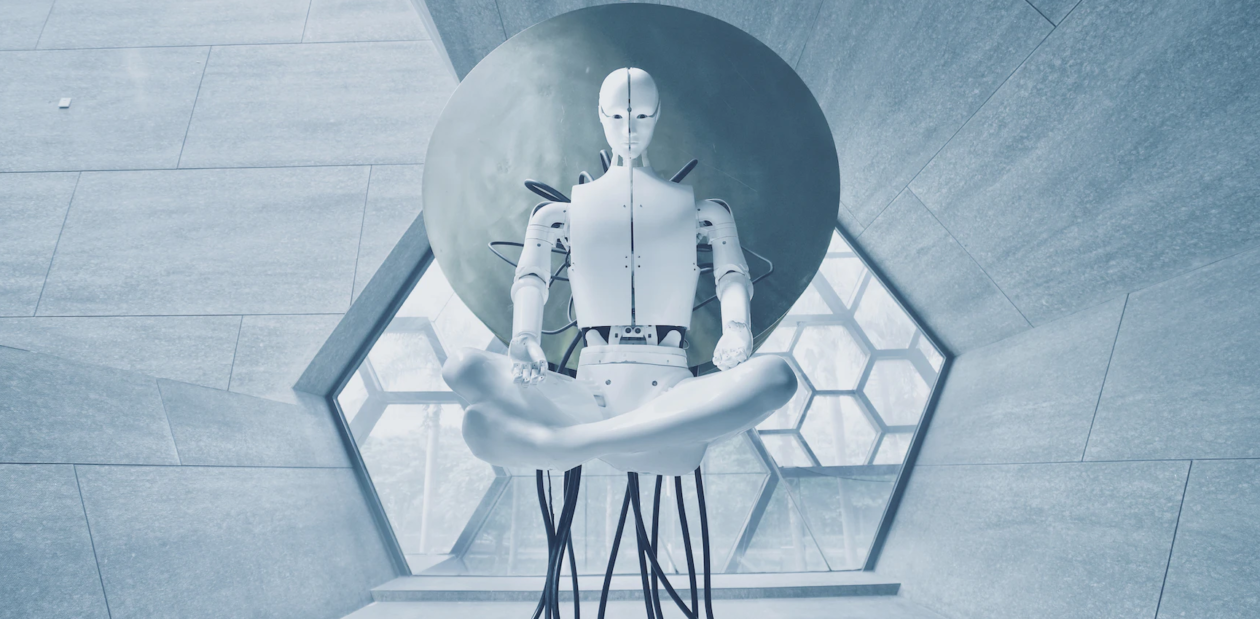
Every once in a while, technology and art become more advanced due to human creation. People hated when music in the early 20th century became more dissonant and complex. Some people couldn’t afford televisions when they first became a thing. Every human advancement is faced with criticism, and technology is typically the scapegoat. But with Artifical Intelligence, it’s almost a completely different story. Humans, with each new generation, get accustomed to the technology of their time. People get so easily attached to AI because it is the most fast-paced, time-saving technological advancement to date. But AI’s convenience is matched with its problems.
Sarah Elaine Eaton describes postplagiarism in her 2023 article, explaining that artificial intelligence and other modern technology has become integrated into daily life and has many different impacts on human creativity. One of the six tenets Eaton describes is that “humans can relinquish control, but not responsibility.” This is a very important one, because when humans let AI control them, they naturally neglect responsibility, finding trust in the technology. However, AI has proven constantly to be flawed in some areas, especially in respect to accuracy of facts.
This brings me to Madhuri Karak’s 2023 article about StoryWeaver’s AI translation tool. While yes, the tool salvages dying languages that may otherwise vanish, a major downside to the tool is its inaccuracy. Sources for these tools are “too specific, and do not encompass a wide enough range in terms of topics and vocabulary to be properly representative of human speech” (Karak). Think of Google translate. It doesn’t always translate accurately from one language to another. This StoryWeaver translation tool may have the same issue due to the sources it pulls from. Yet humans still rely on this tool for things, and it’s on them to take responsibility for the items that they ask generative AI to create as far as accuracy of facts.
The only two ways in which we can navigate the age of AI are by either collaborating occasionally with it as a small helping tool, or avoiding it completely. I personally follow the latter, as I feel like most creative processes can be completed without artificial intelligence. I do, however, respect one’s choice to utilize AI as a “mousekatool,” as long as they do so sparingly and not too often. The point still stands that humans overall have developed a trust and reliance on this technology that, if not calibrated soon, may lead to our doom.
