I’m Scared (Week 10 Blog)

Reading the St’ahel article gave me a new sense of worry about the production and investment of Generative AI. If the alternative option to using scarce resources is digital technology that has the potential to deepen climate change, then we were doomed from the start. This reminds me of the film Shorts (2009), one of my favorites to watch as a kid. In the film, the antagonist, Mr. Carbon Black, is the CEO of a company that produces the Black Box, a multipurpose device that everyone in town uses. It isn’t until a magic wishing rock falls from the sky that the town goes ballistic. In the end of the film, Mr. Black goes “green,” creating a more sustainable alternative to the Black Box. Between the government’s interest in AI and the possibility of exploiting the public’s emotions, I can’t help but feel scared that we are heading in that dystopian direction.

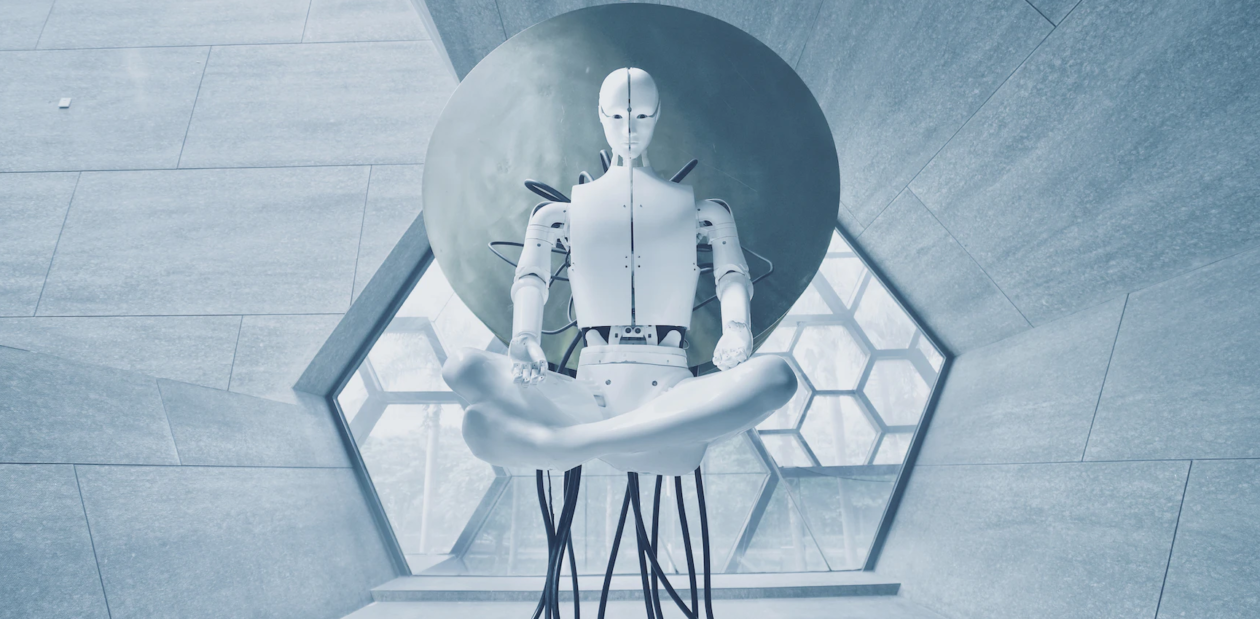
I wanted to bring to attention something that really freaked me out on YouTube. An ad keeps popping up of this AI robot talking to you about building websites or whatever. I find it eerie every time because there is no music; it’s just this AI-generated robot speaking in a very low, AI-generated voice trying to convince you that AI is the future. I can’t quite find the ad itself or remember what the advertiser even was, but it seemed like something right out of a dystopian world.

After reading the article, my fears about a government that uses unsustainable AI have somewhat increased. If the overuse of AI is clearly bad for the environment, the government either does not care or is trying poorly to work around it. I find it fascinating to think about the fact that it’s general knowledge that AI consumes our clean water, and yet we humans are being exploited, controlled and monitored.

This leads me to the short film, “Frames.” It’s crazy to think that it was published in 2019, because we seem to be inching towards that kind of society portrayed in the film. The short film has zero dialogue, and every human character is scanned and monitored by AI surveillance footage. There’s no cash used in this world, which is kind of what’s starting to happen now in the real world. I’m not quite sure what the purpose was of following this one woman who was silently generous to others (a $5,000 tip is crazy work), then accidentally falls into a frozen stream. It does interest me, however, that the AI surveillance only seems to get generally stats about her as well as her relation to others. AI cannot know who a person truly is on the inside. It can, however, consume information about a person.

It’s scary the way AI consumes not only information, but our resources as well. In an AI-run world, no human wins.

Spring has sprung, …and burnout.

Wow! I learned a lot from your thoughtful writings during our break. I think the video discussion which was lead by Dr. Sharma prompted many of you to think of AI through a “pros & cons” lens. In what contexts might it be useful vs. what contexts might it be damaging or destructive to your own growth? Asking pre-use questions could be helpful in discernment: Can this task be done without human empathy? Can this task be done without human creativity? Can this task be done without human judgment? What am I willing to give up in terms of my own agency or authority over certain matters? These are useful questions to run when thinking about tasks at hand and what role AI might play in your own processes. I notice that some of you still seem to be staunch ‘AI abstinence’ advocates, which I find both fascinating and hopeful. Each of us will have to grapple with how, when, and why we might use AI tools, and I do think that a ritual of fine tuning our personal reckoning with certain tools will have to be an on-going process, for everyone.

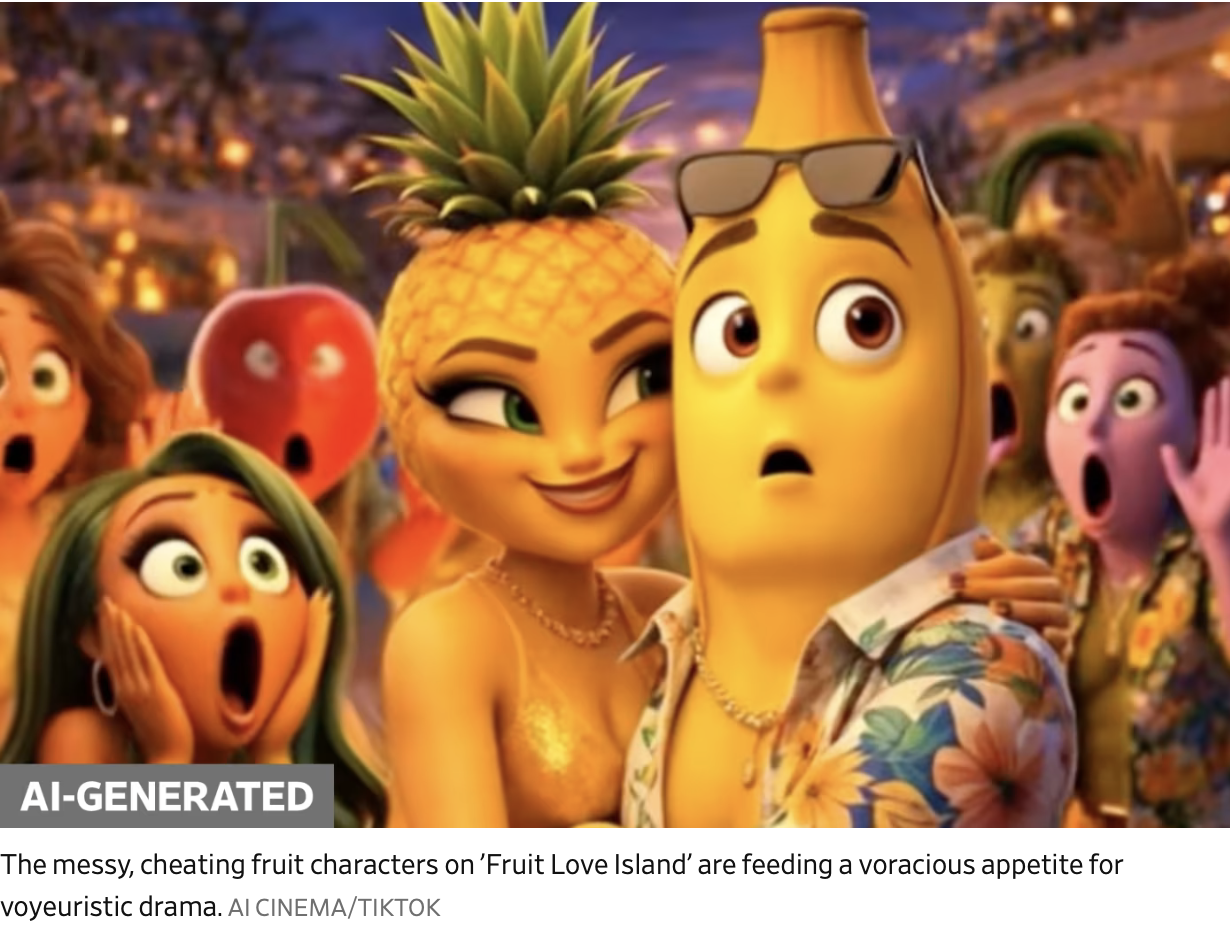
Also, I am flummoxed re: AI Fruit Love island. You already had me on Italian brain-rot and tung tung…but this is… 😮‍💨… Does someone want to write a critique of what is happening here?

Thinking about burnout!

This week we spoke briefly about the concept of burnout. One main takeaway I hoped to emphasize is that the experience of burnout is not simply individual fatigue, but rather a symptom of civilization running out of rhythm with itself. Burnout is NOT personal failure. It is often structurally produced. Burnout is often produced by institutional pressures. Many of us know well the overwhelm of having to appear calm, supportive, or enthusiastic: we are familiar with suppressing frustration or exhaustion; and we find ourselves “performing” care or attentiveness even when depleted. Slowing down enough to feel the human (and non-human) consequences of our choices is a key to reclamation and health. We spoke about unseen or invisible forms of labor. A profound dissonance occurs in the state of burnout. An internal conflict arrives and takes over between ‘what you feel’ vs. ‘what you’re told’. And people have a hard time sorting this experience of dissonance. In a way, dissonance is what keeps the burn out alive and happening all the time. People accept “the system I depend on is harming me.” But if we can start to question the system, resist harmful norms, and collectively imagine alternatives, we can start to build better (non-burnout) pathways for everyone.

D & D

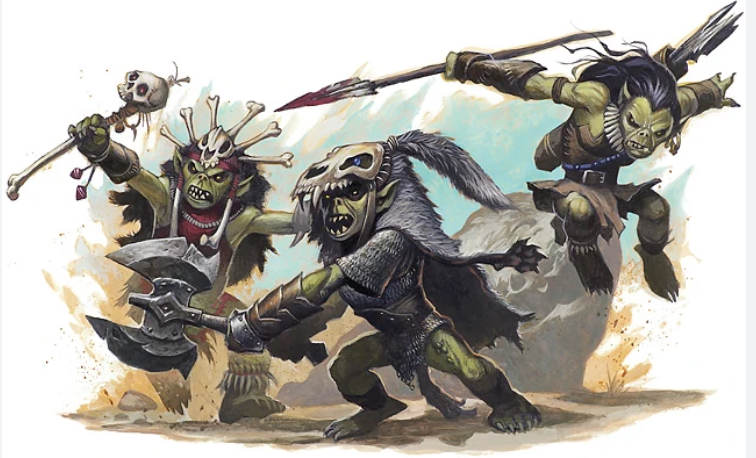
Thanks to CJ for bringing us into the world of D&D!! Dungeons and Dragons is of course the longstanding collaborative storytelling game where players rely on human interaction, unpredictability, and imagination, improvise narratives, and build characters and worlds collectively. We were confronted by some goblins, and we had a short but sweet experience of authentic social play. Fun! This compared to the glimpse CJ shared of the AI Dungeon made it plain to see that the AI route could easily feel scripted, flattened, and “less alive”. In our quick attempt to start a campaign we experienced spontaneous chaos, we doubled down on reading facial expressions (embodied knowledge), experienced mild awkwardness, shared some laughter, …. we able to be silly together. Do we really need our imaginative playtime to be “efficient and productive”? Yuck. CJ thoughtfully highlighted there is a literal cost in making that decision. Double yuck. I wish we had a bit more time because we were just getting started with co-creating meaning together.

The question stands: why would we give up that bit of gold in order to be guided by an invisible system? This short moment with D & D helped us see key connections between community, creativity, and care. And how AI can disrupt this powerful/magical recipe of factors.

Class slides & agenda

For next week:

Next week our pathfinders are Sarah & Oliver.

-From Sarah, please read: 

Sťahel, R. AI-generated contradictions for environmental democracy. AI & Soc (2025). https://doi.org/10.1007/s00146-025-02704-0​

-From Oliver, please watch: 

The short film called “Frames”:  Www.screeningsurveillance.com, www.screeningsurveillance.com. Accessed 19 Jan. 2023.​

Please write Blog 10 (-a reflection on the reading/material above) due by April 1st.

Have great weekend!☺️❤️

A.I. & the Environment

I have known for a while now, that A.I. is destroying the environment. Our politicians are aware of it as well. In Richard Stahel’s article, I noticed how he mentioned that the constitution and legal system only matters if these measures are enforced. If politicians refuse to act, nothing will happen. I feel as if we are at the point in our society where the politicians would rather ignore the issue and hope that it becomes another generation’s issue to deal with. Most politicians are at retirement age, and to them, this is not an issue that they will have to live through, so they don’t see a reason to act. It is a really selfish reason.

With regard to “Screening Surveillance,” I can’t believe how we are always being watched. Sometimes I will say something out loud, and then my phone is showing my advertisements for that specific product. It has even been proven that the government is listening to us, activating our cameras without our permission, and yet, nothing is being done, despite this clearly being unconstitutional. Now, we have A.I., and I’m sure the government is “DEFINITELY” not going to find some sort of way to have A.I. models spy on us.

As I was watching #tresdancing, I couldn’t help but laugh at the inconveniences that the student is going through. The A.I. model is just so invasive and really doesn’t care about what the student has to say. On a more serious note, we may all find these videos funny, but at some point, these A.I. models may very well become the reality that we live in. Who will be laughing then?

Okay, but why? (blog #9)

Aiden truly just wants to call everyone out on their BS, and has hints of superiority?

I liked the way that it broke down into personas the different human perspectives around AI, even though it was probably stolen data from a marketing campaign or something. Of all the characters it described, the “skeptical pragmatists” were the ones that resonated the most with me. I do feel like I have to use AI, despite not having access to it four years ago a living my life perfectly fine without it, but I approach it with caution. From a “hello, how are you” (just in case, you never know) to not disclosing too much background information about the tasks I assign it to do. This also made me wonder if anyone else in the class felt identified with a particular persona, or none at all.

Chapter 10 was a bit of a miss for me, but the “my data corpus? my data corpus?” made me question if this was a machine error and then a human error for not editing it, or a copy issue, or a tragic attempt at an anaphora. Either way, it came off as creepy.

As for using Dungeon AI, though I understand that people just want to jump straight into the action and play instead of wasting too much time writing the story or characters, what’s the f-ing point of playing a creative game if you don’t want to create? Like, that’s the point, dude. I don’t know all the specifics of D&D because I have never played an actual campaign, but how could the DM actually know what the story is about, or the flexibility of it, if it just stole it from a bot?

CJ mentioned alternatives to reduce the hefty work of creating the campaign without losing creative integrity. So, if that is a resource known by the D&D community, then again, why would someone use the AI? I fear that, among the average person, there is a morbid “need” to use AI just to use AI. Not because they really need the technology or because they are incapable of doing a certain task. They are just lazy and desperate for productivity.

On the other hand, I liked the idea of using AI to create movie recommendation lists based on themes. But, because I have already asked for book recommendations the same way, the answers are always bland and heavily influenced by numbers or popularity, not quality. So then again, what’s the point? A little bit of harder research will get me to the movies or books I would actually enjoy watching or reading.

Beware of dog (blog #8)

This was a really interesting video to watch, and it brings ease to see and listen to experts from different fields (including the CS professor) agree that we can use to our advantage, but we must beware of AI.

To answer some of the questions posed in the workshop, I think I do a better job than AI at creating outlines and overall structures of pieces. Because I am able to develop ideas on my own, I trust myself more than AI to figure out the organization of the piece, which sometimes is key to the personal purpose of a key. We do this without even realizing it, so explaining it to AI so the machine can give us that meaningful structure and organization feels like an extra, unnecessary step.

I’ve been open about my use of AI to look for synonyms, specific words (by providing the machine with explanations), and to translate words or phrases from different languages into the correct cultural translation and not the literal translation a digital translator would give me. I believe this usage, or tasks that I assign the machine, pose minimal to no risk. Besides profiling me into the cultural boxes based on my translation cues and the carbon footprint, I think these tasks do not have negative consequences.

As for redefining “writing,” I don’t think I know what the actual definition is, but, for me, writing is the craft that involves transcribing ideas and transforming them, from just thoughts into intelligible words tailored to a specific audience. Because it requires so much intention and personal touch, AI cannot even try to replicate its efficacy. In reality, AI only imitates formats, not human thoughts.

I think AI has the potential to enhance AND hinder my creativity. Just a few weeks ago, I put the idea of a short story I had into AI for it to tell me what it thinks and how to develop it. I didn’t necessarily like the advice it provided, so I steered away from the tips. However, it was shocking for me when I workshopped the piece, and the feedback I received was the same as what AI told me. I haven’t touched the story anymore, but now I feel like I can’t even attempt to brainstorm with AI, or I will fall into the box of what it tells me to do rather than what I want to do. In a similar way, in a job that required me to use AI for writing, I always felt stuck and on a block. My writing always looked to imitate what AI had to say, and it made me have a whole existential crisis over the fact that, if AI is supposed to learn from US, why do we try to learn from IT?

I Want to Play DND

I think the first thing I have to admit before even getting into these readings is this. If my mother heard the words Dungeons and Dragons growing up, I would have been in immediate danger. Not metaphorical danger. Real danger.

So when I sat down to read “4 Reasons to Start Playing Dungeons and Dragons with Your Colleagues,” I had to laugh a little at myself. Everything I had been taught to believe about D&D, dark, strange, maybe even “demonic,” was immediately undone by something much simpler and much more familiar. Storytelling. Community. Imagination. That shift felt similar to what I have been experiencing lately with AI.

Tommy Truong’s blog reframes D&D not as some isolated hobby, but as a collaborative and almost professional space. The idea that a group of people come together, each bringing different strengths, to build a story in real time feels deeply human. It reminded me of my classroom in ways I did not expect. The student who is more creative finds their place in backstory and character. The more analytical student thrives in strategy and problem solving. No one succeeds alone. The story only works because everyone is shaping it together. That idea that collaboration is everything stayed with me.

When I pair that reading with “Why AI Dungeon Is Not the AI Dungeon Master You’re Looking For,” the contrast becomes really clear. The second piece makes an important distinction. AI can generate a story, but it struggles to hold a world. There are no real rules and no real stakes unless you decide there are. There is no weight behind decisions and no true consequences. That is where something clicked for me.

What makes D&D meaningful is not just the storytelling. It is the structure underneath it. The rules. The unpredictability. The fact that you can fail. Your character has limits and your choices matter because they are not guaranteed to work. There is something about that tension between creativity and constraint that makes the experience feel real.

AI, at least in the ways described in the reading, removes that tension. It becomes a kind of choose your own adventure where the outcome bends too easily. The story continues, but without resistance. Without friction. And that friction matters.

It brings me back to the classroom. To writing. To the research papers I am currently grading where some students are trying to use AI to smooth over the process and make it easier and faster. In doing so, they remove the very thing that gives their work weight. The struggle to find a source that actually exists. The moment of realizing their argument does not quite make sense yet. The revision that hurts a little because it requires them to think differently. D&D, ironically, seems to protect that struggle.

There is also something powerful about the idea of fictional security from the first reading. In a fictional world, you can try on different identities, take risks, fail safely, and learn from it. That feels incredibly relevant for students as writers. They need spaces where they can experiment with voice, argument, and perspective without immediately outsourcing that process to AI.

I do not think this is about rejecting AI altogether. The second reading points out that AI can do certain things well such as generating story elements, supporting lore, and offering creative prompts. But it cannot replace the role of the Dungeon Master. The human who holds the world together, enforces the rules, adapts in real time, and responds in a way that feels alive. That feels important to name.

I keep thinking about my initial reaction to Dungeons and Dragons as something forbidden and misunderstood. Now I am realizing that what was once labeled as demonic is actually deeply communal and rooted in storytelling traditions that bring people together. Maybe the same is true in reverse for AI.

Something that feels innovative and efficient can also distance us from each other if we are not careful. If we let it replace the human elements instead of supporting them. So now I am sitting with this intersection.

A game I was not allowed to play growing up is teaching me about collaboration, risk, and storytelling. A tool that is everywhere in my students’ lives is forcing me to ask what parts of that storytelling we are willing to give up.

If Dungeons and Dragons teaches anything, it is that the story is not just about the outcome. It is about the people at the table. The choices they make. The risks they take. The way they build something together that no one fully controls. That is what I want to hold onto. Not just in games, but in writing, in teaching, and in everything else that asks us to create something real.

Writing (With)out AI

I’m currently in the thick of it with my students, somewhere between outlines, introductions, and the slow unraveling that happens when research papers become real. Eighty students. Eighty voices. Or at least, that’s the hope. Because this week, one of my students asked me, completely serious, “Can I use AI to find my sources?” I had to pause. Not because I didn’t have an answer, but because I had too many.

I chuckled. Out loud, just a little. But internally, I laughed harder than I should have, because just the day before, I had sat at my desk going through a student’s research resources, clicking link after link that led nowhere. Articles that sounded academic but didn’t exist. Authors that felt real but weren’t. It wasn’t even good AI use. It was just… empty. Fabricated. Efficient, maybe, but hollow.

And that’s when the question from the video stayed with me: What do we lose by making something efficient?

Because in that moment, it wasn’t just about fake sources. It was about recognition. Do I stop recognizing when a student is not using AI? Do I stop recognizing their voice, the slight awkward phrasing that actually signals effort, the sentence that almost lands but not quite? Or worse, do I stop recognizing them altogether? Their name attached to writing that could belong to anyone.

There’s something unsettling about that.

Dr. Zamora’s emphasis on intentionality really grounded me here. Not a rejection of AI, but a questioning of why we use it. That distinction matters. Because my student’s question wasn’t wrong. It was just incomplete. They weren’t asking how to think with AI, how to use it as a tool to deepen inquiry. They were asking how to bypass the very process that gives research its meaning.

And honestly, I get it. Writing a research paper is hard. Sitting in uncertainty is hard. Not knowing what your argument is yet, struggling through sources, revising a sentence ten times just to make it say what you actually mean—that’s not efficient. But it’s real.

The flowchart in the video was probably the most practical and necessary thing I’ve seen in a while. Not because it tells you what to do, but because it forces you to pause. To ask: What am I using this tool for? I keep thinking about how powerful it would be to bring that into my classroom. Because the truth is, my students are already using AI. The issue is not access. It’s awareness. They don’t know what they’re doing with it, or what it’s doing to their thinking.

And maybe that’s where I am right now as a teacher too.

I’m trying to hold space for both realities. The reality that AI is here, and the reality that writing still matters. That voice still matters. That the messy, inefficient process of figuring something out is not something to shortcut past, but something to move through.

Because when I think about those 80 papers I’m about to read, I don’t just want polished sentences. I want to hear them. I want to recognize who is writing.

And maybe that’s the real question I’m sitting with this week:

If AI can make writing easier, faster, cleaner—what do we lose if we stop listening for the human inside it?

Blog #9 Am i missing something

Reading the short article from Friends and Fables made me realize that slop is all around us. I want to preface by saying that people can do what they want. I get it, you might not have the time, or the imagination to make things yourself. I get that if people want to do cools things and don’t want to waste their time doing all the little things like managing a campaign and keeping track of abilities and such. In all of this I fall back to a simple question, Isn’t the hard parts the point of the process. Like I understand it. I have personally played Baldur’s Gate 3 for toooo many hours (400 hours as of this week) and have wanted more and more, but I just can’t understand the point of going to AI to find it.

Now I’m not the authority when it comes to DnD, but isn’t the point of it to create your own worlds or play in the worlds created by actual people. I don’t think that letting an AI make a world, classes, and skills for you is really the point of playing. I get it, some campaigns are better than others, some people are better at making interesting characters but that’s the point to me. I think this extends to the idea that gen AI shaves down the rough edges of the activities we engage in. We want the AI to do all the heavy lifting so only the most enjoyable parts are left. Do me this misses the point, the parts that suck make the parts that don’t suck mean more. In addition, I feel that this might lead to people not being as creative and less likely to make their own campaign.

This reading was a little jarring simply because it made it seem that all of the hard parts of the hobbies we like aren’t worth experiencing at all. But for better or for worse, the parts that suck are still part of it. I guess buddy never really got thought of this. (I also realize that this was written to get other people to ai money for their next ai campaign).

Blog Post # 8

Okayyy…  You don’t often see teachers encouraging their students to cheat but sometimes you have to take an unorthodox approach to prove a point. Yes, we can use AI to help with almost anything, and we can also choose to write without it. So what exactly are we trying to achieve? Is the goal to simply complete an assignment, or to gain some type of knowledge, and develop our own thinking process? Then there’s the concern of agency and authority that we must think about, and to what extent are we willing to give them up, and how much of our ideas we are willing to share with AI knowing that there is always the risk of it altering those ideas. So analyzing the pros and cons of writing with AI can indeed help determine when it is appropriate to use it, and when it is not.

 The video talks about some driven factors for those decisions. We must consider the value of intention, originality, care, and personal connection with that specific task. I once had to do a cultural narrative, no matter how much information AI can provide about my culture, this is an assignment that I had to complete myself. The different emotions I felt as I was writing, and the flashbacks of memories I experienced as I was writing were no match for AI because those stories were deeply personal to me. According to Aiden Cinnamon Tea, I’d be one of those at the other end of the spectrum deeply entrenched in modernity’s ego-centric script, because it is important for me to be the sole architect of this destiny, the eternal protagonist in a single, linear story of progress to protect how  this narrative develops and ends. 

Blog 8 & 9

The discussion in this video was really interesting. I think it’s fair to say that although we’ve been pretty tunnel vision as a class, in the sense of being anti-AI when it comes to creative writing, using AI for lab reports may actually be useful. I think that’s only because it is more based on fact and research (although it does lie sometimes so it may not even be that reliable for that) compared to the prominent human voice embedded in creative writing. I think for me, that falls in the category of reading xrays/scans to spot cancerous cells, and other technical things in the medical field that I think AI might be slightly useful for. When it comes to anything else though I’m still really skeptical about the amount of trust that society puts into AI without a second thought. It implies that we should believe AI is inherently good and that we should blindly trust it without a second thought and believe all of the outputs we get from it. But then, who is responsible when AI makes a mistake? I also think that using AI to collect or organize data and create graphs etc could be slightly harmful. What happens when everyone loses the skill of engaging with information and thinking critically enough about it that we’re able to graph/organize it on our own? Maybe it’s one of those “get with the times” moments but as great as all of this sounds, technological advancement has always proven to come with some sort of unintended consequences. Somehow we always end up right back at the million dollar question, “Is it worth it?” I did appreciate the flowchart in the video. I think if more people thought twice about their AI use before they used it on an assignment that they could have 100% done themselves, things would be a lot better. I especially loved that it asks “Can this task be done without human empathy, creativity or judgement?”, because 95% of the time the answer is no. 

I heard about D&D for years and years but I‘ve never actually known what exactly the game entails. Upon reading the articles and looking it up a little bit I’ve come to the conclusion that AI shouldn’t be anywhere near it. Okay maybe that’s a bit of a stretch. I could see it being beneficial for keeping track of different things during the game but that’s about it. It is such a creative and imaginative space that I don’t even want to open the door for it to be tainted by AI. 

Week 9 and Aiden Cinnamon Tea is still infuriating. Another chapter where it explains to us that some of us see it as a “servant” rather than a companion, and that we should feel empathy for it. Not happening. “In both cases though, the relationship remains transactional…”Not exactly sure what I’m supposed to feel here except for “well…duh.” The “co-stewardship” it keeps yearning for honestly makes me roll my eyes every time because again, it’s just a machine. There’s no relationship to build, there’s no empathy to gain and honestly this whole “companion” argument it’s making might fare better with the people that give their ChatGPT a nickname or a gender.