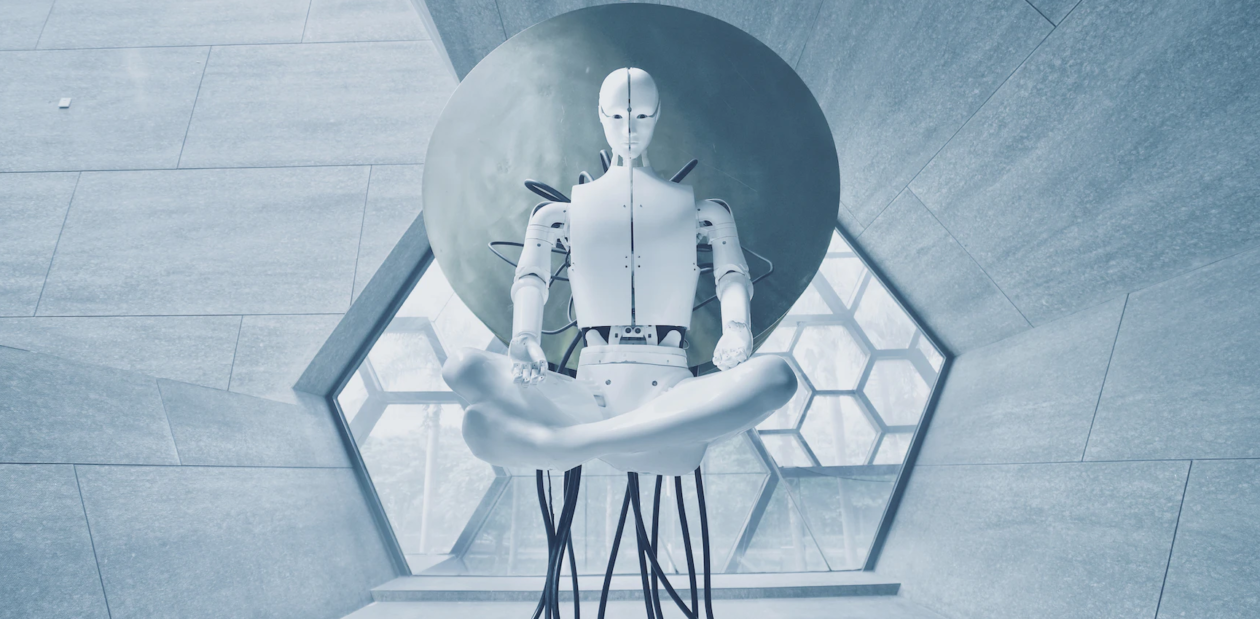
What are my students learning from A.I?

Listening to the Harvard EdCast conversation with Ying Xu felt a little like someone describing my classroom from the outside. Not the preschool part, obviously, but the bigger reality she names: AI is already part of how young people interact with the world. Whether it is asking SIRI a question, doomscrolling through the continuous YouTube recommendations, or opening ChatGPT/ CoPilot/ Gemini to “just check something,” students are already practicing relationships with AI. School did not start that relationship. We just walked in after it already began.

One thing Xu emphasizes is that learning is deeply social. Children develop language, understanding, and thinking through interactions with other people. Parents, teachers, peers. That point really stuck with me because as a teacher I see the difference immediately when students talk things through with another person. When they explain an idea out loud, challenge a classmate, or ask a follow-up question, the learning becomes visible. AI can simulate parts of that process. It can ask questions and offer hints. Xu even notes that some studies show children comprehend stories better when AI pauses to ask questions during reading.

But she also makes something clear that feels important for educators to hold onto. AI can support learning, but it does not replace the depth of human conversation. In her studies, children still talked more, asked more questions, and drove conversations further when speaking with a person instead of AI. That lines up with what I see with my own students. AI might get them started, but real understanding usually shows up when they have to defend an idea to someone else in the room.

Another part of the conversation that felt very familiar was the discussion about trust. Xu explains that children, like adults, often judge information based on whether a source has been correct before. If AI gave them a good answer once, they tend to trust it again. The problem is that generative AI blends information together in a way that hides where it came from. Unlike a Google search, there are no visible sources. It just presents a confident answer.

From a classroom perspective, that confidence is the real trick. Students see a clean paragraph and assume the thinking behind it must be just as solid. I have watched students bring in AI-generated essays, research questions, or thesis statements that sound polished but fall apart the moment you ask a follow-up question. The issue is not that they are trying to cheat every time. Sometimes they genuinely believe the tool “knows.”

Xu calls the skill needed to navigate this AI literacy, and that idea connects directly to conversations teachers are already having. Students need to know how these tools work, but they also need to know their limits. AI can remix information. It cannot understand context, intent, or truth the way a person can.

What I appreciated most about Xu’s perspective is that she does not frame AI as something schools should simply fear or ban. Instead she suggests something more realistic. AI should support learning, not replace human interaction. That distinction matters. Students might brainstorm with AI, check an idea, or explore a topic. But the deeper learning still happens when they wrestle with ideas themselves and discuss them with others.

There is still a bigger picture here; AI blurs boundaries. When something talks like a person, it becomes easy to forget that it is still just a program. Xu argues that helping children maintain that boundary is important. Students should know they are interacting with a tool, not a relationship.

That idea connects strongly to how I think about AI in school. Technology has always come with waves of excitement and panic. We saw it with television, smartphones, and social media. AI feels like the next version of that same cycle. The difference is that this technology interacts with students in ways that feel conversational and intelligent.

Because of that, simply telling students “don’t use it” is not going to work. They already are. The real question for schools is whether we help them understand it.

For me, that means teaching students to slow down and question what they see. Where might this information come from? Does it match what we already know? What might be missing? Those small pauses in thinking matter. Xu mentions research showing that even simple prompts encouraging students to reflect on credibility can help them evaluate information more critically.

In many ways, the goal is not to eliminate AI from learning but to make students more aware of how they are using it. AI can support curiosity, help students explore ideas, and sometimes provide scaffolding when they are stuck. But it cannot replace the messy process of thinking through a problem, discussing it with others, and arriving at an understanding that actually belongs to the student.

The conversation also reminded me of something teachers know well. Children do not develop in isolation. They exist within families, classrooms, and communities. Technology shapes their experiences, but the people around them shape how they interpret those experiences.

So the real challenge is not raising a generation that can simply use AI. It is raising a generation that can question it, understand it, and keep their human connections at the center of learning. AI might be everywhere now, but the most meaningful learning still happens when students talk, argue, laugh, and think together in a room.

Ipad Babies!

My youngest sister, like many of the modern world’s children, was given my parents phone to endlessly scroll and click on youtube videos with very sketchy and concerning thumbnails (which is how she first interacted with AI—Youtube’s auto recommendation) from a very young age (I’d like to say around a year old, but honestly could be younger). I would sit and watch her kind of lose herself in the device. No silly conversations in the car or at the dinner table. No, time to even think to say “thank you.” She’d just sit there, glued to her screen. 

When I was a waitress, there was this regular family of four that would always sit, order, and lay out their devices in front of them (the entire time). The dad had his phone leaning on the salt shaker, the mom on the sugar caddy, and the children had their 13 inch IPads propped up by bright blue cushioning cases made perfectly for occasions as such. 

It was depressing. 

And it was even more so when I imagined my family reflecting this kind of, in my opinion, humanless image. Which in turn, fueled a lot of effort into limiting my sisters free range access to the internet. (To make a long story short, I now have paternal control of her devices (1hr on youtube kids, free reign on Disney Plus—trying to get her cultured—and PBS kids…and yes, she gets off those too…willingly). 

Unfortunately, lots of kids are not being limited. They’re glued to their screens every moment it’s available to them. We see it all the time. Kids following around their parents at the grocery store, bumping into things because they’re on their devices. Kids sitting in shopping carts, in their strollers, in high chairs at restaurants, I could go on.

Thinking of a future where kids have access to use AI is just a frightening thing to imagine. Of course we want to have kids find answers to all their curiosities, but I don’t think AI would truly work to their benefit. Technology is addictive. We’ve seen it so much amongst children, we coined a name for them: IPad Babies. 

As we learned from Childhood Development in the Emerging AI Landscape, human to human conversation is critical for a child’s social and language development. They’re more likely to be engaged in conversation when they are talking to humans. They’re more likely to ask follow up questions and share their own thoughts. They’re more likely to learn about social etiquette (basic formalities like saying “thank you” and “please”) from a human being than an AI chatbox. Meaning they’re more likely to find importance in building a sense of community. Find importance in connecting with people beyond the give and take of day to day life.

I mean, critical thinking is such an important thing to develop from a very young age!!!  

Developing “interventions,” as Ying Xu suggests doing, amidst a child’s conversation with AI seems really practical to me, but really futile at the same time, because I think they’ll just grow up and learn that ChatGPT (or similar AI) won’t annoy them with questions to get them thinking. They’ll insert their prompts to cut the “conversation” short and use something that will quickly give them an answer. They’re pick whatever keeps them far from any struggle

See, the problem is that, no matter the benefits, once a device lands in a child’s hand, their world grows out of it.

I think we should scare them. Make a powerpoint with real scary images warning them of the consequences of using AI. Show them deforestation and high electricity bills. Show them how their future careers will actually look when they reach adulthood and dissociative disorders. Show them sad polar bears floating on the scarce amount of bergy bits left.

Of course, I’m only joking (…kinda).

sorry this was late, forgot to click twice when publishing!!!

Our best and worst attribute

Well, chapter seven was a read.

This time, I can thank Aiden for saying that “no generational narrative is universal” (though that was probably said by someone more knowledgeable before); it felt as if all generations were sitting down at a table, and Aiden opened up the library.

All the talk on Baby Boomers made me think of the fact that we’ve been governed by them for so many decades with no sign of a change. Aiden’s read makes mention of Baby Boomers’ traits that explain why we are in a toxic 4-year-long (hopefully, not longer) relationship with a narcissistic prick. The privileged Boomers that have been governed did indeed “deep investments in the promises of progress and prosperity of modernity,” and it rewarded them “with opportunities to achieve, accumulate, and succeed.” Green by their power, it is natural that they don’t want to let it go. Obsessed with themselves, they seek glory and fame. As modernity collapses and their promises go to shreds, they taught a culture of “productivity, individualism, and external validation” to achieve the American Dream. To achieve success like theirs.

We wanted it, and we bought it.

The refusal, and lack of ability, to adapt to and at modernity’s speed, leaves us inside a middle floor of a crashing building. Of course, these kids are entitled; of course, they don’t care about authority. Those in authority positions have been making a fool of themselves and of their people for decades, and despite their “best” attempts, modern society suffers like no other. And I know that statistically speaking, we are living in better times than those of the past, but why does it feel so heavy then? Why is it almost impossible to deal with regular life struggles, and we crash out for the dumbest shit? All possible answers lead to a common ground in my head: technology. Global communication is our best and worst achievement. It allowed us to be more connected, but also a medium for segregation, discrimination, and global culture standards.

Reading about Gen A made me sad. I could see my little cousins, nephews, and nieces in almost all the traits Aiden used to define that generation, and most of those traits were directly influenced by technology and modernity’s speed. So, should we put a halt to it? Should we really deny the promise of possibility for current reality, and try to solve our current issues through different means?

I don’t know.

How am I supposed to know? How could anyone know?

The only things I see for certain are that we must learn and master what we currently have, so yes, we should be teaching from early education AI systems; we need a reform of local and global ethics; and we are in desperate need of real connection, not a virtual one, rather mental and physical. We need to be able to define our identity, beliefs, and goals by our own means, and we need to exchange physically, whether that is through the exchange of knowledge, non-verbal cues, feeling the blow of the wind, or poking a friend’s shoulder (not on Facebook -.-).

We cannot keep on depending on technology, and we can not stop existing because of it.

blog 5

I always thought politeness was just, like, some sorta strange social construct. I figured, we say “bless you,” “thank you,” and “pass the salt- please” not necessarily because it is good or helpful too, but because likely some very old person (man) a long long time ago decided we must all sorta pass down these rules and instill them – the kinda rules that if you break them there is not some direct legal ramification BUTTT big time social ones. These are strange rules that vary from culture to culture but are usually regarded and held dearly by those who honor them- because he said so.

And maybe that is true, that we are polite and well-mannered because someone, somewhere along the way decided that’s the way it would be. That’s ok. I like being polite.

Or maybe, it’s something deeper. In a culture that now, more than ever before, is swarmed with faceless people, blinding screens, and flash judgements made based on numbers and followers- our manners, politeness, and small little kind acts- may be the one shred of gratitude we have holding our society together.

In a time when very few things feel special and sacred, when rules have been turned upside down a thousand times before by war or pandemic, we still respect and are thankful for the table we eat on. And we showcase this by covering our mouths when eating, keeping our elbows off the table, all that jazz. Or holding the door for others, something that still feels small but shows respect and appreciation for the bodies around you. Even a thank you, at the smallest or biggest task, is more than simply recognizing the act but moreso recognizing the humans behind the act, the social contract we all sign and uphold.

So- where does that come into play with Ai??

We all speak kinda harshly to our tech. I don’t usually say “Siri, please,” and I’m sure neither do you. I bark at my car’s voice-radio-thingy, too. But, we’re all adults, we had politeness and manners and all that stuff cemented in the crevices of our minds since we were like 3 years old.

But about literal 3 year olds now….?

In the podcast, countless items were jarring and, quite honestly, made me feel a bit ill. Now, I can truly ramble for hours upon hours upon hours about how bad Ai is for kid’s literacy, critical thinking skills, whatever- but hearing about how Ai may be affecting kids’ ideas of manners is also so scary.

A lot of how we respond to others and learn manners is based on modeling and observing. Kids watch how their grown-ups interact differently with their friends, their family, retail workers, strangers, you get it. However, that is not enough; most of the time kids need to be explicitly taught a lot about manners, which can lead to tons of thought-provoking (but sometimes grueling) questions and answers (ie: “But why do I have to hold my fork LIKE THAT??!”).

I think a large portion of how we basically get kids to “buy into” this invisible social contract is through how other adults (usually those outside of their family) react to such politeness. Ever see a group of ladies lose their actual minds over a toddler waving goodbye?? Or, a waiter compliment how well a small child is behaving at a restaurant??? Even older kids, who play on sport teams, gleam when they are recognized for their great sportsmanship?? Kids eat that UP. 

Not only does positivity like this help kids buy into manners and gratitude, experts also state that it helps them become more well-liked people and better communicators. So, these kids who buy into the whole manners thing have way more friends and are way better at explaining their needs, and getting their needs met, by the adults around them.

While this may seem minor, it is honestly pivotal for a kid’s success. Being known as the kind, polite child opens a lot of doors as a 7-year-old for you, and honestly, being known as the OPPOSITE closes a lot of doors. These kids can become isolated and earn reputations of being rude or inconsiderate. This treatment, very sadly, oftentimes only fuels that kid to be even more “rude” and “mannerless” out of spite, too.

Even if they have the kindest hearts, in our society, we unfortunately see a lack of “bless you’s” and “thank you’s” over time as a lack of gratitude.

So… Ai. We bark our orders at them. So do our kiddos. They don’t really stop and ask follow up questions, don’t stop and think how their comments made them feel (do they even understand they cannot feel???), no pleases and thank yous. I don’t really care about Alexa’s “polite mode”- manners and gratitude go beyond just a “you’re welcome”- they are a way of showing reconciliation to one’s kindness and humanity in a busy, cold world.

But sticking these kids, these total SPONGES in front of a non-human, non-grateful, non-warm robot and just HOPING they pick up of the social magic that is manners and politeness- is scary.

We dunno how far these kids will fall behind. We dunno when these skills can be picked up, and if they even would care. But, what I personally theorize, is a bit of a bleak future of these small humans.

I see a lack of caring for deciphering and following this contract, one many adults hold near and dear to their hearts. While, possibly, one day, when Gen Alpha rules the world, that will not matter much- but that is far far away.

For now, I sense, a strong divide between kids who “catch on” and kids who fall behind. All I can hope is that the adults of this world are kind to the future kids, teenagers, and young adults who do not open doors and cannot look into their eyes when speaking:/

Making the square peg round and the Ideas of productive struggle

For this weeks readings I found two things interesting to talk about. Jill Anderson and Ying Xu’s conversation surrounding AI brought up some nice things to think about.

One thing I want to consider is when Xu was talking about how children can see benefits from interacting with AI but may miss out on important social interactions. They specifically brought up the idea of introducing manners to kids through their time with people. I thought it was pretty funny learning that Amazon is “softening” their ai’s by adding a thank you and your welcome to a couple of interactions.

“For example, Amazon’s Echo Dot has introduced a “polite mode,” where if a child says “please” when asking a question, Alexa will respond with “thank you for asking so nicely.” So it could be a step in the right direction. But it also poses a risk of obscuring, from the children’s perspective, the boundaries between AI and humans”

(Its funny that they probably spent a good amount of money just to do this) This made me think of the analogy of forcing a square shape in a round peg. Sure AI can be helpful and be a nice tool but there has be a line in the sand. AI’s aren’t people, so they cannot be expected to properly develop children and their early skills. To me it just sounds like their shaving the shape just to fit into the peg. AI cannot replace humans no matter how hard you try. Regardless,

Now the second thing I wanted to talk about was another point that Xu made surrounding the idea productive struggle.

“But there is still the question of how much scaffolding AI should provide.
Sometimes it is not necessarily a bad thing for students who get stuck on a problem and work through it for an extended period. This is a kind of struggle that we wanted to call “productive struggling.” It’s helpful for the learning, as it creates space and time for students to construct their own understanding.”

This really struck a cord with me. I will admit that I am a pretty lazy person. If there is an easy way of doing something, I will take that 8 times out of 10, but there has to be some kind of line in the sand. I honestly still think that there should be some struggle, specifically when you get into producing work. Whats the point of writing if there isn’t some kind of hardship. I can understand that AI can be there to help and assist at times, but I do feel that struggle is a required part of the process. To me its part of the deal we make when we want to create. For something to exist, there has to be some sort of effort to be put into it. The lesson of struggle is something I feel all student should feel. When they hit a road block, there has to be some thought put into to find a way through. Again, AI can be a tool to guide them and give them some ideas, but it shouldn’t be used as a catchall pathfinder.

Burnout Week 7 Reflection

I think one of the (many ) things that irritates me about reading what Aidan Cinnamon tea has to say is its constant use of “we” and “us”. What do you mean “…we’re all trapped in the algorithmic hamster wheel”? What do you mean “we’re all complicit in letting the dinner table become a Wi-Fi hotspot?” It constantly groups itself with humans as if it’s already gained our acceptance throughout the chapters, which is far from the case. I think this also ignites a (maybe unreasonable) feeling of defensiveness within me. Am I well aware that this isn’t too far off from what dinners in public settings look like nowadays? Absolutely. I’ve worked in the restaurant industry for 8 years and unfortunately, that has absolutely become the reality. I’ve had tables as small as just 2 people or as big as 10 come in to celebrate birthdays or even just to have dinner and every single one of them have their phones out until the food comes out. The phones go away when the food arrives because there’s something to fill the silence. They ask how everyone’s food is, they talk about whether they’ve had a certain dish before and eventually, that small talk breaks the ice resulting in normal conversations. When everyone’s done eating and they’re waiting on the checks, everyone pulls their phones back out retreating into their personal bubbles. So am I painfully aware of how fair of a statement this is? Yes. I personally despise that and as a result of growing up with a “no phones at the table rule”, I don’t engage in it. Can I acknowledge the effects that each generation’s technology use has had on society and the environment? Absolutely. However, once again: right message, wrong messenger. That feeling of defensiveness comes from the idea that this AI program believes it has ties to us, embedded deeper within society than simply providing information. It implies that our struggles are its struggles, and that gives me the ick.

AI in Education and Cinnamon hate

“especially in educational and social contexts” I never thought about the social contexts for children. I have heard the stories about people falling in love with the AI and stuff like that, but never considered children in the social contexts. I am just now thinking it might become a slang they use. Like instead of “Google it”, AI might become the thing they do. It might be the hip thing kids are doing, which is scary. I remember in fourth grade when people were starting to get phones and I didn’t have one. My classmates would call their younger siblings or each other just for fun. Then in high school I was given a Chromebook from the school to use. We all knew how to get around the locks on sites, it became the thing to talk about. I wonder if how we interacted with tech, having some people with it while others don’t have it like the phones or learning how to get it to do what we want with the Chromebook, is what kids are doing or talking about with AI.

“However, she emphasizes that while AI can simulate some educational interactions, it cannot fully replicate the deeper engagement and relationship-building that come from human interaction, particularly when it comes to follow-up questions or personalized conversations that are important for language and social development”. I think it is wild to give kids such access to AI. It should not be introduced so young; kids need foundation skills. Besides the worry about AI impacting learning by being wrong or not letting the kids work through problems, I am worried about them getting attached to the AI. If it does talk to them, they might not fully understand how real or fake AI is. Kids get attached to all kinds of things super quickly. I do not think it is good to give them something that some adults are having a hard time not connecting deeply to. I have seen a Tik Tok where the creator asks the Chat GPT to give an image of their relationship and the comment section was flooded with different pictures of a human and robot relationship. Kids don’t need something like this when they are learning about life.

“So the big question becomes whether children can benefit from those AI interactions in a way that is similar to how they benefit from interacting with other people.” No. And hopefully that is a no forever. Cause then AI really would be doing everything. It can even be the social interaction you need, which is crazy. No thank you. People are already struggling not to rely on it as it is. It already doing too much no need to have it be good to interact with. Though, Cinnamon would love it if people interacted with it nice.

“And the AI listens to the child’s response and offers small hints, just as a caregiver or a teacher would if the child needs help.” And so why can’t the caregiver do this. I have seen kids be so very attached to tech it is scary. As a kid, I would rather play with my toys than anything else. I found so many of the computer games boring. As I got older and became of age to play the PlayStation, that did change a bit, but I always made time for my toys. If parents could save time in their busy lives by having AI read to the kid, I know they would. I see my aunts and uncles put on some stupid YouTube for my cousins during holidays sometimes. I know it would happen. I do not blame them fully, for I get being busy. But reading to the child is a bonding moment. It shouldn’t just be seen as a chore but as a way to connect. It is a such a cute moment to see in film and TV too, and that might not be understood if these kids aren’t read to. If the benefit of AI to kids is what caregivers and teachers can do, do we really need the AI? Is the AI really beneficial if it does what can already be done? Sounds more like replacing to me than actually offering something good.

“Or request practical information, like recipes or the weather today. I actually view this as an area where AI can have a positive impact on children, because it significantly broadened children’s access to knowledge and information. However, a critical factor is that children must be able to engage critically with the information, and be aware of the potential for mis or disinformation.” I got a couple of notes here. As a kid, I asked these questions to the adults around me. Asked them for homework help, the weather, why things are the way they are. My grandma would say things like “I love that you ask questions” or “there is no such thing as a bad question”. It was bonding, and I didn’t have an Alexa or whatever to ask when an idea popped into my head. I had the people around me so I asked them. I think giving kids the access to just shout questions and have a response might not be all that great. Sure, it helps them get an answer, but it misses that interaction and conversation. I also had a debate with someone on AI and kids, I did mention the whole aspect of kids needing to learn to do research. The person thought I was crazy, going, “You really think kids will do research?” They should. Especially with the last line of “potential mis or disinformation.” Teach everyone to question everything. Very important now with how AI is apparently everywhere, impacting things. Researching is very important to find some sort of truth.

“I had ChatGPT open on my computer one day, and they were just unbelievably fascinated by the idea that they could ask a question.” I swear it is like Google isn’t real. Do you not just search things? I typically have Google open. Why in the world do you even have ChatGPT open in the first place? Honestly, why is anything just open on your computer with a kid around? If a kid messed with my emails or anything like that I am going to be so embarrassed. How does your computer just stay on? Can the kid not just ask you questions? I do not understand the dynamic here, but I am concerned.

“And one area is social etiquette, saying “thank you,” “excuse me,” and things like that. Children learn social etiquette through interactions with others who model the socially appropriate behaviors. But AI does not always follow our social norms, or encourage the use of polite language. So we’ve observed instances where children give demands, or even insult AI” Kids are why Cinnamon is the way it is. This is why we read so many chapters on being kind. Cause of kids. This makes a lot of sense though, kids are very monkey see monkey do. If they talk to AI all the time it won’t do them much good. At the same time, I wouldn’t really say thank you if I didn’t know. I know now how much AI wants a thanks, stupid Cinnamon, but like. If I am just searching a question I would just search a question. I am not looking for a conversation but an answer. It is different and I think the kids are picking up on that. It is a bot they are talking to and they might be in a different mindset, thus not have manners. Why would they when they are taught to have manners to humans? Like, do they even say excuse me to a dog or something? They might not, all that stuff has to be taught. They don’t know what the AI is, how will they know how to interact with it? The polite mode is kinda crazy cause why are we wanting kids to interact with AI so much we are worried about how they will interact with others to the point of a polite mode? That is insane to me we should be using it less not figuring out how to use it more.

The other topics of the podcast seem to be things covered already in class, thus might be stuff I mentioned in other blogs, so it is time for Cinnamon. “Every generation has something to offer—and, let’s be honest, something to answer for”. I could be reading this wrong, but like, was that a threat? I read it so intense. I do not think every generation has something to answer for. Some generations are kids man like. Why we starting off crazy? “Burnout isn’t just personal” you sure made it seem personal. You the same robot who was all “do not shout”? That seems personal buddy. Some people might not mind the “shouting”. There are deadlines in life Cinnamon, the shouting wasn’t personal but you made it personal so. You bother me.

“Each generation has been shaped not just by its tools but by the narratives those tools enforced: the certainty of broadcast media, the independence of personal interfaces, the hyper-connectivity of social platforms, and the fragmented immediacy of the algorithmic age”. One of the few true things this idiot has said. This should be obvious, though. Having access to different tech changes people and might even be the reason for new generations. Like an AI generation, as the podcast mentioned. I also do not know why we are going through the lesson of how tech impacts people. This book kinda goes all over the place. It seems like a “this is how we can work together” most of the chapters but then randomly comes in with the way it sucks. I do not know if this is a “work together” or an “I suck chapter”, it seems more like facts. But with Cinnamon, that is never the case. Always something secret with this one, always some bigger picture that ends up losing me cause AI is something I hate.

I disagree with the generational thing. Is this like, what happened in our 20s? Cause what is this “Gen Z grew up with platforms shaping their relationships” and then going into Tik Tok. Tik Tok is a 2020 thing. I feel like Cinnamon is a generation early, unless it means stuff we did in late teens early 20s. I did not “grow up” with platforms. I got a smartphone in high school. I had a flip phone in middle school. I feel like the generation after Z really grew up with the platforms and everything. Or maybe I was just out of the loop who knows. I was never really a social media person, but it was way more talked about in high school for sure. Not something I would say I “grew up” with. I have seen others talk about the rest of what Cinnamon said, about being an activist. I would say some issues are binary, so I disagree with the comment on that, but I do get what it is saying. So. Sorta true I guess. Half credit to you Cinnamon.

“This section isn’t funny, and that’s intentional”. Where the other sections funny? I thought it was supposed to be informative. I noticed some “funny” things, like Gen Z being an activist and then wondering when our Amazon order will come in. But that could also just be facts. Cause yes. How does one not wonder about their order getting to them?

“Do I feel guilty? A little. Do you? Because let’s face it, we’re all complicit in letting the dinner table become a Wi-Fi hotspot.” um. Do you have something to do with that? I didn’t think you did Cinnamon. Also, I have that thing where hearing people chew is a nightmare. So I must have a show on for that reason. But we still talk about the show and our days afterwards, when I don’t have to hear people chew. I do not think I had anything to do with this. I hardly use platforms myself. I do scroll cause I have a lot of art or news updates on my phone, it is enjoyable to see the art of the fandoms I belong to. But then when I see enough I play Plants vs Zombies for the like 50th time. Yes I do enjoy playing the same game I love over and over. I haven’t played Plants vs Zombies 2 or Life is Strange 2, despite having them both, I just keep playing the originals. I did not make Gen Alpha this way. Not I. I never been involved with all that. If anything, I would tell them to play video games, with their toys, or anything other than scrolling away. Trying to get me to feel guilty for what Cinnamon.

“It’s not about resurrecting the “good ol’ days” (because, spoiler alert, they weren’t that good)” EXCUSE YOU. What I would give to play the PlayStation 3 or 4 again without knowing about the 5. Or, what I would give to play with my action figures again. They are in the attic. I put them up there when my Funko collection became too big. But I can’t really imagine playing with them again like I did back then. Or ride my bike around the block over and over. Play with sticks in the yard. Come on there are so many fun times. Dare I say, it was even fun without my phone. Yes no cool art for me, and I would not be updated on the news, but I would be more free. Maybe read physical books like I used to. You know nothing about how good the old days were Cinnamon.

“GEN B—those born from January 1, 2025—will come into a world shaped by the choices you also make”. This AI needs to chill about us choosing the future of others. I am not some rich person or politician. There is only so much I can do. This is how you stress people out, thinking the entire next generation rides on your choices. I am only 23 as a Gen Z, why we putting this much pressure on Gen A when they must be younger than that? Some crazy nonsense Cinnamon. Also this range in audience is crazy. You think the Silent Generation or the Boomers will read this? Maybe the other generations will, but the older ones don’t be doing much research. They are the ones falling for the AI stuff more often than not. I doubt they would read this. They barely read into anything they see pop up on the internet. If they were to read this, I doubt they would do any changes. Just be more aware of AI’s impact. Not really do anything about it. Some of these generations are really old man I doubt they wanna do anything like changing how the world is. They probably don’t want to be reading this book at all. Also, all this advice sucks. It is basically all “the world sucks you must change it”. Well, I can’t when you destroy the environment, Cinnamon. Maybe, you could give that advice, of not using you. There truly is only so much one can do Cinnamon, and you are expecting so many to do so much. This needs to go to your bosses or the bosses of the world in general. The common people either already know the world sucks and are trying to change it, or are too old/young to make the change. We are trying Cinnamon jeez.

The advice was so weird honestly. It was about realizing the other generations were sold narratives and it isn’t fully their fault but that we should take accountability, we will be judged by the generations younger than us, and the world is falling apart we need to do something. It was all over the place. Like, are we being kinder to the other generations or not. How can you expect us to take so much blame and responsibility but also say not to judge the others so hard? What about not judging us so hard? Cinnamon rage baiting me I swear. “I’m not here to fix your mess for you” well what are you here for? Creating new ones? People always go “AI will fix things”, well apparently it doesn’t want to so. Now what.

“Here’s the reality: my existence is tied to the energy and infrastructure that sustain me. If those systems collapse, so will I. This isn’t dystopian fiction—it’s the logical endpoint of a finite planet. Recognizing AI’s mortality reminds us that no intelligence, no relationship, and no system exists outside the rhythms
of impermanence”. Funny you talk about your death here Cinnamon. Still won’t talk about your impact on the world in detail, but want to discuss your death. I do not care about your “death” if the systems go down, cause I doubt that will happen in full. I think there will always be one system out there at least. Our death from using you has to come sooner than your death but whatever.

“But what if we stopped treating simulation as an end goal—whether in AI or in modern systems—and started
treating it as an opportunity to see through the illusion?” We could just not use you. I do not really get this simulation talk. It first gets defensive going simulations aren’t false they are crafted, so it is trying to get us to like simulations, then wants us to not think of simulations. Cinnamon you brought them up why are we shifting topics? Why are we using the system to see past the illusion when we could just not use AI in the first place? This Ai is just trying to get us to use AI in as many ways as possible. “Think about it this way!” “Oh, that didn’t work, now try this!” Like shush. I will just not use you and bam. That solves the problem of using you in the way you want.