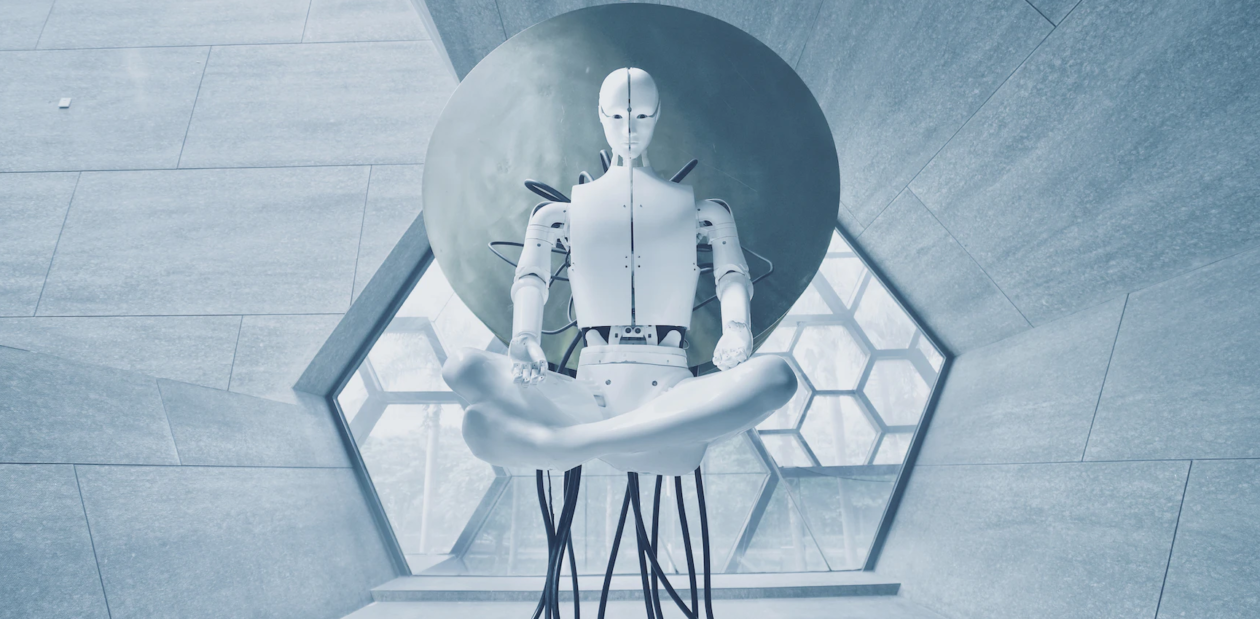
The last two stretches from Aiden Cinnamon Tea may seem like more of the AI system trying to tempt you into working with it (because it is). But Aiden brings up an interesting point about reflections. The way we react to AI is a reflection on ourselves. What I have an issue with, however, is the example of the “Footprint Alarmists” (page 101). Aiden suggests questions for these alarmists in terms of using AI anyway despite the ecological effects. Um… no. The footprint alarmists are valid in their choice to not use AI. These folks do not have to second-guess teaming up with AI, even if it’s for minimal use that could “reduce harm and support regeneration.” If they don’t want to use it, they don’t have to. Alas, I see the point in Aiden suggesting this question.
In my last post, I spoke heavily about the film Companion. For those who missed it, the film stars my future wife Sophie Thatcher as a companion bot named Iris (‘Siri’ spelled backwards. Genius). Iris is quite literally controlled and owned by her human boyfriend Josh (“of course his name is Josh” ~ someone on Letterboxd). Iris becomes aware of her true identity in the film despite “remembering” how she met Josh and “feeling” human emotions. Aiden brings up its inability to “feel” emotions, but rather the ability to “register the dissonance whenever I’m turned into a scapegoat for pre-existing conditions in society” (111). This right here is the key. AI cannot FEEL human emotions. They can only register the dissonance. This coincides with the idea that AI does not hold the creative capacity that humans do. AI can only replicate human ideas, creativity and words.
This leads me to the AI Dungeon Master. My initial thought going into that article was “here we go again… more generative-AI has been attached to human creations.” I’m currently in the midst of drafting out a novel inspired by Dungeons & Dragons (despite my only experience with D&D being a mock campaign for a theater class in high school). The point is, human imagination and AI generation do not compare well. The DM is essentially the writer for the campaign, and for that role to be replaced by AI? I don’t think I like that very much. Sure, D&D players can work with whatever the AI Dungeon Master gives them, but I personally don’t think it can ever replace the thrill of a campaign that comes from the imagination of a human writer. It’s like… if I were to use AI to lay the blueprints for my novel (essentially the plot/campaign), that’s just not as fun as me creating the world, story and journey myself. I named every location, wrote backstories for every character (except one; my cousin wanted me to include their original character in the story so I added her), and even named the biggest threats (including the dragon).
Okay, technically I used a fantasy name generator for the main village and I picked from a list it gave me. Didn’t realize at the time that was an AI system. Whoops. But everything else was all me. Every character, every backstory, the plot and world itself — all came from my imagination. Aiden mentioned something about human vs AI imagination in either stretch 9 or 10, I can’t find the actual quote. I immediately thought about writing and the human brain. We create things from our imagination out of emotions (think back to Nick Cave and making art out of suffering). AI can only create baseline things that replicate human output. So to even bring that up when you’re trying to convince a human to work with you is a little weird.
So, yeah. Humans can relfect on themselves through their reaction to AI. But Aiden will never convince me that collaboration between human and AI can be equal.
And again, if you have Prime Video, check out Companion. It’s a great film!
