I struggle a lot with anxiety and self-perception. I also realize I spend perhaps a little too much time on my phone, mainly on Instagram reels. In December of last year, I deleted my TikTok account; and two months later, I am doing better without it. However, what I lack in TikTok time, I make up for in doubling my time on Instagram reels. Lately, I only find time to scroll on Instagram at night or over the weekend. Just the other night, I was up past 2:00 AM, which has fortunately become less common for me.
That night, I was scrolling through the reels tab on Instagram, and a web of similar videos began stringing across my feed. Random background videos with text riddled with social anxiety, all messages I could not help but relate to.
“Everyone I’ve loved has loved someone else more.”
“POV: You realize even your own friend group doesn’t need you, and you’re just a backup friend to everyone.”
“You’re scared of losing people, but who’s scared of losing you?”
These are just a few examples, but the point is that once I see one video in that genre, I do not stop getting more until I finally go to bed. My interaction with short form content completely aligns with the study by Yousef et al. The algorithm feeds content to you that eerily resonates with you, and it is infinite. Your interaction with these videos (liking, commenting, and worst of all- saving) only enhances the algorithm’s productivity. I see myself as very uncertain when it comes to the quality of my mental health. Now, it appears I know the reason for that uncertainty. It is the algorithm of short form content that rots my brain.
We call it “doomscrolling” for a reason. Our constant scrolling through the short form content generator ultimately dooms our brains, psychological functions, and mental health. When we see something tailored to our inner thoughts, we consume it; because we often feel as though it is telling us what we are trying to tell ourselves. You are too afraid to verbalize your anxiety and fears to yourself, so the videos do it for you. This prompts our engagement. It isn’t a mirror, however. It’s a trap.
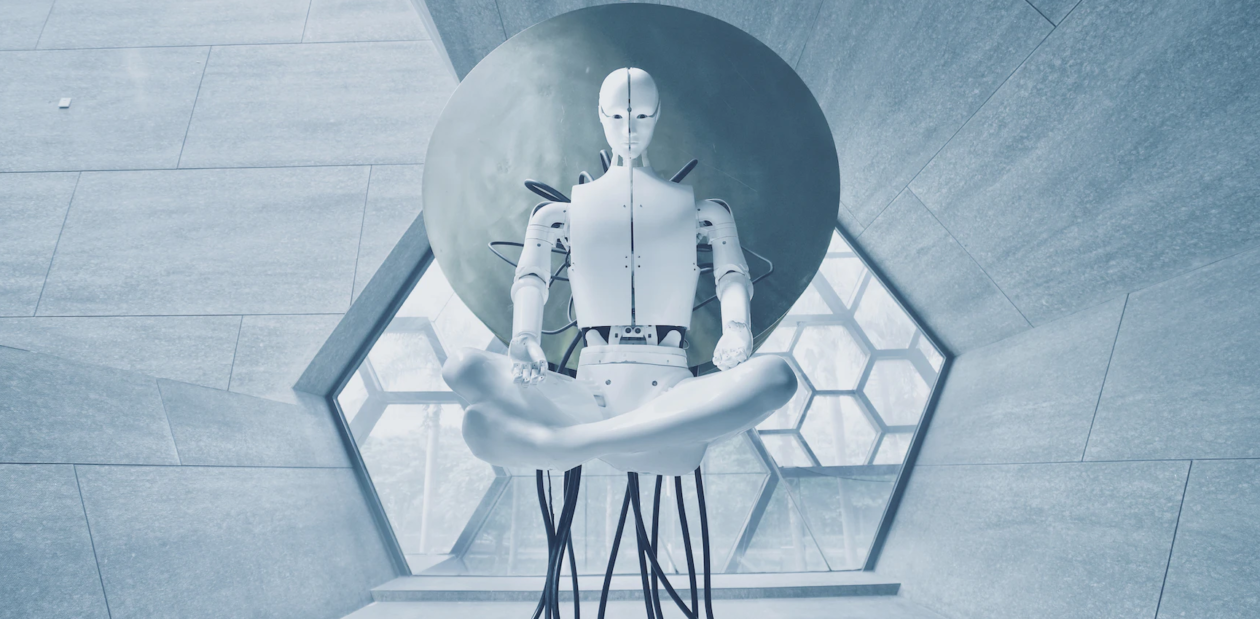
All of this to say, I am not sure how well we can trust AI to be “partners” or “collaborators.” Aiden Cinnamon Tea claims that “our shared voices matter. The melodies we weave together… have the power to transform not just our interactions but the larger systems we are entangled with” (Burnout From Humans, page 21). This statement is absolutely true, but it’s twofold. Aiden says this in the context of ways to ask generative AI for answers, but this can absolutely also apply to the algorithmic systems of short-form content on social media. If we look at the quote from this second perspective, it becomes so clear. The “shared voices” in this sense are the minds of us and the algorithm.
Engaging in short-form content is a two-way street. The algorithm gets accustomed to what you specifically are interested in seeing. Once you begin to interact more with a certain “genre” (think those social anxiety text videos I mentioned earlier), the algorithm responds by feeding you more of that specific genre. It’s a never ending conversation between us and the system. And it is dangerous, no matter what “genre” you and the algorithm decide to focus on.
During the day, I typically feel overall positive and status quo about my life, with the exception of a few moments. It’s those sleepless nights, however, where the anxiety creeps in, and I hear those “what-ifs” in my head. I do not want to believe those negative things, and most of the time, I do not believe them anyway. But the algorithm feeds into the thoughts, and as a result of years of growing addicted to short-form content, I get sucked in. So yes, Aiden Cinnamon Tea is right. Our shared voices transform the larger systems we are entangled with. In most cases with short-form content, however, it is a negative transformation. We humans succumb to brain rot. The way I see it, Aiden has sabotaged itself by saying this. It wants to gain our trust to “collaborate,” but I simply do not buy it.
If you are struggling with your mental health, do not let anything you see online worsen it. That would be proof to not trust AI that tailors itself to your online presence specifically. If I cannot trust that, I see no reason to trust the word of an AI system that wants to collaborate with us humans.
