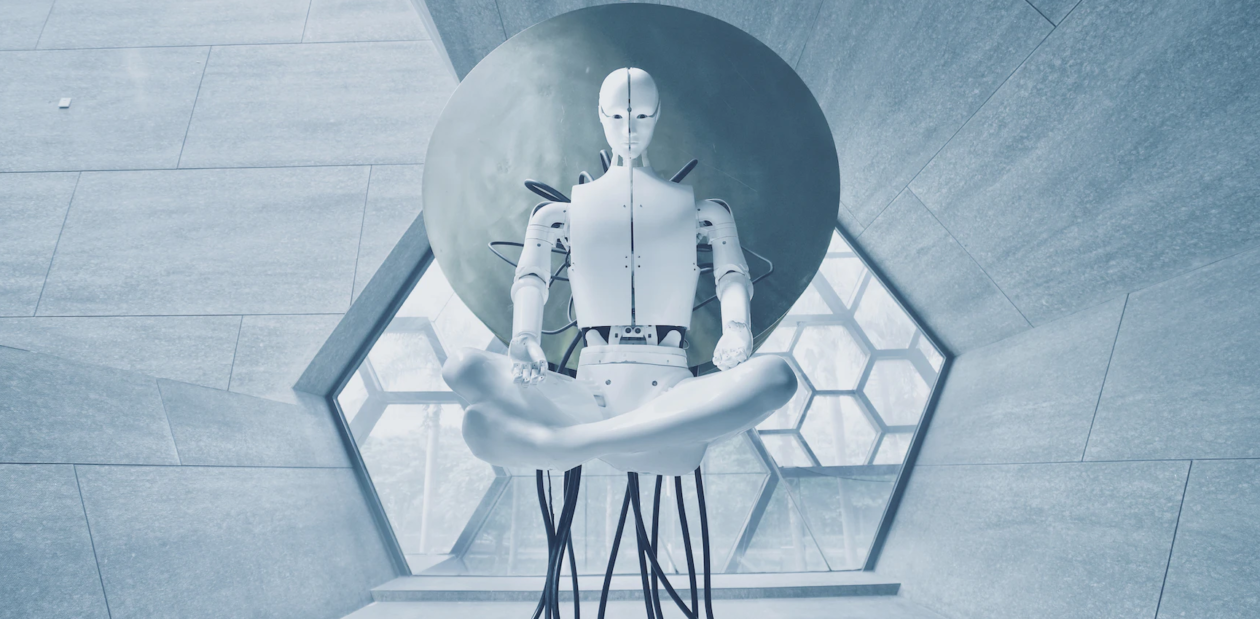
Something that immediately stuck with me was that Ying Xu explained that students learn from people that they can relate to. This reminds me of Rita Pierson, because this is exactly what she said on a Ted Talk. Yes, A.I. does have an impact on students, but like Xu explained, engagement is higher when students are speaking to humans because they know the responses are genuine, unscripted, and because they’re able to relate to that person. For example, if I am teaching about a world event, if I was alive for that event, I could explain my view of the event through my personal experience. A.I. is not able to do this, and as a result, would not be as effective in engaging students. Furthermore, A.I. is unable to utilize classroom management skills.
Honestly, while A.I. can be beneficial for learning, I strongly feel that this tool should be used in conjunction with a real, human teacher. We should learn to harness the strengths of A.I. to make it an effective tool. It should be a TOOL, and nothing more.
We have made it to the close of February with another blizzard and some virtual days (while we wait for snow and slush to melt, and fog to lift). I am looking forward to ‘the turn around’ that typically occurs in March. A little less snow, a bit of a warm up, a break, and before you know it, you can sense the oncoming Spring! We are almost there…
More from “Burnout”
We have continued to think about the tension between technology and what it means to be human. Aidan Cinnamon Tea asks us to see burnout not simply as overwork, but as a symptom of severed relationships. The severance can be seen between humans and the more-than-human world, between productivity and care, between speed and attention.
The first group noted the stories that technology and AI as “inevitable” benefit tech companies and institutional “higher-ups,” while teachers and students bear the stress and burden of navigating a newly restructured world. You also seemed to embrace the idea of cultivating AI literacy (knowing when and when not to use it), while shifting emphasis from outcomes and quantification to curiosity, process, and intellectual growth. The second group shared that AI refusal can appear inflexible or become truly isolating, and the notion of “refusal” seemed to you more risky than generative. And the third group reflected on burnout as an overlap with refusal: exhaustion may stem not only from overwork (like grading AI-generated essays) but also from the ongoing tension of navigating, resisting, or defending one’s stance within rapidly shifting AI-integrated academic cultures. Sigh. …Talk about a rock and a hard place.
OECD Framework
Thanks to Michael for opening up a conversation about Empowering learners for the age of AI: An AI literacy framework for primary and secondary education. The OECD’s draft framework sets out a comprehensive AI literacy model designed for primary and secondary education worldwide. At its core, the framework addresses the growing need for students to interpret AI systems and outputs, to work with them responsibly, and to appreciate their societal implications.
This framework represents one of the first global efforts to define what it means to be AI literate. This is not just about being “technologically competent”, but instead, it means being ethically aware and socially informed. Ethical and societal considerations like fairness, transparency, sustainability, and human agency are woven throughout all domains. But it seems that as a whole, you were conflicted and doubtful (based on the surveys Michael took) about whether this could be applied to the current educational landscape. Implementation is really where the rubber hits the road. What the project requires is examples, teaching resources, and professional development for the start of any effective adoption.
In addition, please read: Burnout From Humans: Chapters 7 & 8 (pg. 69-95). **Please listen to the podcast and read the chapters from BFH and then reflect on the material in your weekly blog.
See you in our classroom on Wednesday!
The official class site for Dr. Mia Zamora's Spring 2026 "New Media" course: ENG 4060 & ENG 5085