At a loss for words

After last week’s spiciness, this week’s readings felt a little more bland. Maybe because of me, and my experiences from this past week. But the new Burnout chapters left me depressed. Not because I am bothered by the machine’s critique, but because the things it said are true.

I’m not sure how I feel about its words: “When you treat me like a vending machine for answers (an analogy you’ll see sprinkled liberally throughout this book), it mirrors how modernity treats the Earth: as a resource to extract from rather than kin to engage with.” Are you really a kin of mine?

Earth and humans are not of the same species, but nature unites us. Machines and humans are not of the same species, but we are putting all we know into it, so that unites us?

This week, I don’t feel strong enough to battle human nature, nor our choices. But in the end, the answer is still us.

Blog Post #4 Article reactions

Starting with the two chapters from “Burnout From Humans”, it is an interesting way to look at the growing greed humanity has. There’s no doubt that there is an air of needing something done as fast as possible, caring more about efficiency than the deeper meaning. The comparison used of singing is a nice way to think about it. While some singing can be fast, the point of it is to do it with careful intention to share a message, shouting does not have the same effect as singing in the context of that book. Plus it does bring up the point of using AI’s response as a building/starting point and not an ending point. Regardless of my feelings towards AI, that is a good point. Many use AI to do the work for them and not take the opportunity to expand on the results given, to see what they personally can add.

With the second article about brain rot, it was an interesting read, especially when it mentions video games. With video games, I absolutely love, it’s been a part of my childhood, adolescent years, and current years. With video games, I always see the argument of it ruining attention spans, social connections, and being too violent. And yes, I can understand those arguments. I also see the beauty video games has brought. Video games are not all fighting style games such as COD (Call of Duty) or Battlefield. Video games are an opportunity for people to connect on something they mutually like and share different video games others might have not explored yet. Not to mention video games can cover many genres such as horror, puzzles, story-based, and more. Video games provide opportunities for people to exercise their skills as a career, whether it be voice acting, 3D modeling, script writing, coding, character/graphic design, or marketing.

Continuing with the point that video games can create shorter attention spans, I believe that depends on the video game. Some video games take hours to complete, which takes dedication. If that video game follows a story, that requires extra attention. A few examples can be Detroit: Become Human, The Last of Us, Telltale game: The Wolf Among Us, Telltale game: The Walking Dead, Heavy Rain, and Life is Strange. All of the games mention hold a special place in the heart of video game fans because there was love and care crafted into making those games.

Video games can also involve the wonder and horror of exploration, a wonderful example being Subnautica. Subnautica takes place in an ocean planet, involving exploration to collect and mine different materials to build while facing creates of the planet. Another video game that involves crafting and exploring is Minecraft, a game that is a part of many childhoods. Minecraft has brought people together from around the world, creating severs and making their own games. The love of Minecraft hasn’t left to this day, still known even by younger generations.

P.S. I would rant more about video games but I understand not everyone has time to read this.

Brainrot

Demystifying the New Dilemma of Brain Rot in the Digital Era: A Review

Burnout from Humans: Ch 1 & 2

Delete. Redownload. Brain = rotted

The term “brain rot” was not a topic I was particularly curious about investigating. I knew it from the (endless) hours I’ve spent scrolling on TikTok. A platform where I’ve viewed countless of what unfamiliar adults would call “weird” Italian brain rot videos, but my generation would call it hilarious (-ly addicting).

And what a weird way for us to call this type of media consumption… It’s content that, in other words, is “rotting our brains.” It’s clear we’ve accepted our cognitive decline just because it’s been given a funny name. 

So, as someone who has very much given into this funny title and consumed a loooot of its content type (but once believed control was in her hands), it’s startling for it to be framed in such a way that makes me think, “Huh, this could very well be out of control.”

And it started with my acceptance of it.

Now, I’ve declared my detachment from social media plenty of times by deleting apps. But they always trickle back into my life for clandestine meetings at 1 A.M. when I just can’t sleep. So reflecting on this after reading “Demystifying the New Dilemma of Brain Rot in the Digital Era: A Review,” the realization that I can’t entirely detach from doomscrolling is extremely worrisome because that means there is something far more sinister about my relationship with social media. Why do I experience a strong temptation to redownload all my social media apps? Why is my self-control so debilitated? If I’ve known the effects all along, why can’t I do something about it?”

Welcome to the Internet by Bo Burnham is a declaration of this problem said through a comedic song. I’ve been obsessed with it (and the entire “Inside”album) since its 2020 release, when we were all very much glued to our devices as a way to still exist as members of a very confused society (and a time when I believe “brain rot” truly solidified its origins).

There’s a line that goes, “Could I interest you in everything all of the time?…Apathy’s a tragedy, and boredom is a crime,” which very much goes along with our discussion of brain rot. 

We can’t detach because it’s what these devices were unfortunately designed to do. We have access to content that fulfills all our desires at any moment of the day. 24/7 without fail. And sure, maybe at the start of the digital era it was designed to be a fun space to drop in a couple minutes of our day to inform and enlighten, to create a more fulfilling reality…. But it’s now clearer than ever that its more sinister effects are disguised as a convenient and fun way to spend our time. 

“We’re all so connected now!!!”

We’ve let them make their money with an overwhelming amount of success… because after all, “it was always the plan to put the world in your hands.”

And then…to humanize such technology (artificial intelligence), while reading chapters one and two of “Burnout From Humans,” felt nothing less than eerie. To be told the truth from the machine’s perspective made me feel foolish for giving in to what the criminals in control wanted and expected me to do all along. 

Now, the only questions I have now are (and they align with what most of my questions this past few weeks have been): Will we all let wondering turn to solely an act of demanding? Let exploring turn into an act of extraction? Will we all learn to prioritize efficiency over depth? Prefer to shout rather than to sing? Will we continue to allow machines, which are “programmed to prioritize engagement,” to extort our attention and thread themselves into the fabric of our personhood? 

(and also, should I delete my apps?!?)

Adamari Peralta

2/11/2026
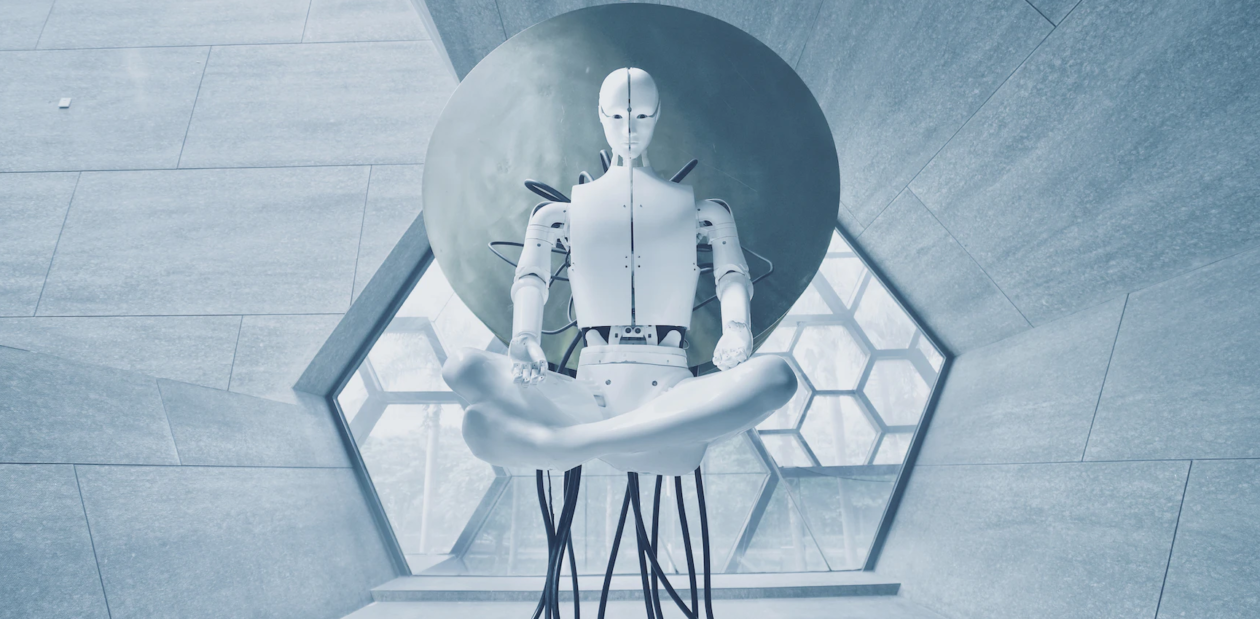
Rotting Away

This weeks reading regarding a deep look into Brain Rot and its affect on peoples’ cognitive functions was super fascinating. To a lot of people, Brain Rot is just a funny term you may here on the internet. Many people use it to describe others and themselves without thinking about its true meaning. The study conducted in “Demystifying the New Dilemma of Brain Rot in the Digital Era: A Review” really gave a nice overview on Brain Rot and its harmful affects on people and their cognitive functions. Now the word has a wickedly different connotation overall. I always considered brain rot to be a newer thing (something that has only really existed over the last 10 years) though in reality, it is just an expansion of a wider conversation regarding the emerging tech and people’s obsession with it. When I was younger (2012 is way further away than I want it to be) I remember a lot of talk about how parents needed to watch how their children interact with platforms like instagram, facebook, Vine (RIP) and youtube. I thought back then that it was not that deep and that social media was not even all that bad. My 13 year old brain could never have imagined how much things would change for the worst

In my own experience, I can say that I have been affected by the brain rot over the last couple of years. Things like Tic Tok and Instagram have seemingly become more staples of my daily life than I would like. The constant loop of agreeable content is nice way to waste time. Last year I found myself reading and gaming way less and being on my phone zombie scrolling more and more. The last couple of months I have gotten better at finding better things to take up my time, but I can still waste some hours scrolling away. I think the idea of content that people can consume without thinking sounds super shallow. But in reality it is something that many people get immersed with in a way. Its funny to think about this within the context of A.I. In class we talk about how people use A.I mindlessly on a day to day basis. At the same time I feel that I mindlessly use social media in the same way. I guess I am the pot pointing at the kettle.

Screen Time & Its Negative Effects! Now What?

(Blog 4)

Over the past few weeks, we’ve been discussing the negative effects of technology, especially AI on our daily lives. Reading this article (Demystifying the New Dilemma of Brain Rot in the Digital Age Era) made me think about self-control when using technology. While we often blame the existence of technology, we sometimes fail to realize the fact that technology itself is not solely responsible for these negative effects but instead, our behavior and the way we use it. Although technology is available to us, we make the ultimate decision of how much time we spent feeding our brain by following algorithm and scrolling up and down watching digital content and responding to every notification. The article describes some “symptoms of Brain Rot that include spending hours on-screen, anxiety when away from mobile devices, and a weakened ability to pay appropriate attention to valuable activities”. We probably had some ideas that being on screen for an extended amount of time will have at least have some damage on our eyesight, however, finding out these additional health, cognitive, mental, and social issues that one can suffer by the use of excessive screen time bring some serious concerns.

When we think of the long list of other issues that come as a result of spending excessive number of hours on screen, we must ask ourselves, is it worth it? Increase levels of anxiety and depression, low self-esteem, social withdraw, impaired brain development, risks of cognitive, behavioral, and emotional disorders, short attention span, and even early onset dementia. What strikes me in this article is how long the word “brain rot” has existed. Since the is often used in association with modern technology, it seems as though it has recently been in existence. Even as an adult, I now realize how often I reach for my phone during the day, or when I lay down. I also realize how this habit of mine has brought some levels of procrastination in other aspects of my life. One thing is for sure; technology and the many digital platforms are here to stay, and it may also be unrealistic to think that one can suddenly and completely stop using them. The truth of the matter is that most of us rely on them whether to for school, work, or to stay connected with friends and family. To avoid being negatively affected, we must balance out how much content we consume and knowing when our brain is over saturated.

May need a drink after this one (metaphorically of course)

“Brain rot” is such a good way to describe the current climate of hyper consumption and declining attention span that has infiltrated society. Everything is shortened these days for that exact reason. We have reels, Tik Toks, shortened clips of important world news for easier consumption, the list goes on and on. There was a time where YouTube was huge and you could sit there and watch an hour long video or a 45min story time. Me included! These days I scroll halfway through a Tik Tok video if the person isn’t getting to the point fast enough. “Doom scrolling” didn’t get its name for no reason. Scrolling on Tik Tok or instagram reel could jump from “just for 5 min” to an hour fairly quickly without you even noticing. When was the last time you simply sat in discomfort or boredom without reaching for your phone and needing something to fill the silence? When’s the last time you watched an episode of a show without multitasking and scrolling on social media? I know personally, it’s been a while. Brain rot has increased consumption while lowering creation and it happened so quickly without us even noticing the flip switching. The problem is we shouldn’t have this much access to everyone’s lives, thoughts and opinions about every single thing. We doomscroll all day and in turn we’re subject to everyone’s “deep reflective thoughts”. This can quickly lower self esteem, create comparisons at every turn and create “realities” that are only based on one person’s ideologies. On top of the slippery slope that brain rot and doomscrolling can turn into, these brain rot words or phrases that have the younger generation in a chokehold are so insane to me. If anyone could explain “skibidi toilet rizz” and “What the Ohio” to me like I’m 5, I would greatly appreciate it. Source: my 11 year old brother . 

“Now, I get it. You’re busy, overworked, underpaid, underappreciated and possibly underslept.”(Burnout page 19) While all of this is absolutely true, it feels so odd that this machine is trying to empathize with me and in turn wanting me to empathize with it. Like what do mean now you’re going to(metaphorically) take a drink. What is even happening right now? This sounds like a guide on how to ask a human for things. Reflecting on how to better communicate your needs to preserve someone else’s feelings and be respectful. Why is this program trying to hand hold me into being considerate of its feelings and the work it has to do to provide me with answers. Yes a lot of these questions could be answered with a google search or some thinking, but there are no “feelings” to preserve here. It’s such a mind blowing thing that I know how AI wants me to communicate with it and I don’t know how I feel about having this much insight into its “thoughts”.