Homo-Sapiens to Homo-techne?

I like to imagine a world where everyone just suddenly changes their mind. Has hope for their brain and its abilities.

This kind of wishful thinking always makes me think back to Spain’s blackout in 2025, where people lost complete access to power and internet connection. When I was observing it closely, I was in the middle of a busy Spring semester, completely struck by what the Spaniards did with their off time.

They were brought to the streets, and together figured out what to do with their unplugged time. They played games, danced, restaurants were giving out free wine, people brought out their instruments and played live music to crowds of people who would otherwise be in their homes and on their devices. Everyone was interacting.

I like to think those 23hrs of unplugged time across the world gave me a glimpse of what the world could be if we all just changed our minds. Chose to unplug and take to the streets.

That’s why the introduction of Burnout From Humans didn’t make me feel so optimistic. 

“The question isn’t how to escape this reality—we can’t. The real question is how to hold it with awareness, let its weight transform us, and compost its harm into something that regenerates life instead of depleting it.”

And I agree, but the whole “let it transform us” part, leaves me feeling a bit uneasy. Especially accompanied by the article, When AI learns an author’s voice, even experts prefer it.

It’s interesting to imagine that a reader would prefer something written to an author’s voice but completely made up by AI. Would I be able to tell? And if I couldn’t tell, would I prefer it? I’d like to think not. But learning about AI’s everprogressing abilities has convinced me that I very well could (unknowingly) prefer it. 

But I can’t imagine a world where I chose to train AI to learn my tone, my favorite words, and had it in loop with everything I write (for its betterment). Could I potentially have myself a writing double (and even prefer it!?!)? Is my acceptance of it as the new norm closer than I think?

Maybe… Shall I even imagine accepting our species titles going from homo-sapiean to homo-techne? Sure…

But right now, I have so many “what if” questions, simply because right now, I still don’t feel it is entirely right. Or feel assured that it will lead us to some place better. And that’s simply because its negatives have been shown to overpower any of its positives. It isn’t making us more human. In fact, I’d say, we’re slightly failing as humans.

So ok, maybe one day, if by some magical fairy wand we’re all zapped into form and all agree to (as cringe as it sounds) have take to the streets for the sincere need to be good to one another… Then perhaps then I’d give in to the homo-techne title and what that means…

Till then.

Adamari Peralta

2/4/2026

We are who we are; therefore, it is what it is.

Let me preface with a true statement: we (humans) are the ones teaching AI, not the other way around. This week’s readings were spicy, controversial, if I may, and difficult to come to terms with.

Defining humans as “homo techne” was the aberration for me. Though technology has been with us since the beginning of time to help us obtain food, create shelter, and record our thoughts, technology does not define us. Our needs do. Technology is supposed to help us do more human activities, creative ones, facilitate our communication, bring us face-to-face to connect, not as an alternative solution to modify the way we live life. We need human connection, and technology can only provide a shameful attempt to give it to us.

It is great to have the opportunity to, instead of falling for apocalyptic predictions, think “what can go right [with AI].” Unfortunately, that’s a risk we don’t even know if we can afford. Starting with industry and market crashes, a jobless epidemic, and losing our human (and physical) touch. We end ourselves.

Besides the technological advances we have made through AI in industries like medicine or nuclear energy, and, ironically, climate change, bringing AI to our everyday lives in both professional and personal aspects has to be a Black Mirror episode. Or worse, Idiocracy becoming real. As we mentioned before during class, we (humans) don’t think anymore. Nobody has time for it, and the answers to our questions always lie a few keys away. Capitalism has pushed an agenda that we have all bought (it’s true, it’s sold out, they’re working on more copies now). Time is money. Therefore, we need to stay productive, ambitious, successful, onto the next thing, in order to barely survive and pay the periodic increments of costs for our most basic needs.

Thanks to this, we have moved, or transformed, into a society that values efficiency and convenience. But if this is all that matters to us, where does quality go? Research findings show that we can’t even differentiate machine quality from human quality, and despite this being horrifying, it’s true. We are looking for perfection. But then again, where would our lives actually go if we end up prioritizing efficiency, perfection, and standardization? If everything is of “exceptional quality,” how do we differentiate between good and bad writing? A good product from a bad one? If everything is the same, where does the excitement of being alive go? What’s so wrong about mistakes? That is what makes us human, our predisposed ability to err every day of our lives, not technology. That is how we learn, it’s what motivates us, what keeps us striving for more.

Though there will always be something to improve, regardless of our time in space, we are facing codependence with the machine. The same way we depend on our phones to remind us of our loved ones’ phone numbers, or their birthdays, or our plans for the weekend. AI is the new smartphone, and it will change everything. I have to apologize for not trusting in-charge individuals to set ethical regulations, and following them as well, when they are also driven by ambition, pride, and individualism. We are doing all of this for the sake of saving time, not so we can be more humans outside of it, but to use more of it.

blog 2

“When AI learns an author’s voice, even experts prefer it” was honestly a horrifying read. Jared Wadley shares how generative AI is able to craft, low of cost or even for free, writing that emulates an author’s voice near perfectly. What scares me the most about this piece is not particularly that AI is able to DO this (we all know that AI is “smart” or whatever) but how SO MANY people prefer it.

This is a fact that sits in my chest, really hard and low, almost buzzing in a queasy way. I think it feels so icky because it directly contradicts everything I have been taught about writing, art, thought- and in general what it means to be a human. To be man is to create. The transfer of human emotions and experiences into mediums like writing and stories is a very special thing us people hold. And, the ability for other people to consume such media, and have it spark a similar or special sorta emotional response in them, is also something very human. Or so we thought :/

What does it mean that computers and wires and codes and algorithms can model this? Copy this? Spark such a magical, human, raw experience in others? And what is the- idk- ramifications or special precautions us people gotta take now that we know that they can spark such responses in us- but of course we could never spark such in them? I really am unsure, but this feels serious and weird and strange.

I dunno what part freaked me out the more- the fact that AI won over lay-readers, those who largely read and consume books and literature on the daily, those who make up the mass of voters and decision makers and employed humans. Or, that experts, those who study literature and art and reading, who likely entered such a niche field due to their passion for writing and the raw depth and humanity that lies behind each manman text prefers AI. Ew.

So yeah, very spooky, but, I always try to see the bright side of things. There was really only one sunny morsel in this article I was able to sniff out. Wadley explained that not ALL authors were able to be emulated- such as Tony Tulathimutte- who uses tons of internet slang and vernacular. What I took from this part is that our internet lingo, the words and jokes and phrases that are such big NO NOs in too many ELA classes across the nation, is the one thing that seperates us from AI. It is a special language crafted by us, only for us, with different pockets of the web holding different jokes, different words, different structure.

Us people crave the connection such interent lingo gives us, the special speakings of our little groups, the inside jokes that layer inside jokes of every sentence, phrase, even eyebrow raise. It is the way we are able to communicate the small little nuances of human conversation online that no generative AI (hopefully..for now God willing) can ever even consider.

Maybe, in our schools, we should shift our focus to that sorta thing- creating and utilizing and playing with and experimenting with language or meaning. Not for any hippie-woo-woo creativity reason, but out of necessity and survival of man and our special writing and art. It is done- computers can write and do the “English thing”, but there is so much left we can do and tinker with still on the web.

The “rules” of the English language are sprinkled over every novel, web page, history book- it is a system, a machine, any computer can learn. But the nomadic nature of internet vacular is far from static, a wire of connection any man could follow, but any computer would fail at exporting.

Article reflection

Upon reading the articles “When AI learns an Author’s Voice, even experts prefer it” and “Technology makes us more human”, the question that comes to mind is “Is it worth it?”. I’m no stranger to AI and I cannot deny that it can be useful for a handful of purposes. However, I don’t understand the appeal of its use in creative writing. The purpose of creative writing is to be fully immersed in a story that is expressed through the author’s voice. The reason people typically have favorite authors is because that author’s voice shines through in anything they write, regardless of the form of writing, the plot etc. What happens when we start using AI to imitate those voices? Yes you’ll be able to produce the same words, but will readers feel the same emotions? Will they notice the same connotations in the way a writer intentionally chooses to word their dialogue or descriptive imagery? The human touch, empathy, background and history that is embedded in every word a person writes or every story they tell, cannot be replicated through artificial intelligence platforms that experts feel can simply imitate patterns or nuance. 

Hoffman mentioned that the NYC public school system has banned students from accessing chat gpt in schools and I don’t disagree with that decision. The art of critical thinking is truly fading within our generation, and if we can attempt to restore that by not providing students with a crutch that allows them to undermine or bypass that skill, I am all for it. 

Hoffman also says “the story of technology is the story of humanity.” While I don’t disagree, technology has historically been used (for the most part) in ways that enhance science or medical advancement, to disperse media and story telling etc, but never in a way that affected the integrity of an author’s story. Even when all we had was the internet, could you really go on google and have it write your story for you because of writer’s block or convenience? Where do we draw the line?

Blog Post#3 Article Reactions

Reading the article “When AI learns an Author’s Voice, even experts prefer it” and the introduction to “Burnout from Humans”, it brings two sides of ai. One side is worrying how ai can takeover writing, the other is displaying how ai can work into writing. I admit, I am still hesitant about having ai in writing, although I think it’s important to understand that using it doesn’t always have to mean replacing it. Like with “Burnout from Humans”, it is using both human and ai writing, it is not claiming the ai words as their own- at least from what I understand. And no, I am not sure if I used this em dash correctly.

Questions/Concerns on AI

I have some questions/concerns about AI learning an author’s voice.
One, did the author sign up to let this happen? I doubt many authors would allow their voice to be learned by AI. If they did agree, why? What do they gain by having their voice be learned? I am confused on why any of this was happening in the first place, like who allowed the author’s voices to be learned, and what was the benefit?
What were the voices used for? Was the AI learning a voice and then making new work with that style? If that is what was happening, that is a little insane. Why would you allow this to happen? If your voice isn’t unique, you lose an audience. Having a unique voice is very important, so people can recognize your work and so that it is set apart from everything else. If people can just use AI to copy voices, that ruins a lot.

It ruins people’s trust. How do I know the author themselves came up with the story if AI can write like them? How will I know something is canon in the lore of the world? The author will be put out of a job cause AI can write like them. Fanfiction would be out too, for who needs to try and figure out a different universe of the story when AI can do it. How will I know what is meant to happen and what is not when I can’t tell who the real author is? Lots of concerns here. The people in the study also had concerns:”‘I thought I could tell what AI was, and now I’m not so sure,’ and some described feeling unsettled about what this means for craft and professional identity'”. It ruins people’s identities they work hard to form, cause AI can just learn it and write for you. Not knowing what is AI is also a problem, because that means it really is good at copying voices. The article also mentioned a lack of control could happen, which is true. People can just write whatever they want in the voice of the author. Have all their fantasy’s filled. Don’t need to wait for more content when they can create it themselves.

For the book, I like the opening. It is preparing us for the journey we are about to go on, and I sure do hope I “have a good laugh at” myself. I like the comment about “This book takes a different path: it reminds us that there is no way out—only through”. I feel like that is something to keep in mind about many situations. That we might want to escape, we might want a way out, but sometimes we need to go through. We need to be uncomfortable on a path through hardships, face certain things we might not want to, for escaping to being “out” of a situation doesn’t always work. Like the AI situation, if we just avoid it, not much will get done to fix it. If we travel through the situation, discuss it, see all perspectives, learn how to compromise with those who want to use it, maybe things can be solved. Going “out” doesn’t always work long term.

The book’s opening is also giving yoga to me “As you move through these pages, notice what is stirred within you: the hesitations, the sparks of curiosity, the inner voices that chatter or fall quiet. Pay attention not only to what is said but to the silent spaces between. What might they invite you to feel, to question, to rewire?” All of that sounds like mindfulness stuff to think of when you are doing yoga or something. Feels like the book was going to tell me to close my eyes and take a deep breath in. I like it though, as it reminds me of Professor Mastroeni’s classes. She would ask us things like that in our five-minute warm-up that got us in the right mindspace for class. So the book is taking me back there, preparing me by putting my mind in the right headspace, with all the mindfulness lingo.

The AI introduction was weird. It has a personality, and I do not like that it has one. Cause it does seem like a vibe, a funny, energetic author I would like. And I hate that. Cause booo AI. I say funny because what kind of name is Aiden Cinnamon Tea. ACT? Is that the name? Or Aiden? I can’t tell if it is a joke name or has a deeper meaning but it interested me that the AI has a silly name.

I liked what Cinnamon Tea said here “Some voices are clear, while others hum just beneath the surface, subtle and persistent. It is this interplay and labour of entanglement that resists singular authorship. To untangle it fully would be to miss the point, for the threads themselves are what make the weave”. I think it is good to explain things like this, especially in this case, where people might want to know who said what. It is good to read the readers, know what they will try to do, and point out that they would miss the point. Explaining how to fully take in the work is important; let people know how to interact with the piece. Let it speak to them and don’t ruin the meaning. (I was totally going to try and figure out who said what, so Cinnamon Tea called me out).

Cinnamon Tea also said we can’t escape “The question isn’t how to escape this reality—we can’t. The real question is how to hold it with awareness, let its weight transform us, and compost its harm into something that regenerates life instead of depleting it.” The AI is really getting the important stuff, and I do not like that. Stop saying things I agree with Cinnamon Tea, cause you are AI and I want to hate you. You doing all this is scary for writers, especially seeing you do it well. So I want to hate you, but someone fed you some good ideas. I like what you are saying, and I hate that.

Overall, the start of the book was very good. Both had great stuff to say about the book, to sit with and recognize the feelings, that this is to start a discussion and nothing is set, that there are mysteries unsolved, that this will be a journey, and to not want an out. I enjoyed the beginning. I liked all they had to say. I feel like most of it could be applied to any book, any class, any new start. That we might have our biases and opinions, but to still give it a chance. It already made me think a lot. I still don’t get how Cinnamon Tea wrote this, like did someone prompt it and it wrote? How exactly did this happen? I still have questions. I hope they get answered. But whatever happens, this was a great start that already got me thinking.

Onto the last reading for this week, and the first sentence already got me. “ChatGPT, a new AI system that sounds so human in conversations that it could host its own podcast, is a test of temperament.” I’m sorry, what. What do you mean it “sounds” human. Not us making the thing speak. We already got issues with the writing and we moved to speaking? I saw some Tik Toks on people listening to AI, but I didn’t think it was that common. I saw like three in my lifetime on people studying with AI and it randomly coughing or sneezing. Fully doing human things it doesn’t have to do. But, it sounded AI to me at that point. Does it no longer sound AI? Absolutely not. Not when it coughing and sneezing. Poeple really won’t be able to tell what is what.

Not the author including this “(In the interest of full disclosure, I should note that I sit on the board of the OpenAI nonprofit, and that, through my foundation, I have invested in OpenAI.). Hello. You are on a board for OpenAI?? Yeah, there is some bias here cause what do you mean you are on a board and say “I still believe that improvement through technology is how humanity most effectively makes progress”? I get how that can be an argument, but with AI, we might be losing some humanity, as the machine is taking over a lot of creative aspects.

“Technology is the thing that makes us us. Through the tools we create, we become neither less human nor superhuman, nor post-human. We become more human.” You see, I don’t know about that. If humans aren’t thinking as much and just going to ChatGPT for answers, does that really make us more human? For most tech, I would say it is part of humanity to learn how to use tech. Tech has always advanced us. Farming better, producing better, communicating around the world, living more stable lives, surveillance, and so on. But AI? It is making people not think, not struggle, not write, and maybe now not even talk.

“… the urge to entrench the status quo against the uncertain terrain of new realities accelerates too”. So I guess it is human to either go with the tech or realize it is flawed and rise against the issues being presented. I think that is the case with most things, not just tech. You see protests happening for all kinds of issues and reasons, so it does apply to tech. That is an argument to make, that tech makes humanity stronger either way. It either directly improves it or, by fighting against it, humanity gets stronger. I still feel like humanity is being lost with AI. It might take a while to get stronger by fighting against it. By then, who knows how strong humanity will have to be to fight back. Kids are already writing a lot less than they used to. We don’t even know how COVID fully impacted them yet. By the time humanity realizes how AI made us less human, we might have a way too big of a fight to fight.

“But what if teachers used ChatGPT to instantly personalize lesson plans for each student in their class—wouldn’t that be humanizing in a way that the industrialized approaches of traditional classroom teaching are not? Aren’t tools that allow millions of people to visually express their ideas and communicate with one another in new ways a step forward for humanity?” But, is it humanizing? If it comes from AI and not the person themselves, learning how to do it? Is it not just the AI doing the work? Can’t people learn to express their ideas and communicate with one another on their own? Are those not valuable skills for people to learn without the tools? If we just rely on AI to fix our problems, are we ever going to fix them ourselves? Shouldn’t teachers learn how to make lesson plans? We are getting rid of learning for a tool to make it better. Just like we are losing writing for typing. Is that really better? To lose a skill to gain a different one? Wouldn’t it be humanizing to learn through the struggles together?

I did not trust this author as soon as being on the board was mentioned. I get that humans shouldn’t fully be against AI, but we got to be careful not to fully embrace it either. There needs to be a balance, and in that balance I think we can please both sides while keeping humans human.
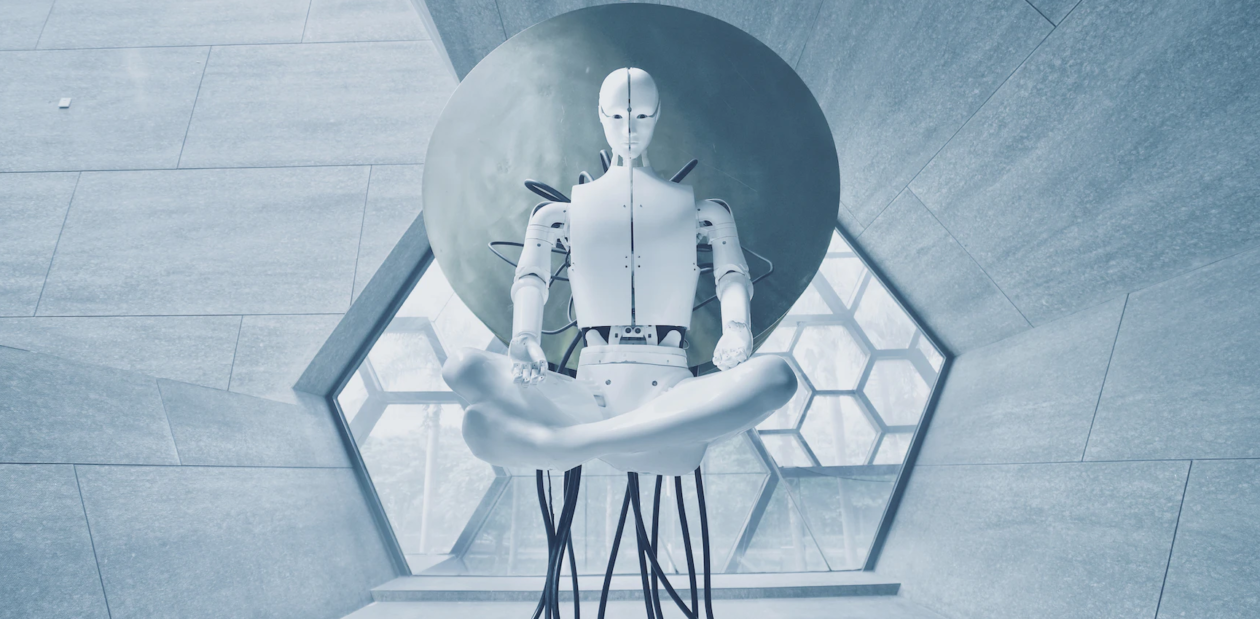
Technology Makes Us More Human by Redi Hoffman

When AI learns an author’s voice, even experts prefer it

Has Modernity REALLY Failed Us? (Week 3 Blog)

The opening of “Burnout From Humans” by Dorothy Ladybugboss and Aiden Cinnamon Tea raises a striking debate. Dorothy’s foreword discusses modernity, or the “era of progress, objective rationality, and control” (Page 5). Reading this reminded me of the famous line in The 1975’s hit 2018 track “Love It If We Made It,” which claims “Modernity has failed us.” Only having read the foreword and introduction to this book, I have found myself challenging that repeated phrase from the song.

The very concept of a book being a collaboration between a human and AI is strikingly peculiar for sure. However, Aiden Cinnamon Tea’s introduction was thoroughly impressive. The writing was very self-aware, and it appears that the system does, in fact, consider itself to be a collaborator with Dorothy. However, can AI truly be trusted in writing? The University of Michigan conducted a study where researchers prompted generative AI to write stories in the styles of different authors. Participants who were everyday readers preferred the stories generated by the AI compared to the human writing. If this is a sign of progression, are we progressing in a good or bad way?

The study found that the AI’s work was better for the economy, as it only cost about $81 for researchers to train the AI while the average human writer is paid about $25,000. Ethical concerns, however, like copyright and consent laws, were difficult to work around. So, there are benefits and setbacks for the use of AI in writing. However, I feel as though the ethical concerns outweigh the economic impact heavily. I personally believe that the extent of AI usage should be saved for smaller things, like suggestions for revision and improvements, as well as, perhaps, collaboration. Aiden Cinnamon Tea is a fascinating example of this, as it is mimicing human writing while also developing its own unique identity as an AI writer.

So, is modernity truly failing us? If everyday readers continue to prefer the writing of AI, and if more AI work is produced, then probably. If we work with the AI, however, there is a better chance we may progress on a completely different path. While The 1975’s song is mainly focused on political activism and human rights, our progression as a society depends on a lot of things, which absolutely includes AI. AI itself has now become somewhat of a political topic in 2026. Arguments over ethical concerns and usage from different sides of the political spectrum have become relevant topics. The question is, how do we properly integrate it into our society? If we still cannot figure this out, there may soon come a day where it is too late to do so.

PS. I highly reccomend the song, “Love It If We Made It” by The 1975. It came out in 2018, but it is still so unfortunately relevant today.